











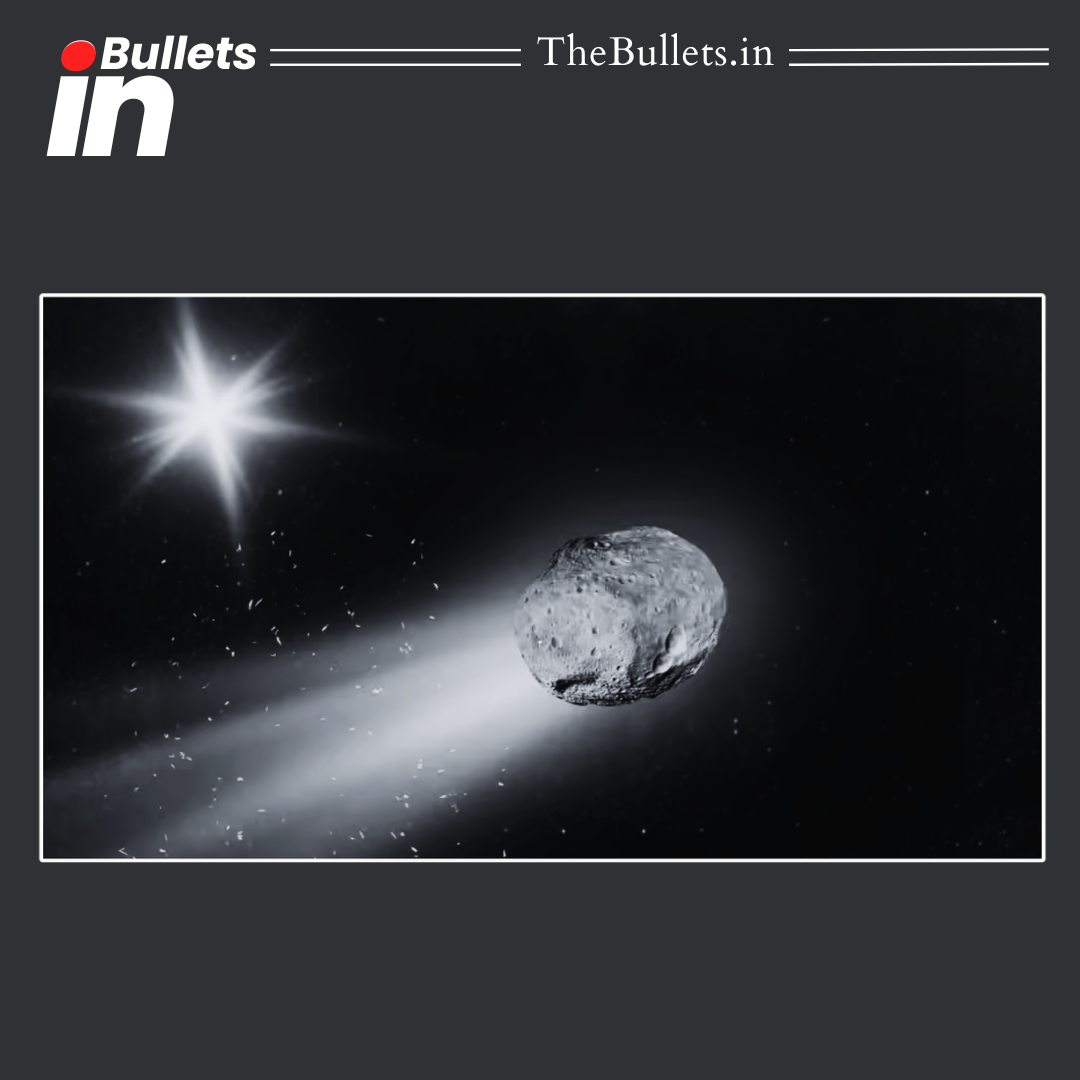


NASA and the European Space Agency have detected methane on interstellar comet 3I/ATLAS using the James Webb Space Telescope, offering valuable insights into the chemical composition of objects formed beyond our Solar System.
BulletsIn
- NASA and the European Space Agency announced the first direct detection of methane on interstellar comet 3I/ATLAS, marking a major breakthrough in astronomical research.
- The discovery was made using the James Webb Space Telescope’s Mid-Infrared Instrument, which can identify chemical compounds hidden within distant celestial objects.
- Interstellar objects originate outside the Solar System and travel through it, providing scientists with rare opportunities to study material from other planetary systems.
- Comet 3I/ATLAS is the third confirmed interstellar object discovered after 1I/ʻOumuamua and 2I/Borisov, expanding knowledge about cosmic visitors.
- Methane, carbon dioxide, and water are key volatile compounds that help researchers compare the formation environments of different planetary systems.
- The comet was discovered on 1 July 2025 by the NASA-funded ATLAS survey telescope in Chile during a routine sky observation program.
- Methane observations were conducted on 15-16 December 2025 and 27 December 2025 while the comet remained hundreds of millions of kilometres from the Sun.
- Research findings published on 8 April 2026 revealed unusually high carbon dioxide levels and a distinctive methane-to-water ratio within comet 3I/ATLAS.



What do you think?
It is nice to know your opinion. Leave a comment.