











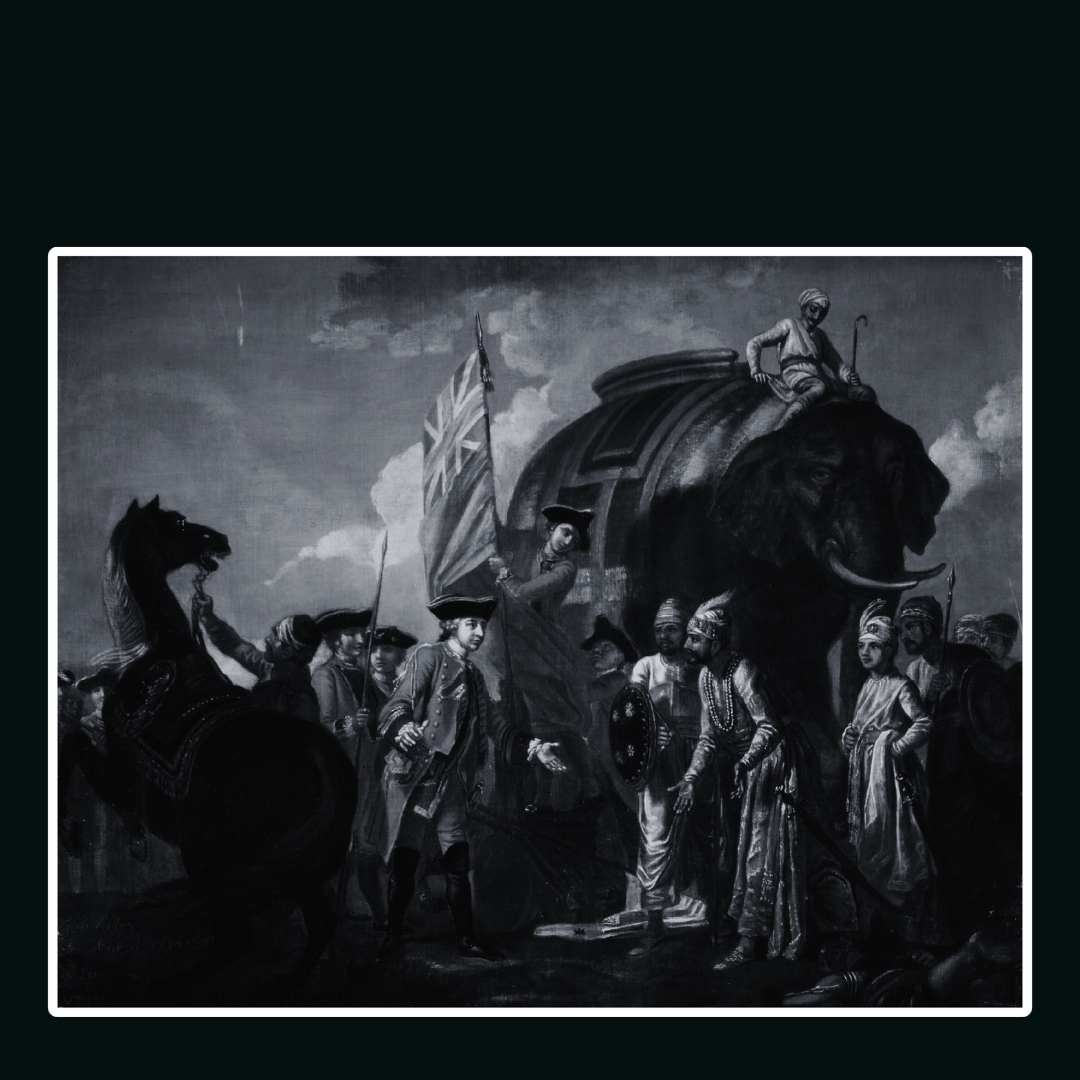


The Battle of Plassey was fought on 23 June 1757 near Palashi in Bengal between the British East India Company and the Nawab of Bengal Siraj-ud-Daulah. Though a short military conflict, it proved decisive. The battle marked the beginning of British political dominance in India and transformed the East India Company from a trading body into a ruling power.
BulletsIn
- The British East India Company sought to expand its commercial privileges and political influence in Bengal, often violating trade regulations and avoiding taxes, which caused serious economic losses to the Nawab’s administration.
- Siraj-ud-Daulah opposed British fortification of Calcutta and interference in Bengal’s internal affairs, viewing the Company’s growing power as a direct threat to his authority and regional sovereignty.
- British officials, led by Robert Clive, conspired with dissatisfied Bengali nobles, exploiting internal divisions within the Nawab’s court to weaken resistance against British military action.
- Mir Jafar, a senior commander, secretly agreed to support the British in exchange for being installed as the Nawab, which became the decisive factor in the outcome of the battle.
- Although Siraj-ud-Daulah commanded a much larger army, a lack of coordination and betrayal by key officials resulted in minimal resistance during the battle fought on 23 June 1757.
- The British victory led to the defeat and eventual death of Siraj-ud-Daulah, effectively ending independent Nawabi rule in Bengal and altering the region’s political structure permanently.
- Mir Jafar was installed as Nawab under British control, allowing the Company to exert indirect influence over Bengal’s administration, finances, and military decisions.
- The battle laid the foundation of British colonial rule in India and initiated large-scale economic exploitation, making Plassey a major turning point in Indian history.



What do you think?
It is nice to know your opinion. Leave a comment.