











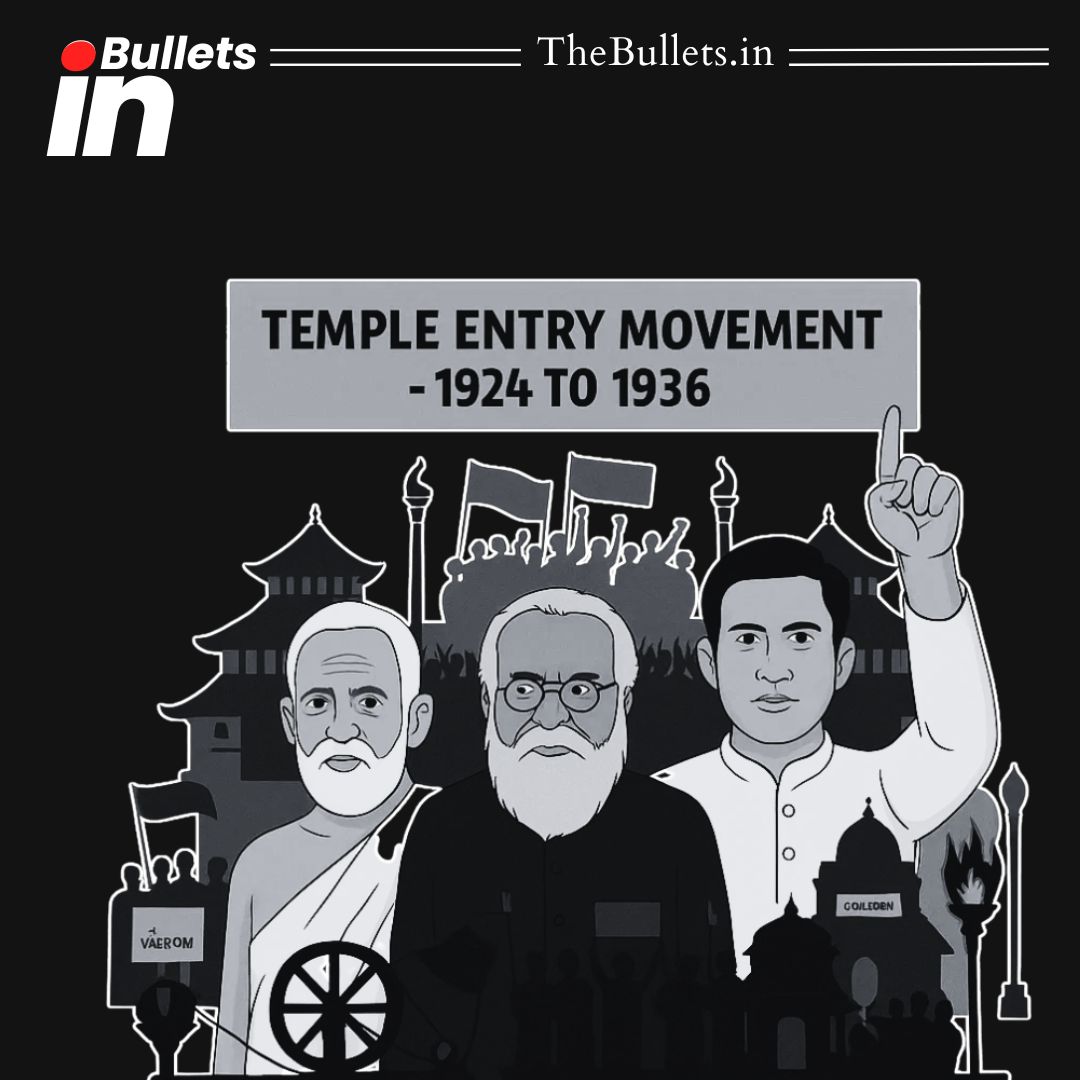


The Temple Entry Movement was a major social reform movement aimed at ending caste-based discrimination in Hindu temples. It began in early 20th-century Kerala and spread across India. Through satyagrahas, fasts, and public marches, leaders like Periyar, Gandhi, Kelappan, and others challenged temple restrictions on lower castes. Though progress was slow, the movement paved the way for broader social justice and legal reforms post-Independence.
BulletsIn
- Movement aimed to allow lower castes entry into Hindu temples
- Started in Kerala, led by reformers like Narayana Guru and Periyar
- Vaikom Satyagraha (1924) first major protest; drew nationwide support
- Guruvayur Satyagraha saw brutal violence but continued with public backing
- Gandhi, Kelappan, and A.K. Gopalan played key roles in later stages
- Movement used satyagraha, fasts, jathas to raise awareness
- In 1936, Travancore Maharaja opened all govt temples to all Hindus
- Madras presidency followed, opening temples to all castes
- Sparked long-term reform but didn’t eliminate casteism
- Movement influenced the anti-untouchability clauses in India’s Constitution



What do you think?
It is nice to know your opinion. Leave a comment.