











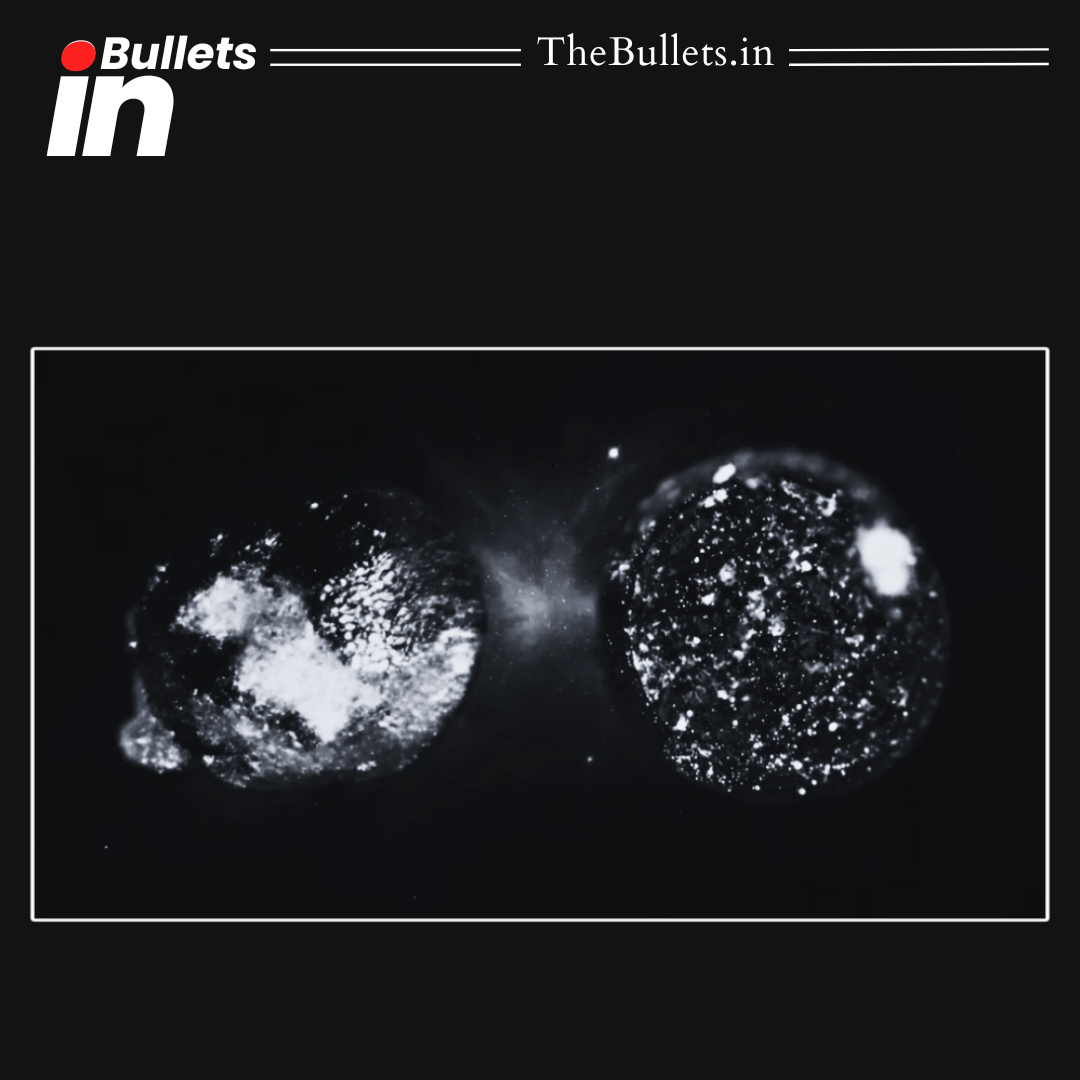


Scientists have identified a previously unknown metallic alloy inside microscopic debris from the 1945 Hiroshima atomic bombing, offering new insights into material formation under extreme heat, pressure, and rapid cooling.
BulletsIn
- Researchers discovered the new metallic alloy while examining microscopic fallout particles known as hiroshimaites, collected from Hiroshima Bay more than 81 years after the atomic bombing.
- The alloy formed during the 6 August 1945 atomic explosion, when temperatures reached several thousand degrees Celsius, instantly melting buildings, steel, concrete, glass, and surrounding soil.
- Scientists found that the material is composed primarily of iron, chromium, nickel, manganese, molybdenum, silicon, and aluminium, which solidified into a previously undocumented crystal structure.
- Unlike conventional alloys that separate into different mineral phases during cooling, the extreme conditions of the atomic blast rapidly locked the elements into a single stable cubic crystal.
- Advanced electron microscopy and crystallographic analysis confirmed that the metallic phase had never been recorded previously, making it a significant discovery in materials science.
- Researchers believe the discovery could improve understanding of metallurgy, high-performance materials, planetary science, and impact physics, where similar extreme temperatures and pressures occur naturally.
- The study also highlights the growing importance of nuclear forensics, a scientific field that examines materials created during nuclear explosions to understand their physical and chemical characteristics.
- The Hiroshima alloy joins other rare materials discovered after historic nuclear tests, including unusual crystal structures identified from debris produced during the Trinity nuclear test in the United States.



What do you think?
It is nice to know your opinion. Leave a comment.