











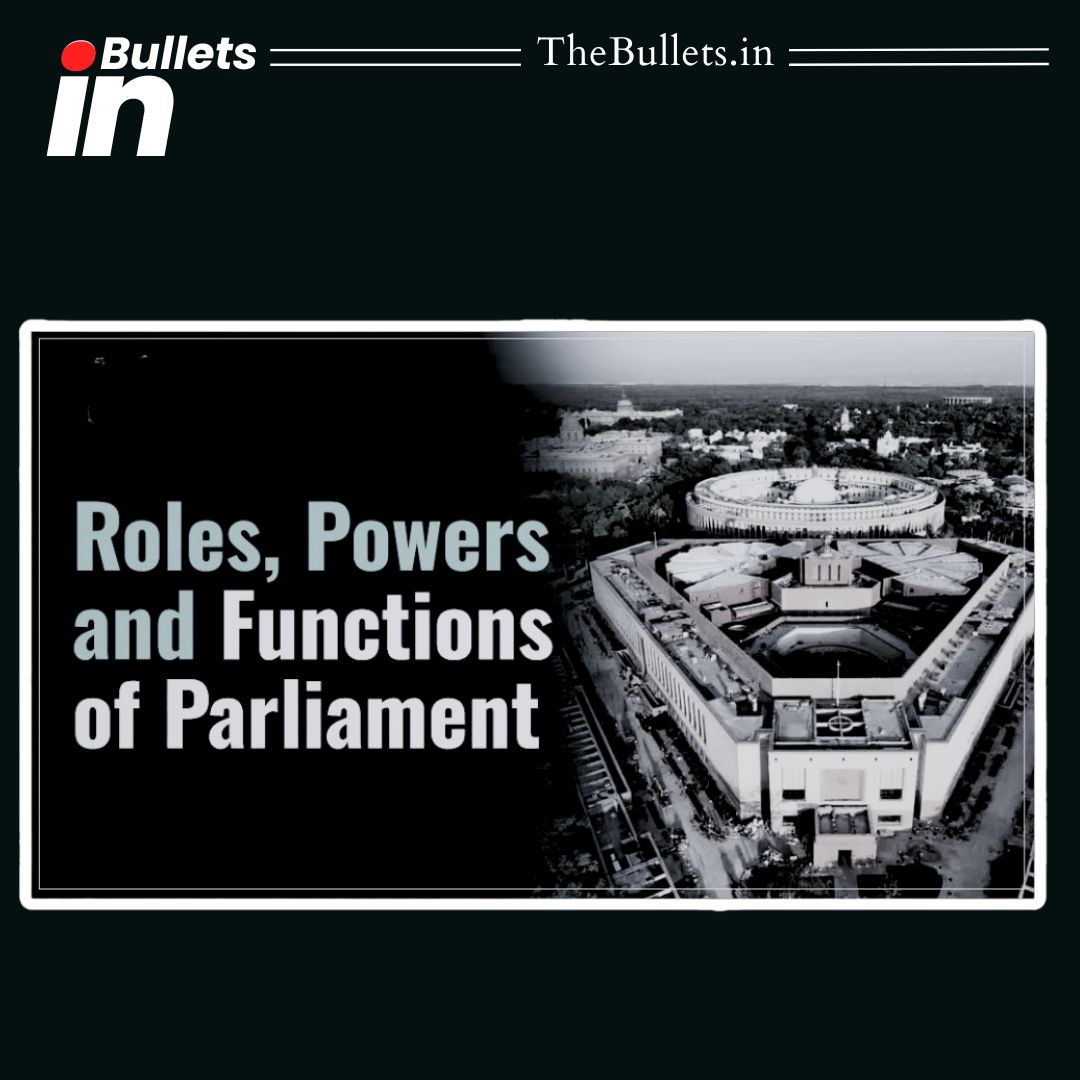


India’s Parliament performs multiple functions including law-making, executive oversight, financial control, and constitutional amendments, making it the cornerstone of democratic governance.
BulletsIn
- Parliament holds legislative authority to make laws on Union and residuary subjects, and it can override state laws on concurrent matters in case of conflict.
- It exercises control over the executive through mechanisms like question hour, motions, and debates, ensuring accountability of the government to the people.
- Financial powers include approval of taxation and expenditure, along with budget scrutiny and monitoring through parliamentary committees for transparent governance.
- Parliament has the authority to amend the Constitution under Article 368, subject to the basic structure doctrine established by judicial interpretation.
- It performs judicial functions such as impeachment of the President and removal of judges and constitutional authorities for misconduct or violation of provisions.
- Electoral responsibilities include participating in the election of the President and Vice-President and regulating electoral laws through various legislative acts.
- Parliament can legislate on State List subjects under special conditions such as national emergency or when authorised by the Rajya Sabha.
- It also acts as the highest deliberative body, discussing national and international issues while approving emergencies and modifying state boundaries when required.



What do you think?
It is nice to know your opinion. Leave a comment.