













India’s Anti-Defection Law is under renewed scrutiny after questions emerged over whether legislators alone can claim protection under the merger clause without party approval.
BulletsIn
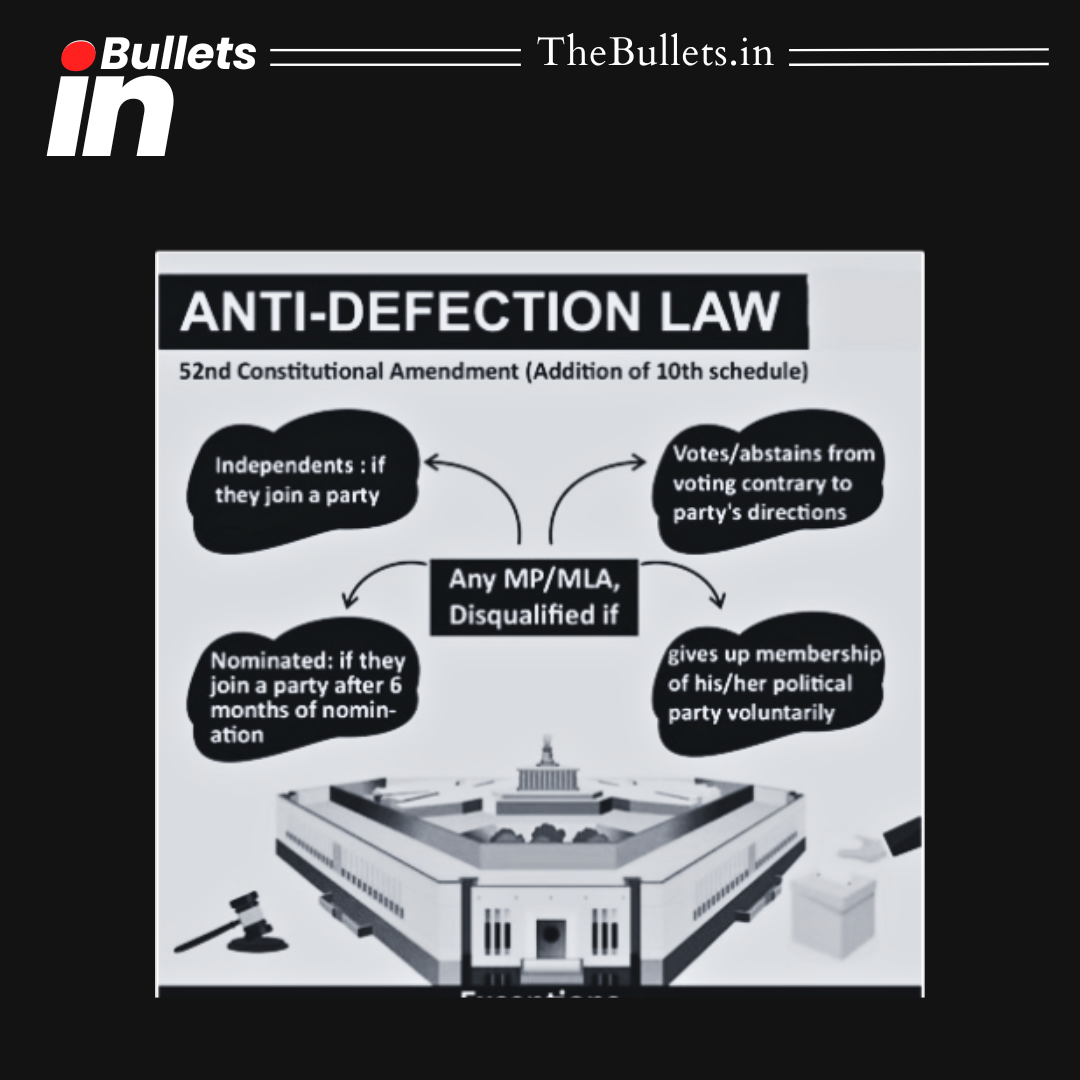
- The Anti-Defection Law was introduced through the 52nd Constitutional Amendment in 1985 to curb political defections and strengthen stability in parliamentary democracy.
- The law disqualifies legislators who voluntarily leave their party, violate the party whip, or join another political formation after election under specified conditions.
- The 91st Constitutional Amendment removed the split provision and retained only the merger clause, requiring at least 2/3 legislators to support a valid merger.
- Constitutional interpretation requires a formal merger of the original political party before the legislature party can claim protection from disqualification under Paragraph 4.
- The Supreme Court in 2023 clarified that legislators alone cannot independently engineer a merger without participation of the original political organization.
- The Speaker or Chairman decides disqualification petitions under the Tenth Schedule, although judicial review remains available in cases involving constitutional violations or mala fide actions.
- Judicial decisions have emphasized timely disposal of defection cases, with recommendations for independent adjudication to strengthen neutrality and public confidence.
- Recent political developments have revived debate over loopholes, delayed decisions, Speaker impartiality, and the overall effectiveness of the Anti-Defection Law in preserving democracy.



What do you think?
It is nice to know your opinion. Leave a comment.