











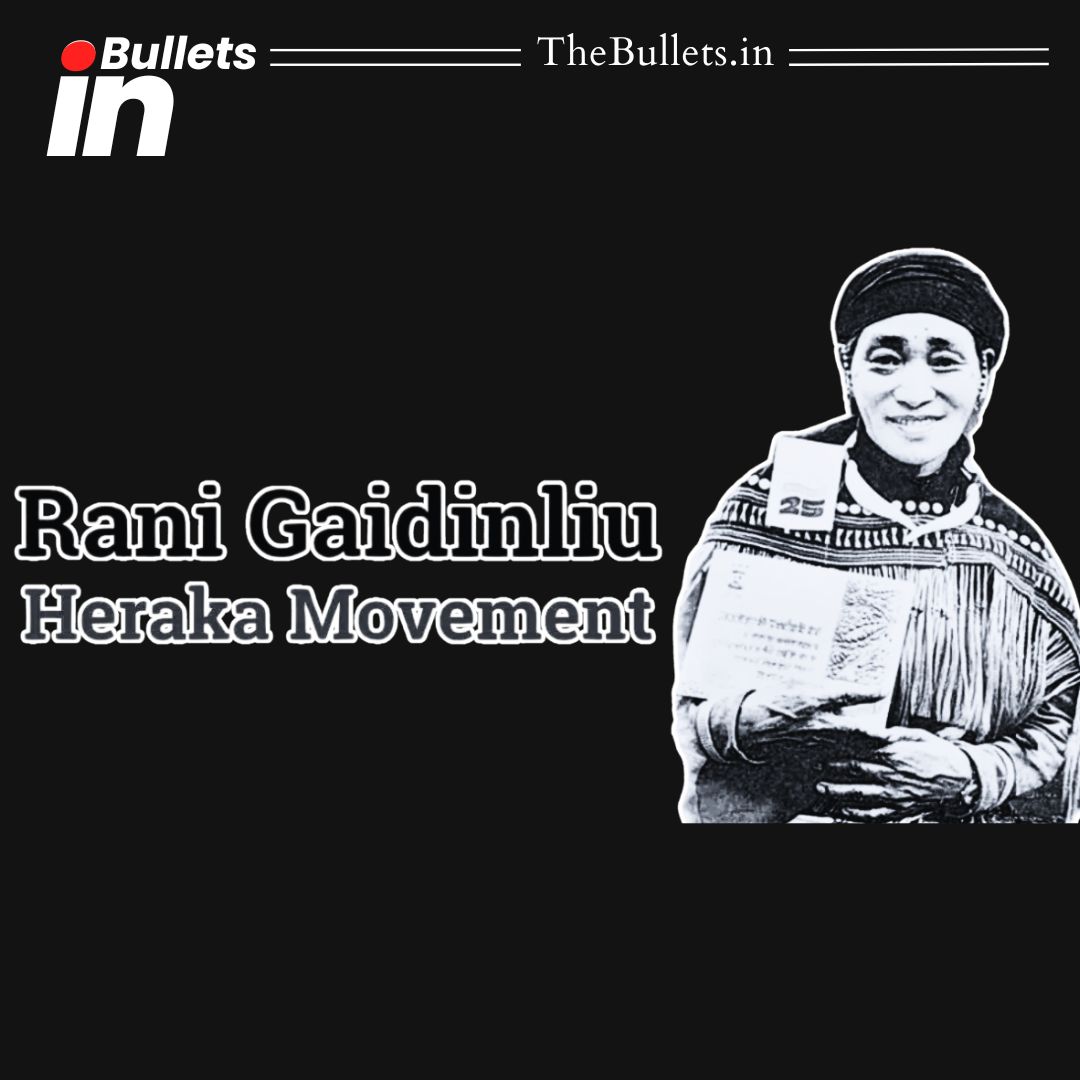


Rani Gaidinliu became a leading Naga freedom fighter and spiritual reformer who mobilised tribal resistance, defended indigenous identity, and challenged British colonial domination.
BulletsIn
- Rani Gaidinliu was born in 1915 in present-day Manipur and emerged as one of Northeast India’s youngest tribal freedom leaders.
- She joined the Heraka Movement at age 13 under Haipou Jadonang, focusing on indigenous religious revival and resistance to colonial exploitation.
- After Jadonang’s execution in 1931, Gaidinliu assumed leadership and expanded the movement into a major anti-British political struggle.
- The Heraka Movement opposed forced labour, excessive taxation, missionary expansion, and foreign administrative interference in tribal society.
- Gaidinliu encouraged tribal communities to reject British goods, refuse taxes, and preserve traditional spiritual and cultural systems.
- British authorities arrested her in 1932 and imposed life imprisonment, where she remained incarcerated for 14 years.
- Jawaharlal Nehru later honoured her courage by conferring the title “Rani” and recognising her nationalist contributions.
- Rani Gaidinliu’s legacy remains central to India’s tribal freedom history, indigenous rights advocacy, and anti-colonial resistance.



What do you think?
It is nice to know your opinion. Leave a comment.