











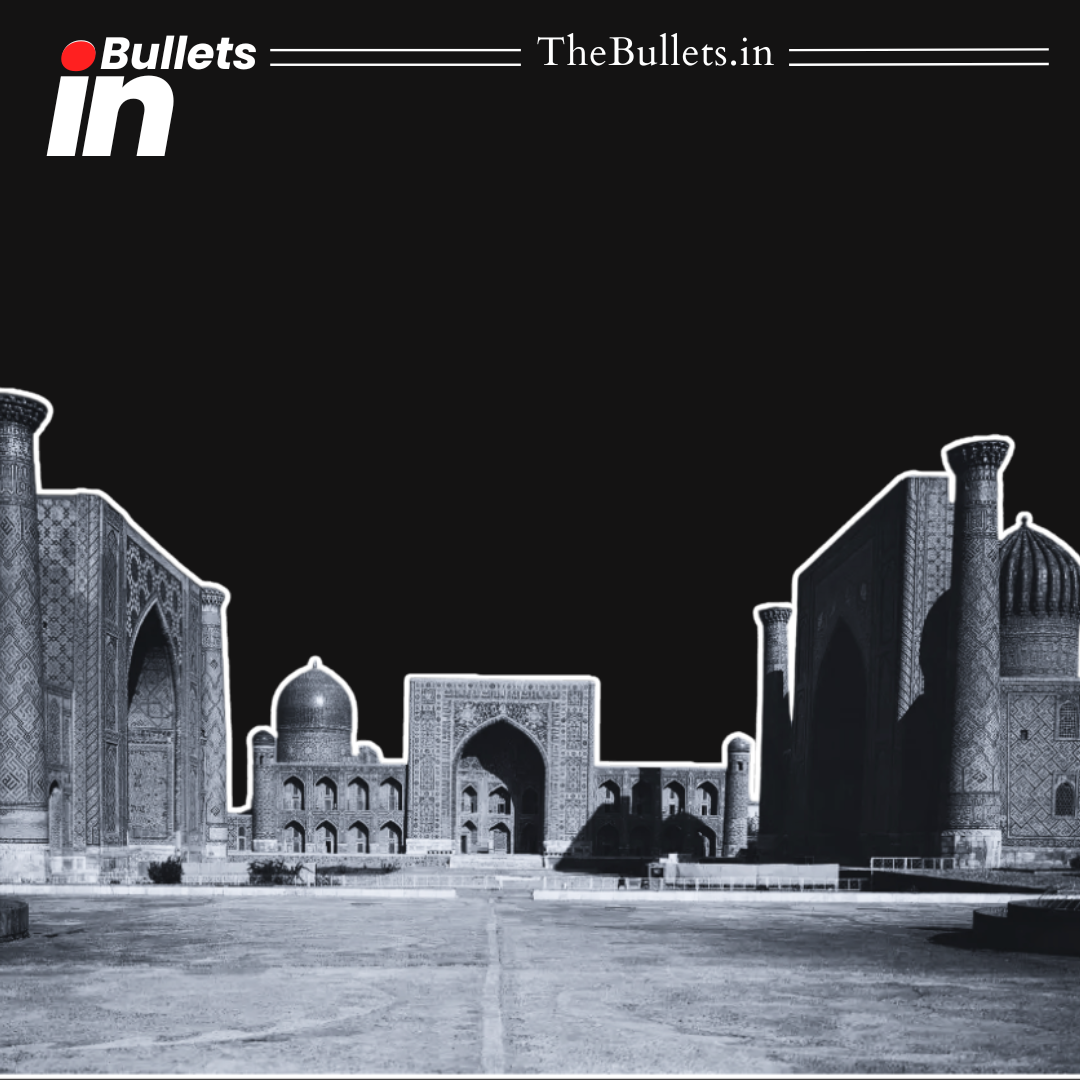


Ancient kingdoms of Western Turkistan and Afghanistan became major centres of artistic innovation, blending Greek, Persian, Indian and nomadic traditions through trade and cultural exchange.
BulletsIn
- The rise of irrigation-based agriculture encouraged urban development, leading to the emergence of powerful states such as Sogdiana, Bactria, Fergana and Chorasmia.
- Located along major trade routes, these kingdoms connected India, Persia, China and the Mediterranean world, facilitating the exchange of artistic styles and ideas.
- Sogdiana became renowned for its sophisticated murals, sculptures and decorative arts depicting royal life, religious traditions, hunting scenes and mythology.
- Bactria absorbed strong Hellenistic influences after Alexander the Great’s conquest, creating a distinctive artistic culture that blended Greek and local traditions.
- The Kushan Empire promoted Buddhist art across Central Asia, with Gandhara and Mathura schools producing influential representations of Buddha and Buddhist narratives.
- Monumental sites such as Bamiyan, Pendzhikent, Afrasiab and Toprak Kala showcased remarkable achievements in architecture, mural painting and sculpture.
- Central Asian artists incorporated Persian, Indian and nomadic decorative motifs, creating unique visual traditions that later influenced Islamic and Persian art.
- The artistic legacy of these kingdoms spread across Asia through trade networks and religious movements, leaving a lasting impact on global cultural history.



What do you think?
It is nice to know your opinion. Leave a comment.