





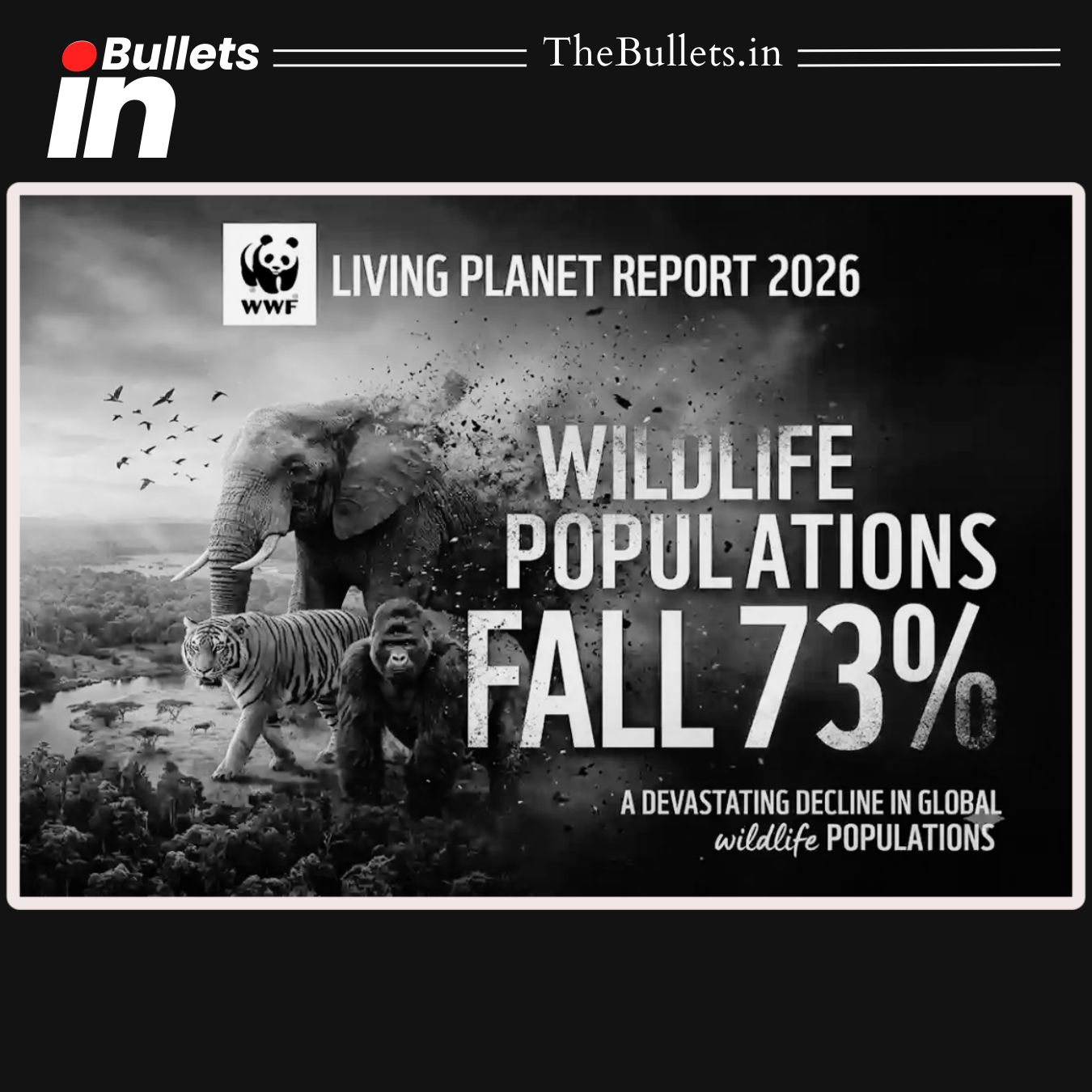


WWF and the Zoological Society of London report that monitored wildlife populations fell by an average 73 per cent over 52 years, though half of populations are stable or rising.
BulletsIn
- WWF released the Living Planet Report 2026, titled "The Science of Hope," on October 8, in partnership with the Zoological Society of London.
- The report finds monitored wildlife populations fell by an average of 73 per cent between 1970 and 2022.
- The Living Planet Index tracks 35,803 population trends across 5,790 vertebrate species.
- Freshwater populations declined the most at 85 per cent, followed by terrestrial species at 69 per cent and marine species at 59 per cent.
- The average decline works out to about 2.5 per cent a year over the period.
- The figure is an average change in monitored populations and does not mean 73 per cent of all animals have disappeared.
- Half of the monitored populations are stable or increasing, with recoveries recorded in green turtles, bluefin tuna, tigers and southern African elephants.
- Habitat loss and degradation was the most frequently reported threat, followed by overexploitation, climate change, pollution, invasive species and disease.
- The report names food, energy and finance systems as the main drivers of nature loss.
- Asia and the Pacific recorded an average decline of 49 per cent, while India shows increases in tigers, Asiatic lions and greater one-horned rhinoceroses.
- The 2026 edition adds 295 species and 967 populations and a longer time series than the 2024 report.
- The report is published every two years and arrives days before the UN biodiversity COP17 in Armenia.



What do you think?
It is nice to know your opinion. Leave a comment.