











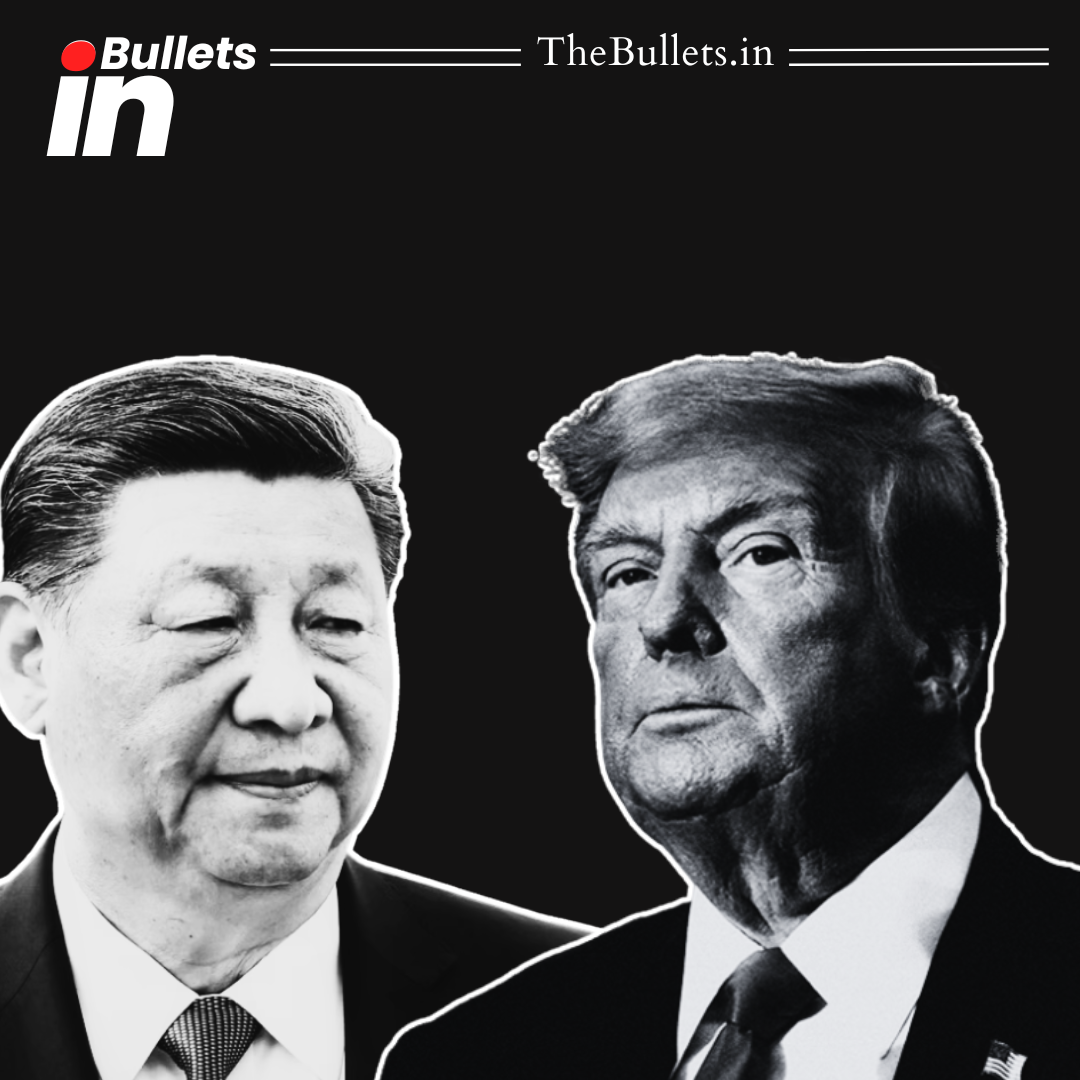


Donald Trump has reignited the trade war with China by introducing new tariffs on Chinese imports, leading to swift retaliatory actions from Beijing. This fresh round of tariffs, along with other strategic moves, signals a more intense phase in the ongoing US-China economic rivalry.
BulletsIn
- Donald Trump has imposed a 20% tariff on Chinese imports, citing national security concerns and China’s involvement in the fentanyl crisis.
- In retaliation, China announced tariffs of 10–15% on key US imports and ramped up military spending.
- Trump believes that this trade conflict will push China to change its trade practices, aiming to reduce the economic dominance China has enjoyed.
- China’s immediate response also includes efforts to build self-sufficiency in technology and energy production.
- President Xi Jinping aims to avoid China’s isolation like the Soviet Union during the Cold War, despite facing growing geopolitical tensions.
- China is expanding trade relations with Southeast Asia, the Middle East, and Africa to lessen dependence on the US market.
- The US has taken steps to limit Chinese influence by negotiating stronger trade ties with countries like Mexico, Vietnam, and India.
- Trump’s administration is also considering additional measures like tightening restrictions on Chinese investment in the US and limiting business operations.
- Trump’s tariffs are part of a broader effort to restructure the global trade system, aiming for long-term economic shifts.
- While China’s economy faces weaknesses, such as the real estate crisis and declining foreign investment, its response is focused on economic stability rather than engaging in a full-blown trade war.



What do you think?
It is nice to know your opinion. Leave a comment.