











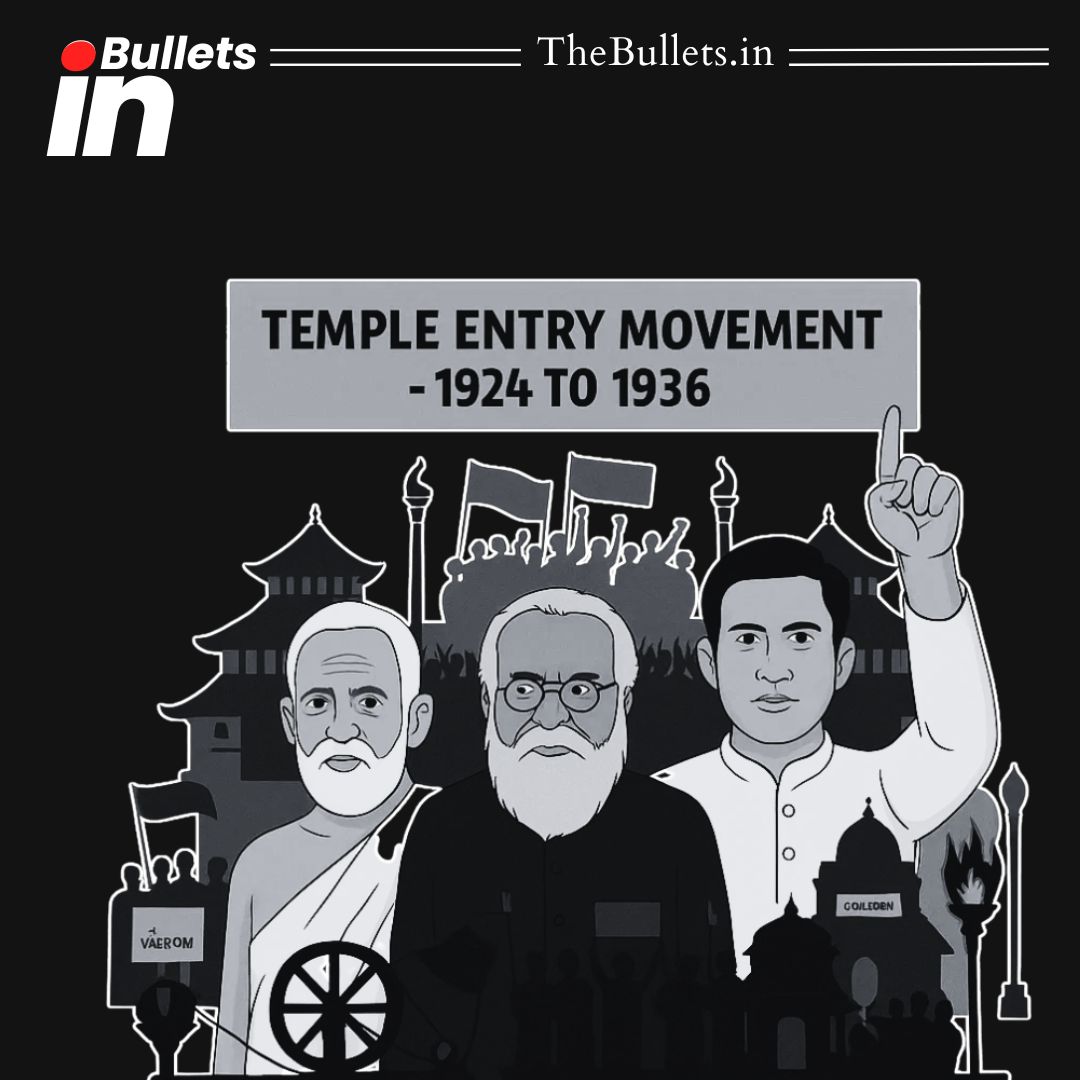


The Temple Entry Movement was a major socio-political campaign in early 20th century India to end caste-based temple bans. Spearheaded by leaders like Ambedkar, Periyar, and Kelappan, the movement used Satyagraha to demand temple access for lower castes. It ultimately led to temple reforms across several states.
BulletsIn
- Aimed to end caste-based temple bans and untouchability in Hindu society.
- Started in Kerala; inspired by leaders like Ambedkar, Narayana Guru, Periyar.
- Vaikom Satyagraha (1924) was first major protest for access to temple roads.
- Supported by savarna allies and national leaders; Gandhi met Maharani in 1925.
- Guruvayur Satyagraha (1931–32) saw mass protests, fasting, police violence.
- Kelappan’s hunger strike and youth mobilization stirred national attention.
- Despite resistance, movement sparked wide social reform and legal change.
- In 1936, Travancore temples officially opened to all castes; Madras followed.
- Movement used tactics from freedom struggle: marches, jathas, satyagraha.
- Constitution later outlawed untouchability; caste injustice still remains a challenge.



What do you think?
It is nice to know your opinion. Leave a comment.