





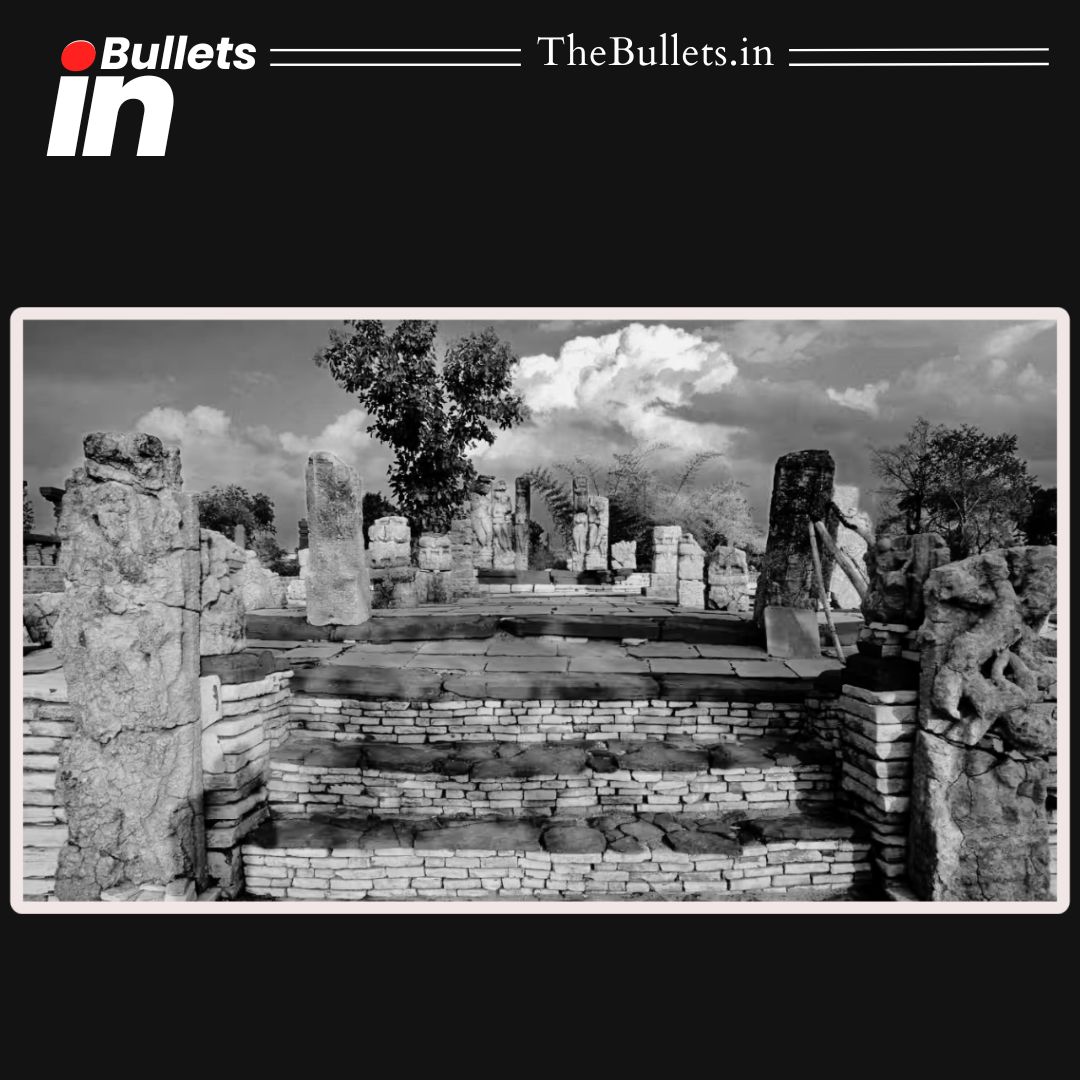


Sirpur's addition to the Tentative List puts the early medieval Dakshina Kosala centre, where Hindu, Buddhist and Jain traditions coexisted, back in focus.
BulletsIn
- Sirpur, historically known as Shripura, lies on the eastern bank of the Mahanadi in Mahasamund district of Chhattisgarh, about 78 kilometres from Raipur.
- The settlement flourished between the 5th and 12th centuries CE as a major administrative and cultural centre.
- It served as the capital of the Dakshina Kosala kingdom, which was ruled by the Panduvanshi and Somavamshi dynasties.
- Alexander Cunningham, the first Director General of the Archaeological Survey of India, documented the site in 1882.
- The Chinese Buddhist monk Xuanzang, who visited in the 7th century CE, is said to have described Sirpur as a thriving centre of Buddhist learning.
- The landscape shows Buddhism, Shaivism, Vaishnavism and Jainism coexisting, with monasteries, temples, sculptures and inscriptions reflecting a pluralistic urban centre.
- The Lakshmana Temple is a 7th-century brick temple dedicated to Vishnu, noted for its early brick shikhara and ornately carved stone doorway.
- The Surang Tila complex is a panchayatana-style temple on a high terrace with five shrines, four dedicated to Shiva and one to Ganesha.
- The Ananda Prabhu Kuti Vihara is another of the architectural highlights associated with the site.
- Sirpur joined the UNESCO Tentative List alongside two geological sites in the Andaman and Nicobar Islands, taking India's list to 81 properties.
- Union Culture Minister Gajendra Singh Shekhawat visited Sirpur on January 1, 2026, and said securing its place on the UNESCO list would be a priority.
- Tentative List entry is only a prerequisite for nomination, so Sirpur is not yet a World Heritage Site.



What do you think?
It is nice to know your opinion. Leave a comment.