











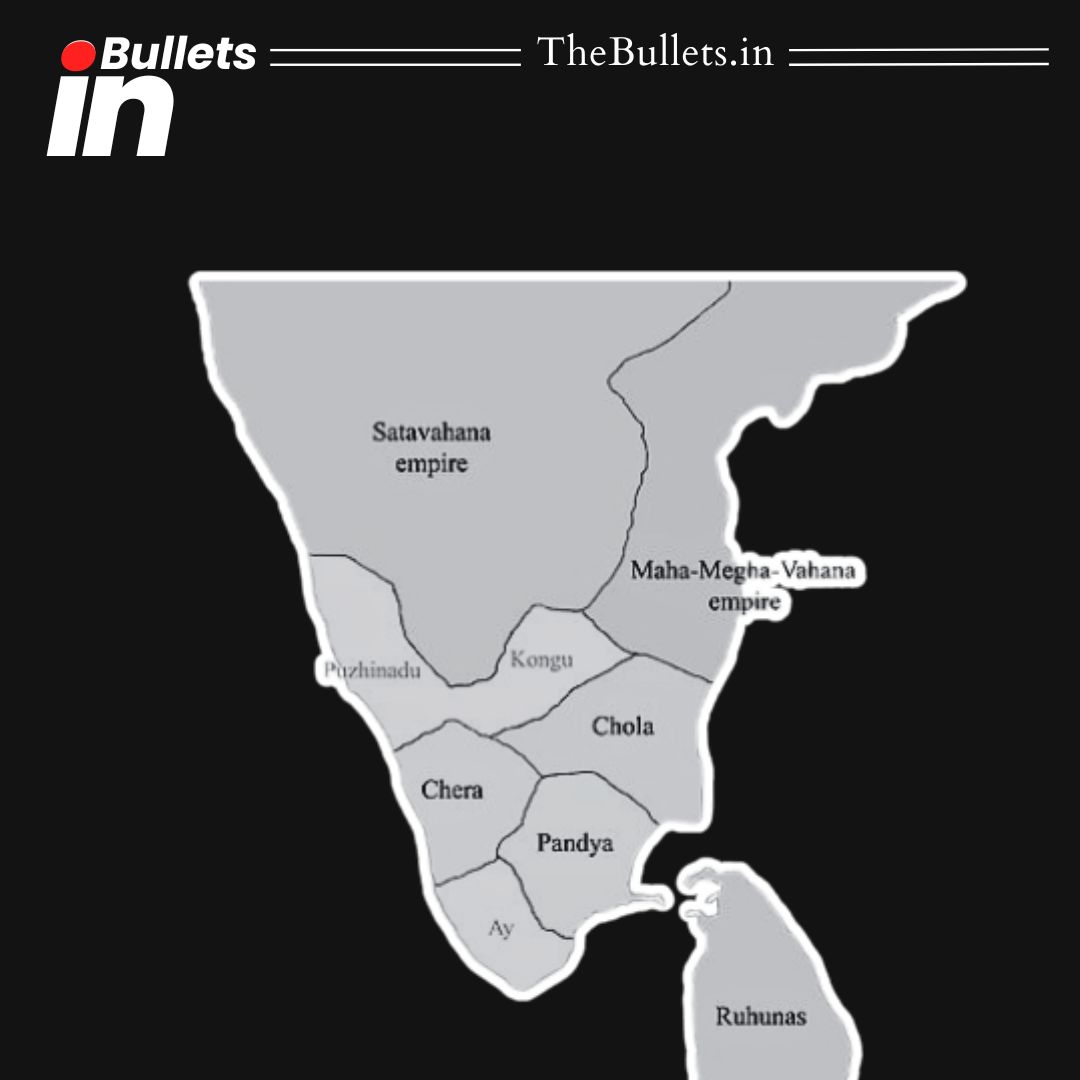


The Sangam Period is a significant era in South Indian history spanning roughly from the 6th century BCE to the 3rd century CE. Named after the literary academies (Sangams) of Tamil poets centered in Madurai, it marks a flourishing period of Tamil literature, trade, and cultural development in ancient Tamil Nadu, Kerala, and parts of Sri Lanka.
BulletsIn
- The Sangam Period is named after three Tamil academies of poets and scholars that thrived under Pandya patronage in Madurai.
- It roughly covers 6th century BCE to 3rd century CE, with the third Sangam being historically best documented.
- Key dynasties were the Cheras (Kerala), Cholas (Tamil Nadu), and Pandyas (Tamil Nadu), each with distinct capitals, emblems, and trade centers.
- Sangam literature (like Tolkappiyam, Ettutogai, Pattuppattu, Silappathikaram) provides rich insights into politics, society, and economy.
- Economy was primarily agrarian with major crops like rice, cotton, pepper; also thriving internal and overseas trade through ports like Puhar and Muziris.
- Polity featured hereditary monarchies assisted by ministers, generals, and spies, with royal emblems symbolizing each dynasty.
- Society was organized based on geography and occupations, with deities worshipped linked to regions (e.g., Murugan in hills, Varuna at coast).
- Religion saw worship of Murugan, Vishnu, Indra, and hero stones commemorated warriors’ valor.
- Women had significant roles with poets among them, and marriage based on love was common; however, practices like sati existed among upper classes.
- Art and culture flourished with poetry, music, dance, and folk performances sponsored by royalty.
- The period declined by 3rd century CE with the Kalabhra invasion, followed by Pallavas and later Pandyas regaining power.



What do you think?
It is nice to know your opinion. Leave a comment.