





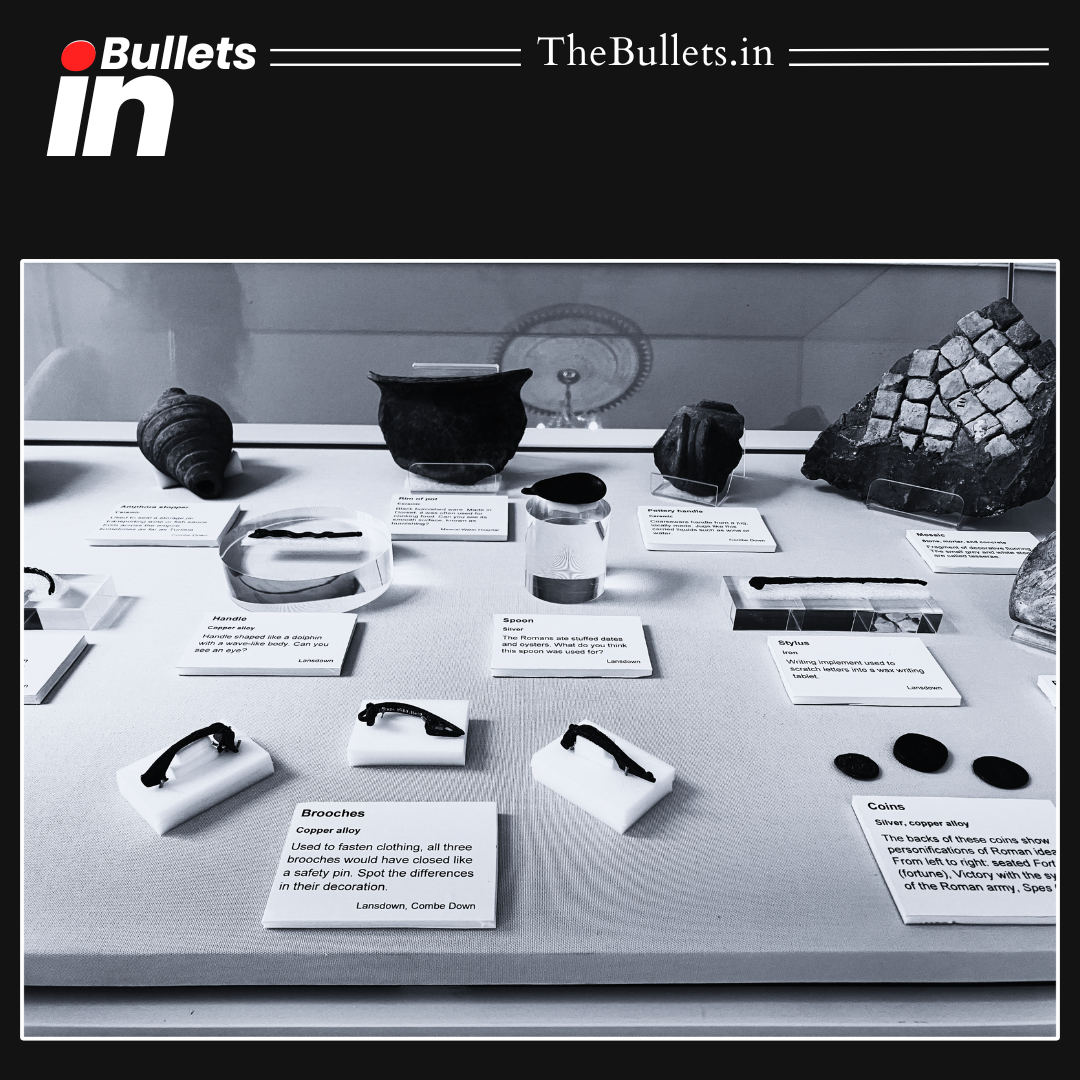


Archaeological excavations beneath Bath Assembly Rooms have uncovered Roman artefacts, expanding evidence of Roman occupation and revealing previously inaccessible historical layers.
BulletsIn
- Archaeologists excavating beneath Bath Assembly Rooms in Somerset uncovered Roman ditches, pottery, coins, glassware, animal bones and roof tiles.
- Almost 60 fragments of Roman pottery were recovered from one ditch, alongside glass vessels, three Roman coins and a limestone tessera.
- A fragment of a Roman military helmet was among the notable discoveries, providing further evidence of military involvement in Bath’s development.
- Archaeologists said the discoveries suggest Roman occupation may have extended beyond the currently visible remains of the ancient city.
- The excavation has raised the possibility that additional Roman remains could survive beneath neighbouring Georgian streets and other inaccessible areas.
- The finds also included 18th-century objects such as a clay pipe and wig curlers, offering evidence about later visitors.
- The discoveries were made during a £20 million refurbishment project at Bath Assembly Rooms, which is scheduled to reopen in 2027.
- The excavation provides a rare opportunity to investigate archaeological deposits beneath a major historic building that were previously inaccessible.
- Researchers said the findings highlight how multiple historical periods can remain preserved beneath Bath’s modern streets and buildings.
- The project combines evidence from Roman and later periods, offering a broader view of Bath’s changing urban history.



What do you think?
It is nice to know your opinion. Leave a comment.