











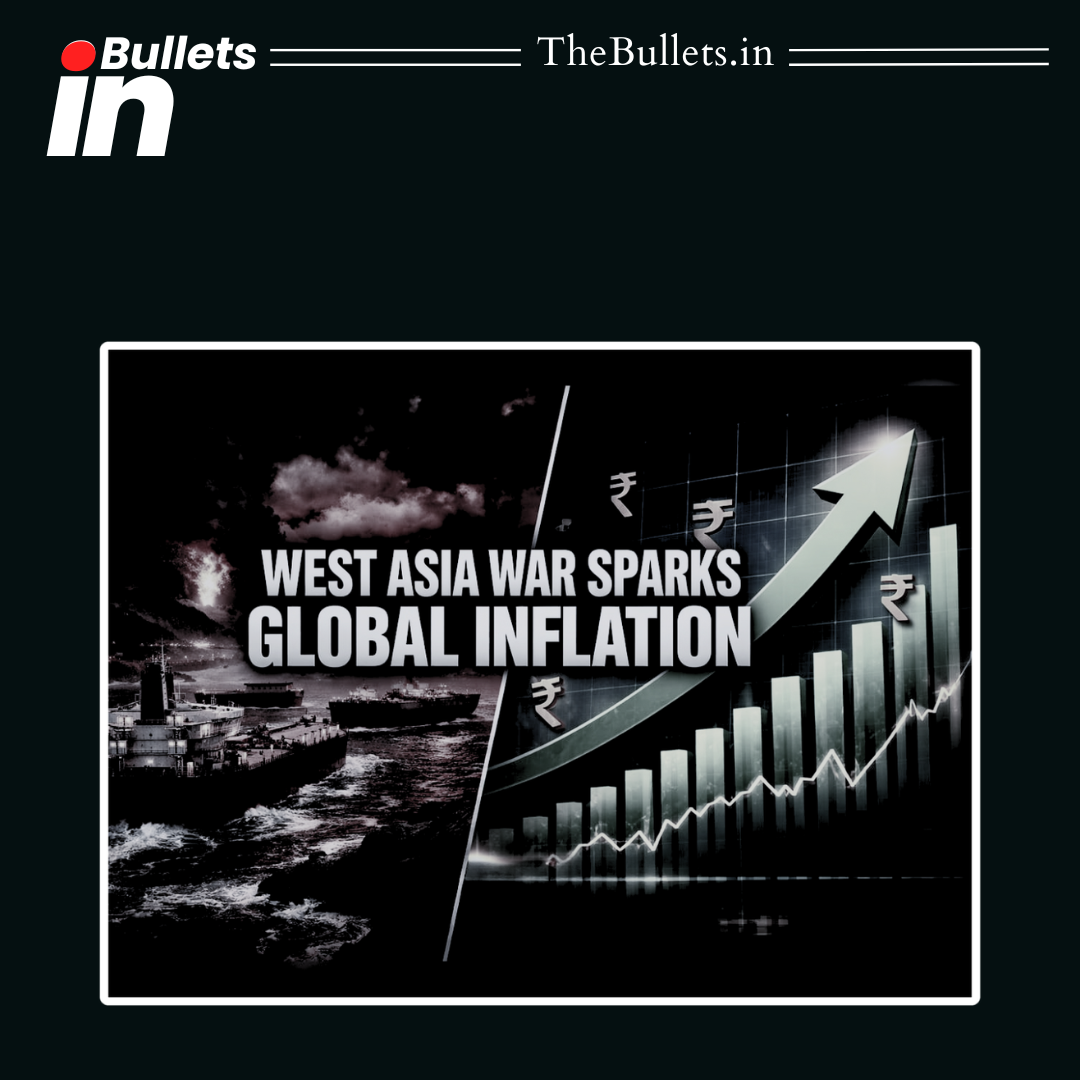


As the war in West Asia continues without a clear end, concerns are growing over its impact on India’s economy, especially through oil prices, inflation, trade and financial stability. The article argues that the government and the Reserve Bank of India need a clear strategy to protect growth, manage price shocks and ensure the economy continues to function smoothly during a prolonged external crisis.
BulletsIn
- The continuing war in West Asia is increasing pressure on India to prepare an economic contingency plan for a prolonged global disruption.
- India is highly vulnerable to such conflicts because of its dependence on imported crude oil, making any sustained rise in oil prices a direct risk to inflation, transport costs and overall economic stability.
- A prolonged conflict can also disrupt shipping routes, trade flows and supply chains, especially in a region that is crucial for India’s energy security and external trade.
- Higher fuel prices can quickly pass through to households and businesses, increasing the cost of living, raising production expenses and weakening consumer demand.
- The government may need to prepare fiscal measures such as fuel tax adjustments, targeted support and supply-side interventions to cushion the impact on ordinary citizens and key sectors.
- The RBI may also need a monetary and liquidity strategy to respond to imported inflation, exchange-rate volatility and possible stress in financial markets if the crisis deepens.
- Pressure on the rupee, current account deficit and foreign exchange outflows could increase if crude prices remain elevated for a long period.
- The article stresses that waiting for conditions to worsen could be costly, so coordinated action by the government and RBI is necessary to maintain confidence and reduce economic disruption.



What do you think?
It is nice to know your opinion. Leave a comment.