











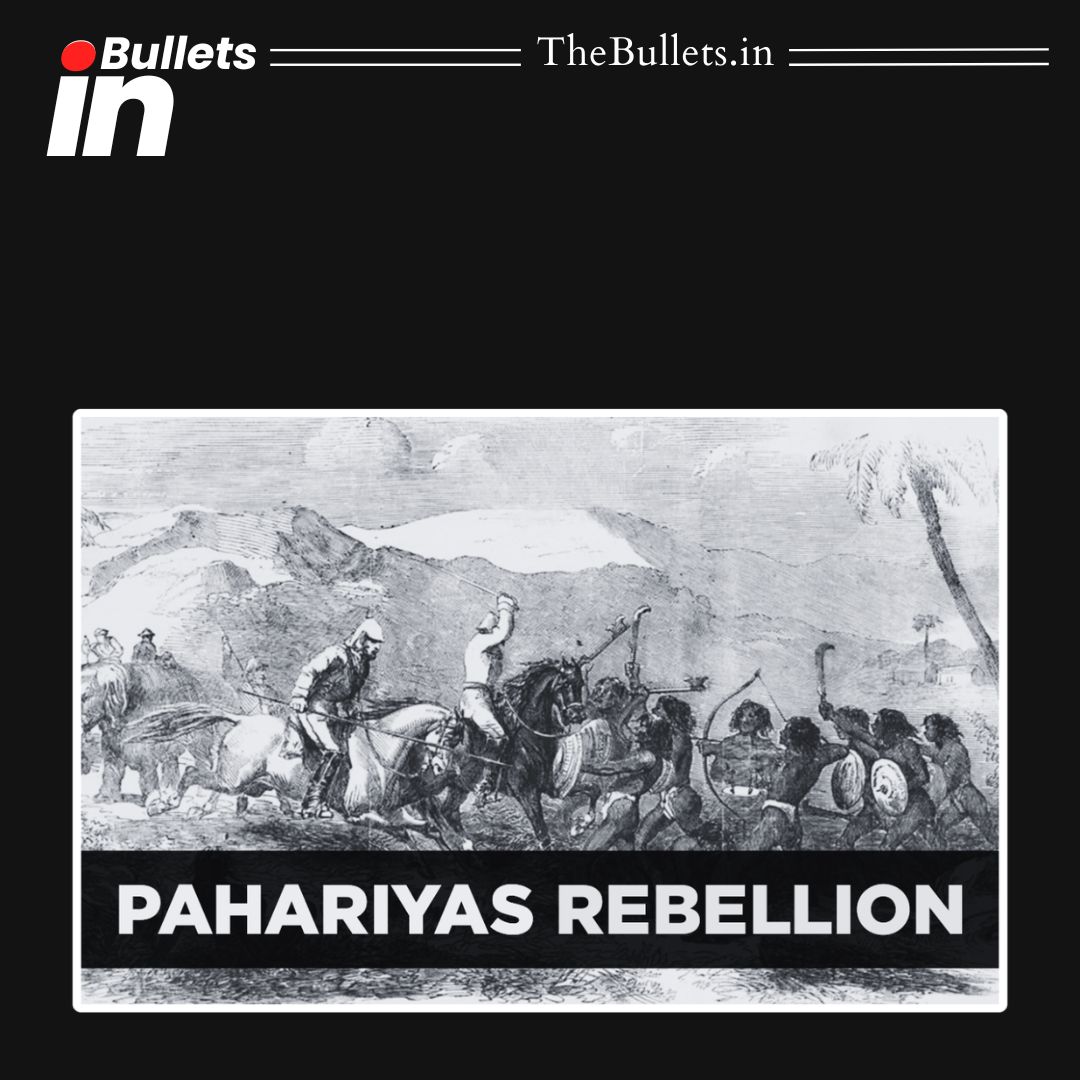


The Pahariyas Rebellion of the late 18th century marked one of the earliest instances of organised tribal resistance against British expansion in eastern India. Centered around the Rajmahal Hills, the uprising reflected tensions over autonomy, livelihood, and colonial administrative control.
BulletsIn
• Raja Jagannath led the Pahariyas rebellion in 1778 against expanding British authority.
• Rebellion emerged in Rajmahal Hills, traditional homeland of Pahariya tribes.
• Pahariyas historically maintained autonomy due to geographic isolation and limited external interference.
• Community relied on shifting cultivation, hunting, and forest-based subsistence practices.
• Conflict intensified as British East India Company expanded administrative and territorial control.
• Frequent raids reflected economic distress, famine pressures, and assertion of tribal dominance.
• Multiple uprisings recorded across decades, highlighting persistent resistance patterns.
• British responses included military campaigns and administrative restructuring of tribal territories.
• Region later designated as Damin-e-Koh under colonial governance framework.
• Rebellion regarded as significant precursor to later tribal movements in colonial India.



What do you think?
It is nice to know your opinion. Leave a comment.