











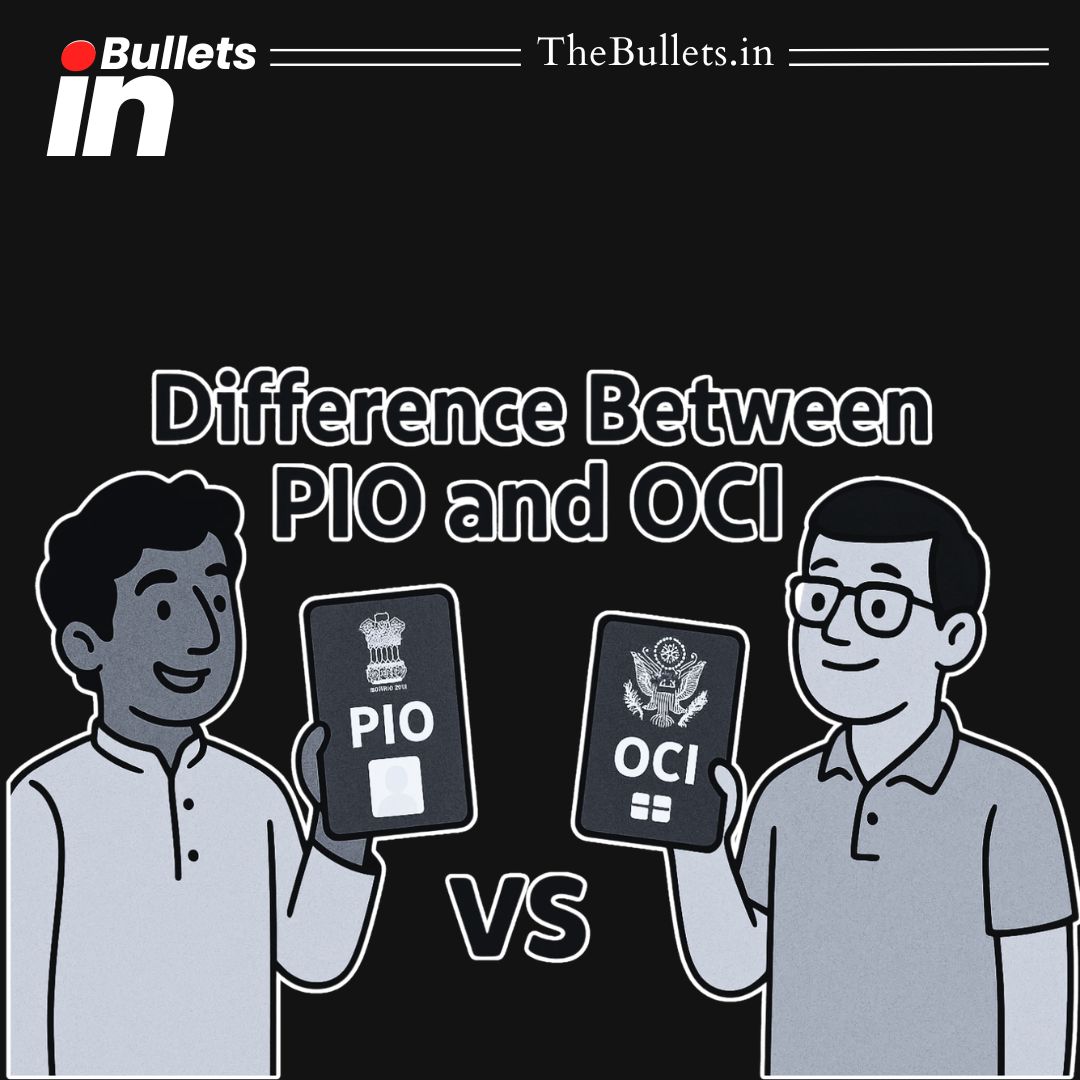


NRI, PIO and OCI categories define overseas Indians with varying citizenship status, rights, and privileges, playing a crucial role in strengthening India’s global connections and economic contributions.
BulletsIn
- Non-Resident Indians (NRIs) are Indian citizens living abroad for work, business, or education, holding Indian passports and enjoying full rights similar to resident citizens except certain regulatory conditions.
- Persons of Indian Origin (PIOs) are foreign citizens with Indian ancestry who do not hold Indian citizenship but maintain cultural and historical connections with India.
- Overseas Citizen of India (OCI) cardholders are foreign nationals of Indian origin registered under the Citizenship Act, 1955, with lifelong visa-free travel and multiple entry privileges to India.
- NRIs do not require visas to visit India, while PIOs need visas, and OCI cardholders enjoy lifelong visa-free travel along with exemption from police registration requirements.
- OCI cardholders get parity with NRIs in economic, financial, and educational matters but are restricted from purchasing agricultural or plantation land in India.
- PIO status has been merged with OCI status, simplifying diaspora engagement policies and providing broader benefits under a single category for overseas Indians.
- OCI registration can be cancelled by the government on grounds such as fraud, criminal conviction, or threats to India’s sovereignty and national security.
- These categories collectively strengthen India’s diaspora engagement, contributing significantly to remittances, global trade, cultural exchange, and India’s international influence.



What do you think?
It is nice to know your opinion. Leave a comment.