





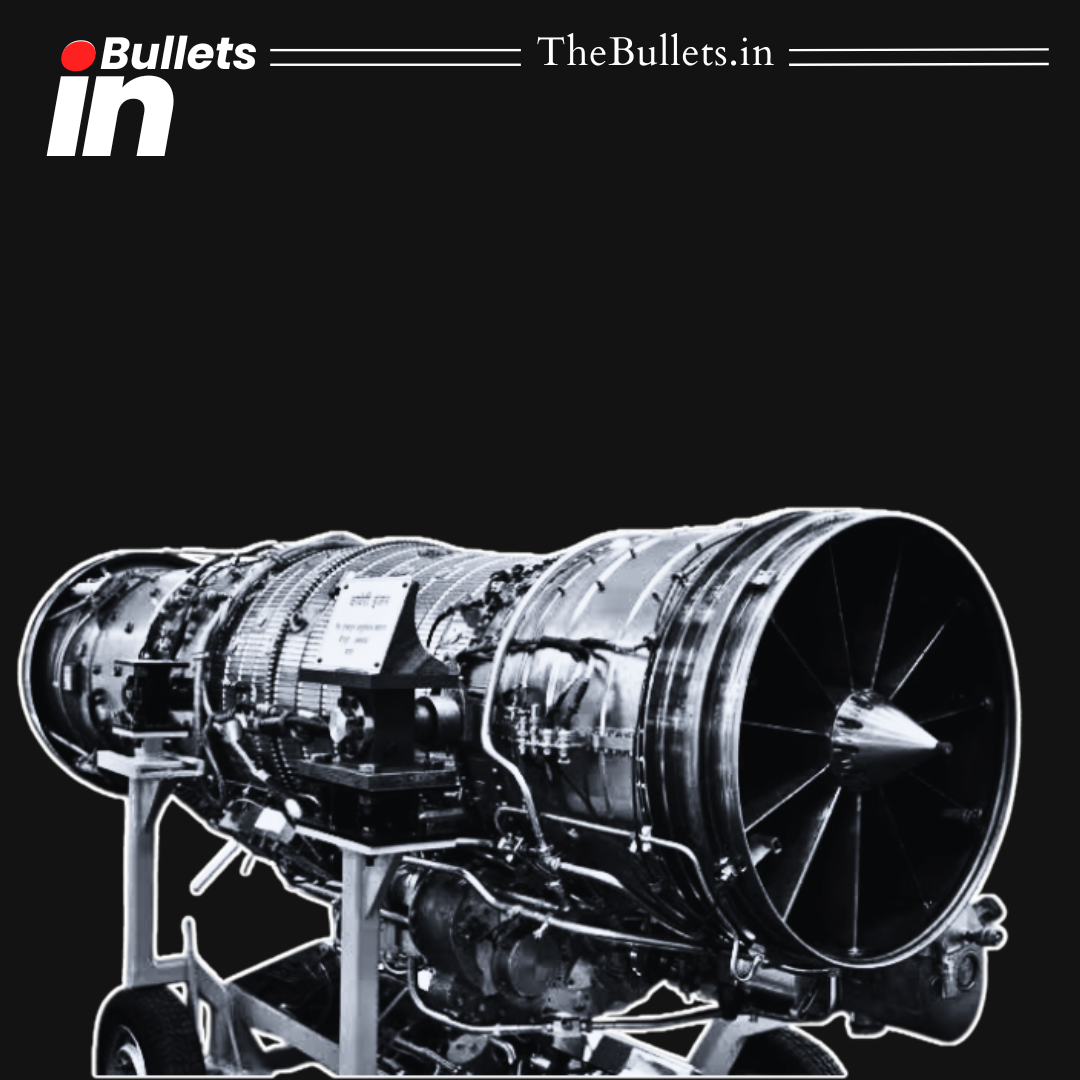


The Defence Ministry's annual report confirms the Kaveri Dry Engine as the powerplant for India's unmanned combat aircraft, even as certification of the wider programme faces delay.
BulletsIn
- The Ministry of Defence Annual Report 2025-26 confirms the Kaveri Dry Engine as the designated powerplant for India's Unmanned Combat Air Vehicles.
- The Kaveri is an indigenous turbofan programme run by the Gas Turbine Research Establishment, a DRDO laboratory based in Bengaluru.
- The Dry Engine is a non-afterburning variant optimised for UCAV use, with manufacturing under way through Indian industry partners.
- The First Engine to Test was integrated in July 2025, and uninstalled performance and operability testing has been completed successfully.
- The engine is being rebuilt for installed-condition demonstrations, including the staircase test that validates thrust response across incremental power settings.
- Godrej Aerospace delivered the first production-standard unit, designated D1, to GTRE in September 2025 for baseline validation.
- Later D-series variants are undergoing 150-hour endurance and altitude trials as part of a structured test roadmap.
- Cumulative testing exceeds 140 hours, including about 70 hours of ground runs in Bangalore and 75 hours of altitude testing in Russia.
- The dry engine delivers about 49-52 kN of thrust, above the 46 kN benchmark reported for the Robotic Stealth Precision Attack UCAV.
- Defence Minister Rajnath Singh witnessed a full-afterburner test of the Kaveri at GTRE on February 16, 2026, a step toward a fighter-class variant informally called Kaveri 2.0.
- The National Aero Engine Test Complex in Karnataka is being readied to support indigenous validation and reduce reliance on foreign test facilities.
- Certification of the derivative engine, earlier targeted for the end of 2026, is reported likely to move into 2027 as endurance and qualification work continues.



What do you think?
It is nice to know your opinion. Leave a comment.