





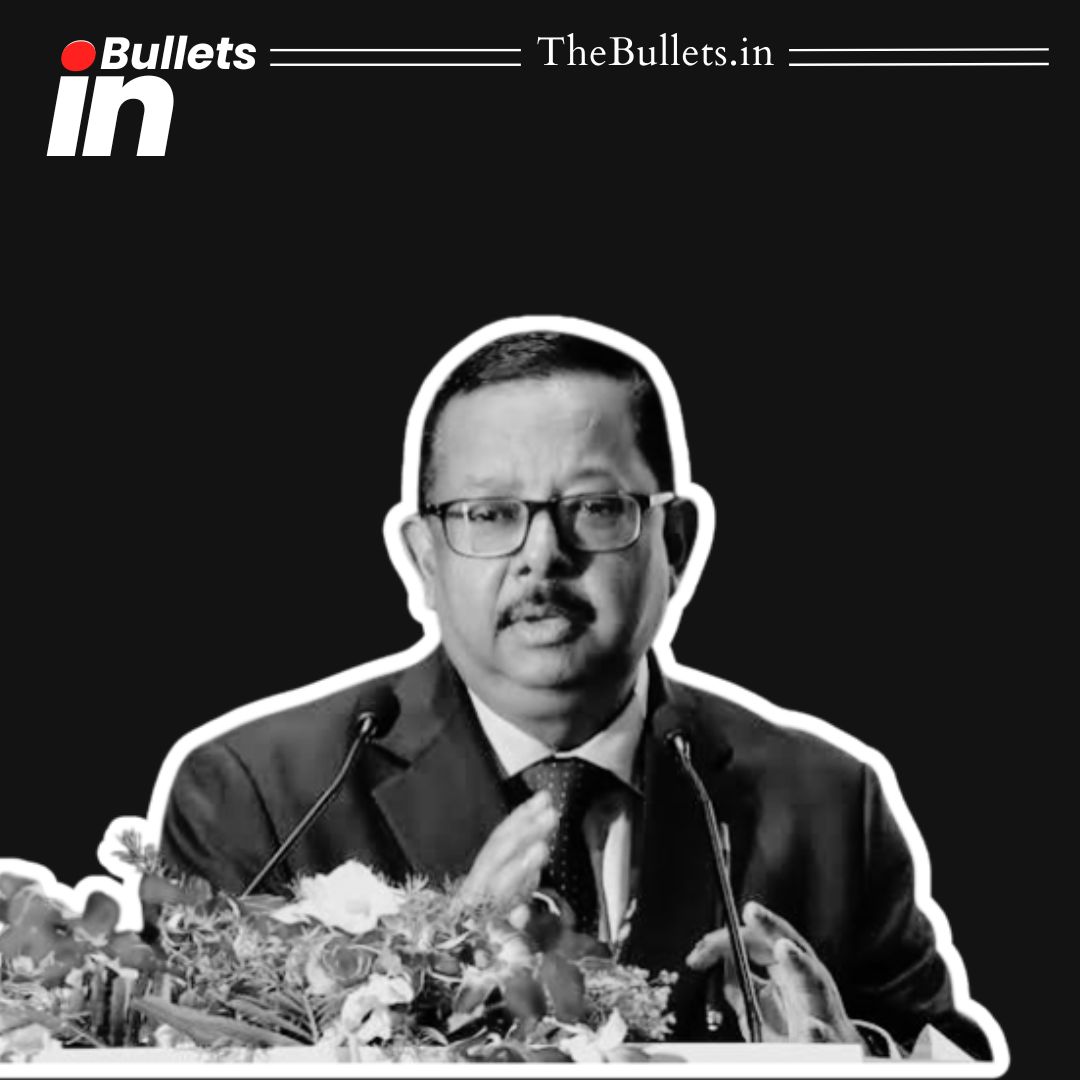


A sitting Supreme Court judge's comments on mass voter deletions have prompted questions over how far judges may speak on matters likely to reach their own court.
BulletsIn
- Supreme Court Justice Ujjal Bhuyan spoke on voter deletions in a valedictory address at a moot court competition at NALSAR University of Law on October 4.
- He said the right to vote is constitutional and integral to the basic structure, and that a process disenfranchising millions would be intrinsically arbitrary.
- He argued such a process would violate Articles 14 and 326, and cited Section 22 of the Representation of the People Act, 1950, on notice and hearing before deletion.
- Former Chief Justice of India B R Gavai objected that judicial propriety does not allow a sitting judge to comment on a matter that is sub judice.
- Former Delhi High Court judges S N Dhingra and R S Sodhi raised similar concerns about the remarks.
- Litigation over the West Bengal SIR was pending before the Court at the time, with more than 22 lakh deleted voters seeking restoration.
- The Restatement of Values of Judicial Life, adopted by the Supreme Court's Full Court on May 7, 1997, bars judges from public debate on matters pending or likely to arise before them.
- The Restatement carries no sanction of its own, though courts have relied on it in judgments.
- On May 27, 2026, a Bench headed by CJI Surya Kant upheld the Bihar SIR, holding the right to vote is constitutional but neither absolute nor unregulated.
- That ruling noted Rule 21A of the Registration of Electors Rules, 1960, requires notice, inquiry, hearing and a reasoned decision before deletion.
- The Bangalore Principles of Judicial Conduct restrain comment that could affect a pending or prospective proceeding, while allowing judges to write and teach on law.



What do you think?
It is nice to know your opinion. Leave a comment.