





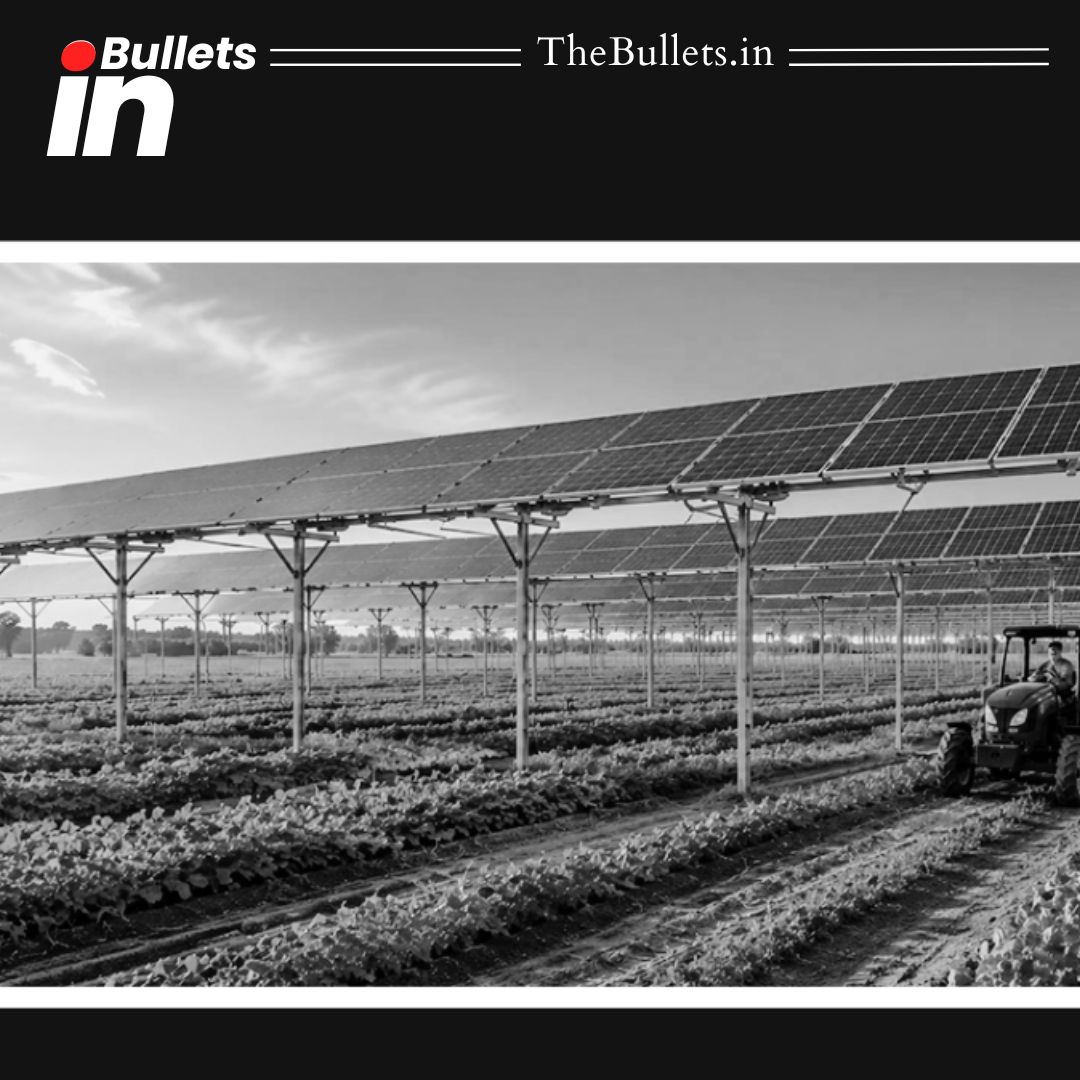


The government will introduce agrivoltaics in the second phase of PM-KUSUM, pairing solar power with cultivation, while stressing that small farmers must not lose out.
BulletsIn
- The government announced plans to introduce agri-photovoltaics under the second phase of PM-KUSUM, its flagship scheme to solarise irrigation.
- The announcement came at the Agrivoltaics World Conference 2026, themed Powering the Global South, in New Delhi on October 25.
- PM-KUSUM stands for Pradhan Mantri Kisan Urja Suraksha evam Utthaan Mahabhiyan.
- Agrivoltaics places solar panels on elevated structures over farmland so crops can be grown underneath.
- MNRE says panels are installed 3.5 to 4 metres above ground, enough for machinery to move through.
- Around 30 percent of India's 160 million hectares of cropland could be suitable, with potential capacity of 1 to 2 terawatts.
- The approach is expected to help states with less non-agricultural land deploy solar without compromising food security.
- Government assessments find it suitable for fruits and leafy vegetables but not for crops such as rice and sugarcane.
- Projects cost 25 to 30 percent more than conventional ground-mounted solar because of the added civil and structural work.
- Most projects in India are still at the pilot stage.
- Agriculture Minister Shivraj Singh Chouhan noted that over 85 percent of farmers are small and marginal, with an average holding of 0.96 hectares.
- He said policy must ensure farmers keep control of their land and do not suffer a decline in crop production.



What do you think?
It is nice to know your opinion. Leave a comment.