











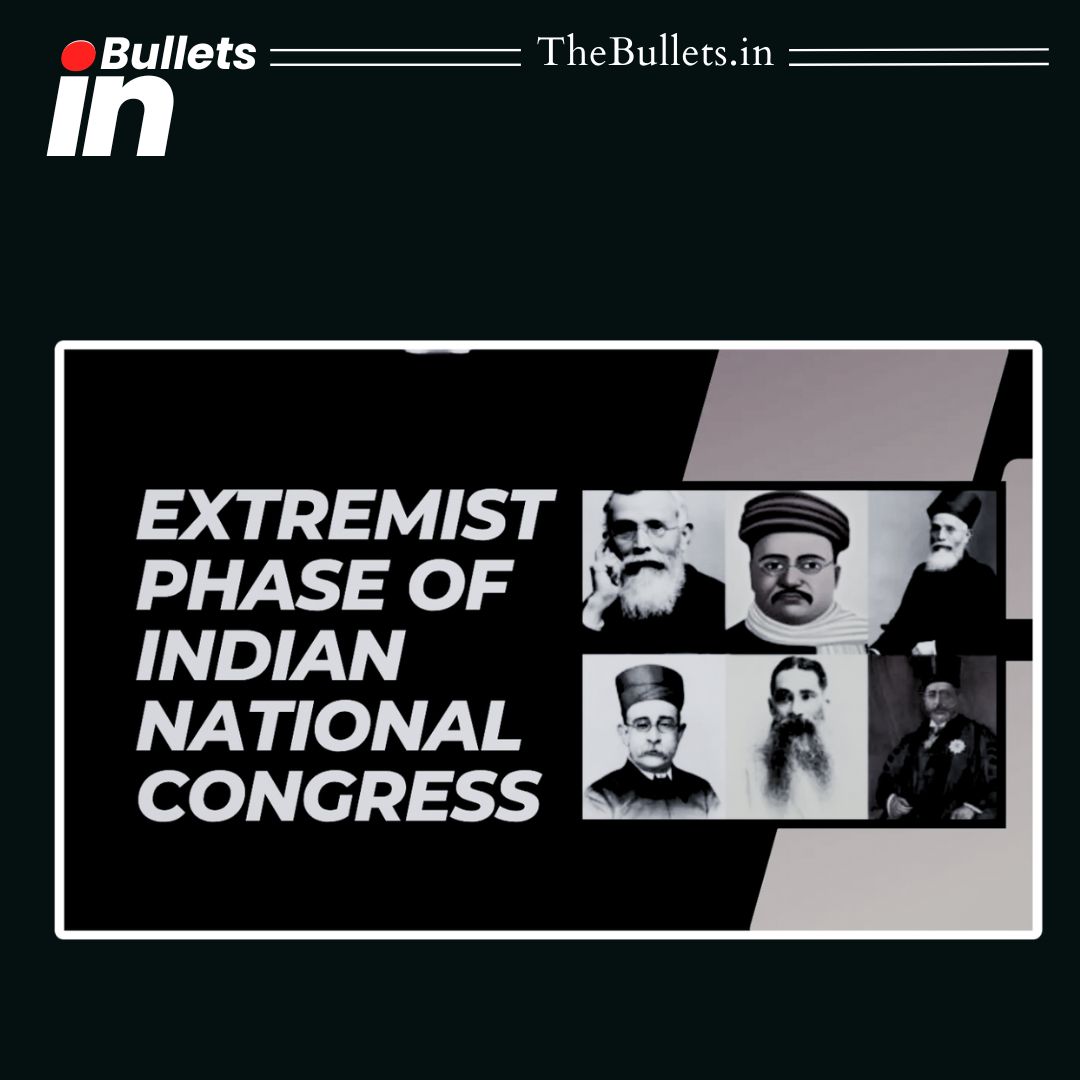


The early 20th century witnessed the rise of extremist leaders in Congress who rejected moderate methods and pushed for Swaraj through mass movements and strong resistance.
BulletsIn
- The Extremist phase emerged in the early 1900s as younger leaders grew dissatisfied with moderate approaches and began advocating assertive and direct political action.
- The Partition of Bengal in 1905 acted as a major turning point, intensifying nationalist sentiments and accelerating the rise of extremist ideology across India.
- Extremists promoted ideas like Swadeshi, boycott of foreign goods, national education, and passive resistance to weaken British control and build self-reliance.
- Prominent leaders like Bal Gangadhar Tilak, Lala Lajpat Rai, Bipin Chandra Pal, and Aurobindo Ghose led mass movements and inspired strong nationalist feelings.
- Social and religious reform movements contributed to political awakening, encouraging pride in Indian culture and strengthening the foundation of radical nationalism.
- Economic hardships, famines, and British administrative failures created widespread dissatisfaction, pushing people to support more aggressive methods against colonial rule.
- The ideological clash between Moderates and Extremists led to the Surat Split in 1907, resulting in a temporary weakening of the Congress.
- Despite setbacks, the Extremist phase played a crucial role in mobilising masses and laying the groundwork for future revolutionary and independence movements.



What do you think?
It is nice to know your opinion. Leave a comment.