











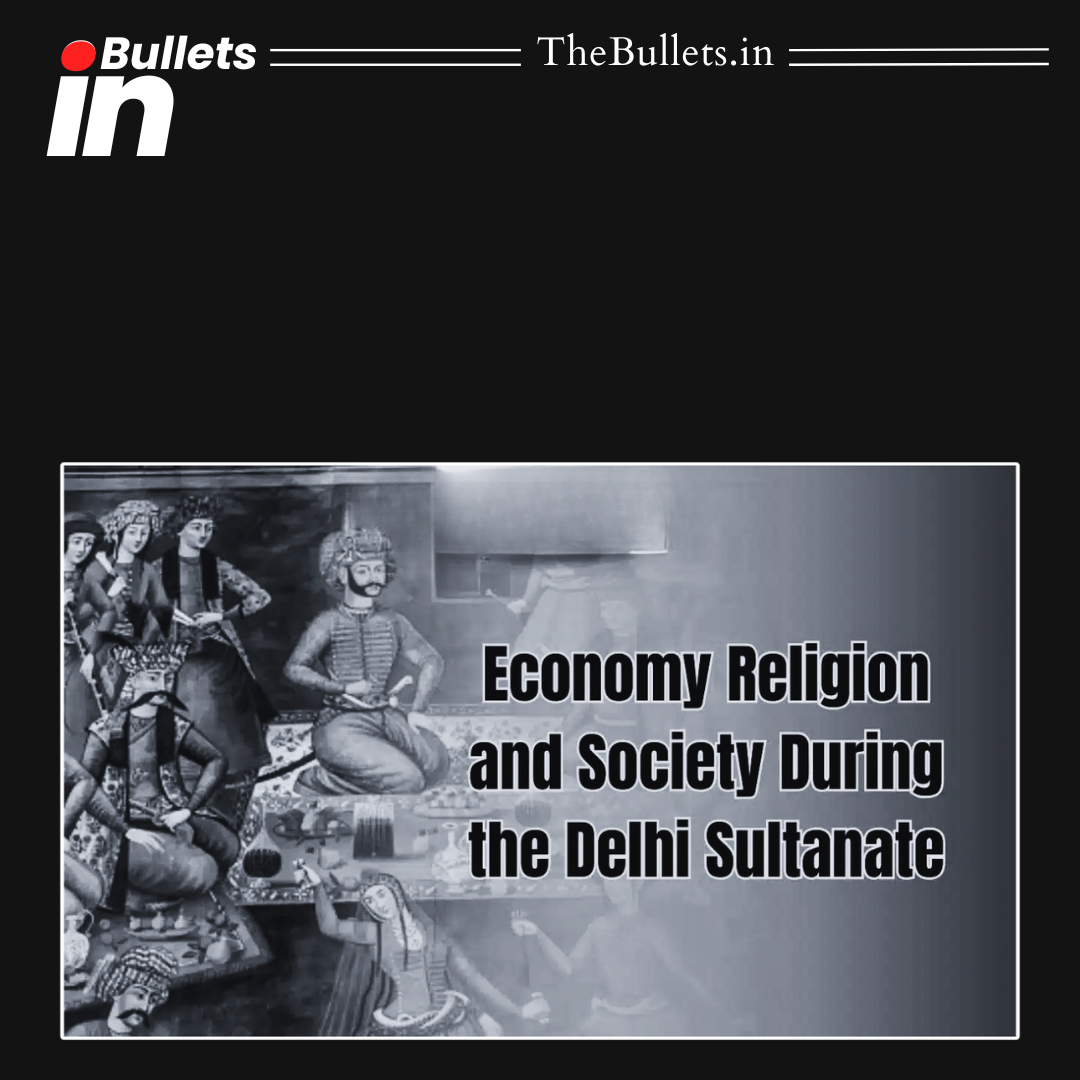


Delhi Sultanate period witnessed important developments in agriculture, revenue administration, trade, currency, social structure and religious institutions, shaping medieval Indian society and governance.
BulletsIn
- Economy was predominantly agrarian, and land revenue was the main source of state income.
- Iqta System was used for revenue collection and administrative control.
- Khalisa lands were directly administered by the Sultan’s treasury.
- Kharaj was the principal land tax imposed on agricultural produce.
- Alauddin Khilji introduced land measurement and direct revenue collection reforms.
- Muhammad bin Tughlaq promoted agriculture through loans known as Sondhar.
- Iltutmish standardized the currency system by introducing Tanka and Jital coins.
- Muhammad bin Tughlaq’s Token Currency Experiment ultimately failed due to widespread forgery.
- Trade flourished through inland routes as well as maritime links with West and Southeast Asia.
- Major imports included horses, gold and silver, while textiles and grains were major exports.
- Caste remained the dominant basis of social hierarchy during the Sultanate period.
- Women generally occupied a subordinate position, and practices like Purdah, Sati and Jauhar existed.
- Slavery was an important institution, with slaves employed in domestic, military and administrative roles.
- The Ulema enjoyed significant influence in religious, legal and administrative affairs.
- The Delhi Sultanate witnessed a blend of Indian and Islamic traditions in social and cultural life.



What do you think?
It is nice to know your opinion. Leave a comment.