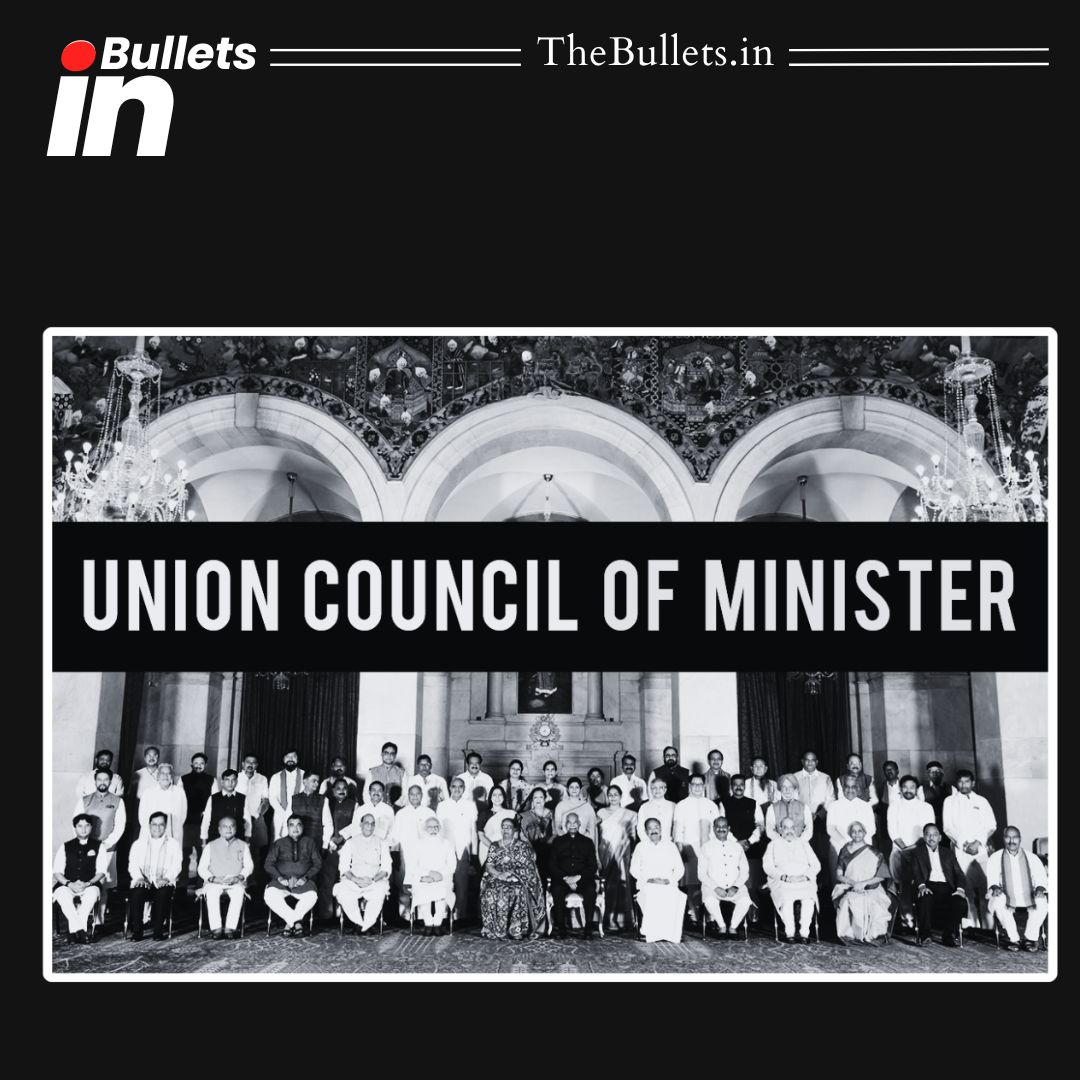








Council of Ministers in India Explained Structure, Role and Functions | BulletsIn
8
The Council of Ministers is the real executive authority in India’s parliamentary system, headed by the Prime Minister, responsible for policy making, administration, and aiding the President in governance as per constitutional provisions.

BulletsIn
The Council of Ministers functions as the real executive authority in India, exercising powers of administration, governance, and national policy implementation under the parliamentary system.
It is headed by the Prime Minister, who leads decision-making processes and coordinates among different ministries for smooth functioning of the government system.
Ministers are appointed by the President on the advice of the Prime Minister, ensuring political accountability and structured executive leadership within the constitutional framework.
The Council collectively advises the President and is responsible for assisting in the exercise of executive powers across national administration and governance.
It includes Cabinet Ministers, Ministers of State, and Deputy Ministers, forming a hierarchical structure for efficient distribution of responsibilities and governance functions.
The principle of collective responsibility ensures that all ministers are accountable to the Lok Sabha for decisions and policies of the government.
The Council plays a key role in law-making by introducing bills, managing parliamentary business, and ensuring execution of approved policies effectively.
What do you think?
It is nice to know your opinion. Leave a comment.