











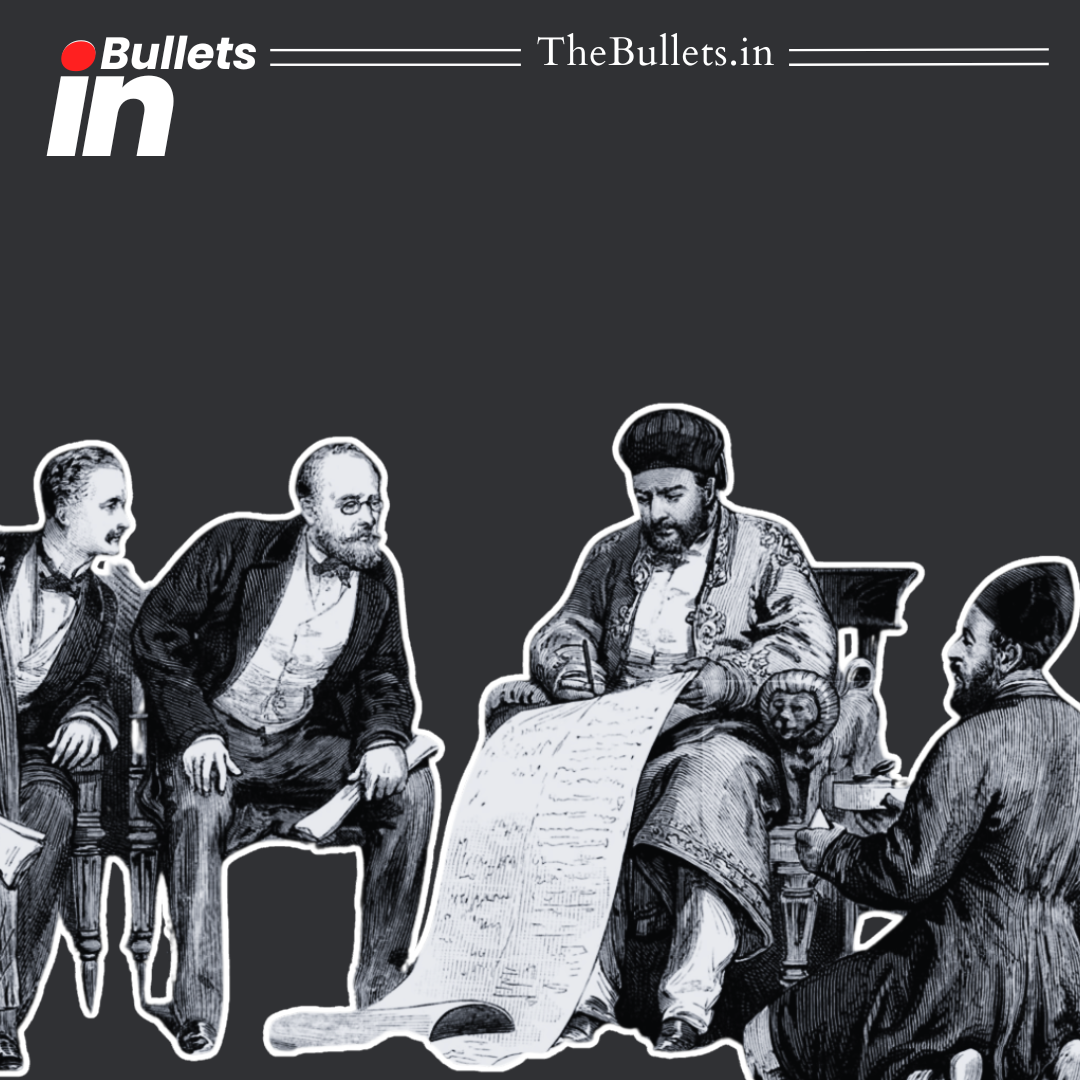


The Anglo-Afghan Wars reflected Britain’s efforts to secure India’s northwestern frontier against Russian influence, shaping Afghanistan’s role as a strategic buffer state in South Asia.
BulletsIn
- The Anglo-Afghan Wars were fought between Britain and Afghanistan during the 19th and early 20th centuries to counter growing Russian influence in Central Asia.
- Lord Auckland introduced the “Forward Policy” to establish a pro-British government in Afghanistan and secure India’s northwest frontier.
- The Tripartite Treaty of 1838 was signed between the British East India Company, Maharaja Ranjit Singh and Shah Shuja to restore Shah Shuja to the Afghan throne.
- The First Anglo-Afghan War (1839-1842) ended in a major British defeat after Afghan uprisings forced British troops to retreat from Kabul.
- The Second Anglo-Afghan War (1878-1880) resulted in the Treaty of Gandamak, which gave Britain control over Afghanistan’s foreign affairs.
- Lord John Lawrence later adopted a policy of strategic non-intervention, while Lord Lytton followed a more assertive frontier policy against Russian expansion.
- The Durand Line Agreement of 1893 established the border between British India and Afghanistan, influencing regional geopolitics even today.
- The Third Anglo-Afghan War (1919) ended with the Treaty of Rawalpindi, granting Afghanistan full control over its foreign policy and independence from British influence.



What do you think?
It is nice to know your opinion. Leave a comment.