











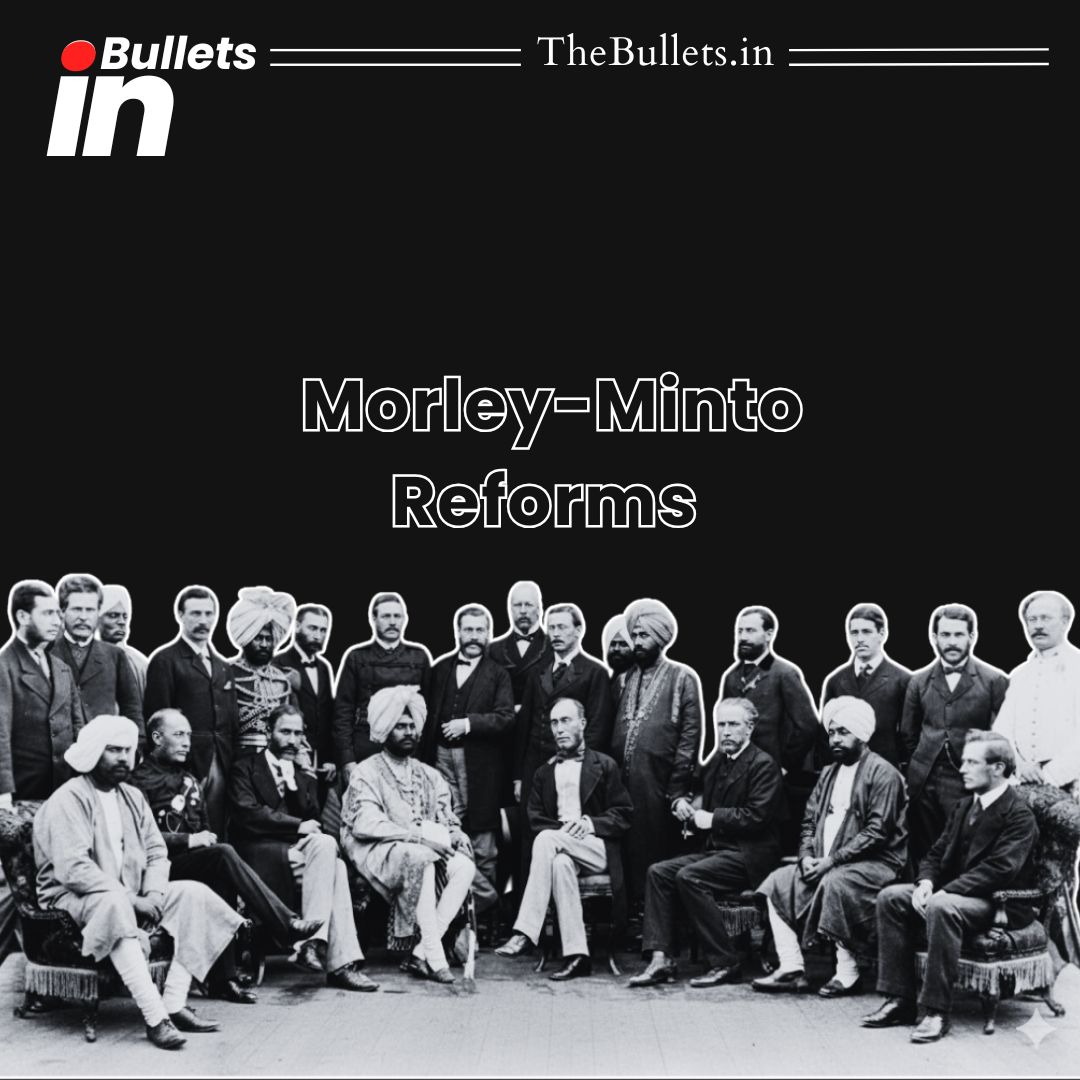


The British Parliament passed the Morley-Minto Reforms in 1909 to expand Indian participation in administration. However, the reforms also introduced separate electorates for Muslims, marking a major shift in Indian politics.
BulletsIn
- Morley-Minto Reforms passed as the Indian Councils Act, 1909.
- Framed by John Morley and Lord Minto to reform India’s legislative system.
- Aimed to increase Indian representation in administration and councils.
- Triggered by Congress demand for reforms and Bengal’s unrest after partition.
- Introduced the separate electorate system for Muslims for the first time.
- Muslims could now elect their own representatives — a divisive political step.
- Legislative councils expanded in both provincial and central levels.
- Indians allowed to discuss budgets, pass resolutions, and question executives.
- Satyendra P. Sinha became the first Indian in Viceroy’s Executive Council.
- Though participation rose, powers of Indian members remained limited.
- Critics said it deepened communal division between Hindus and Muslims.



What do you think?
It is nice to know your opinion. Leave a comment.