











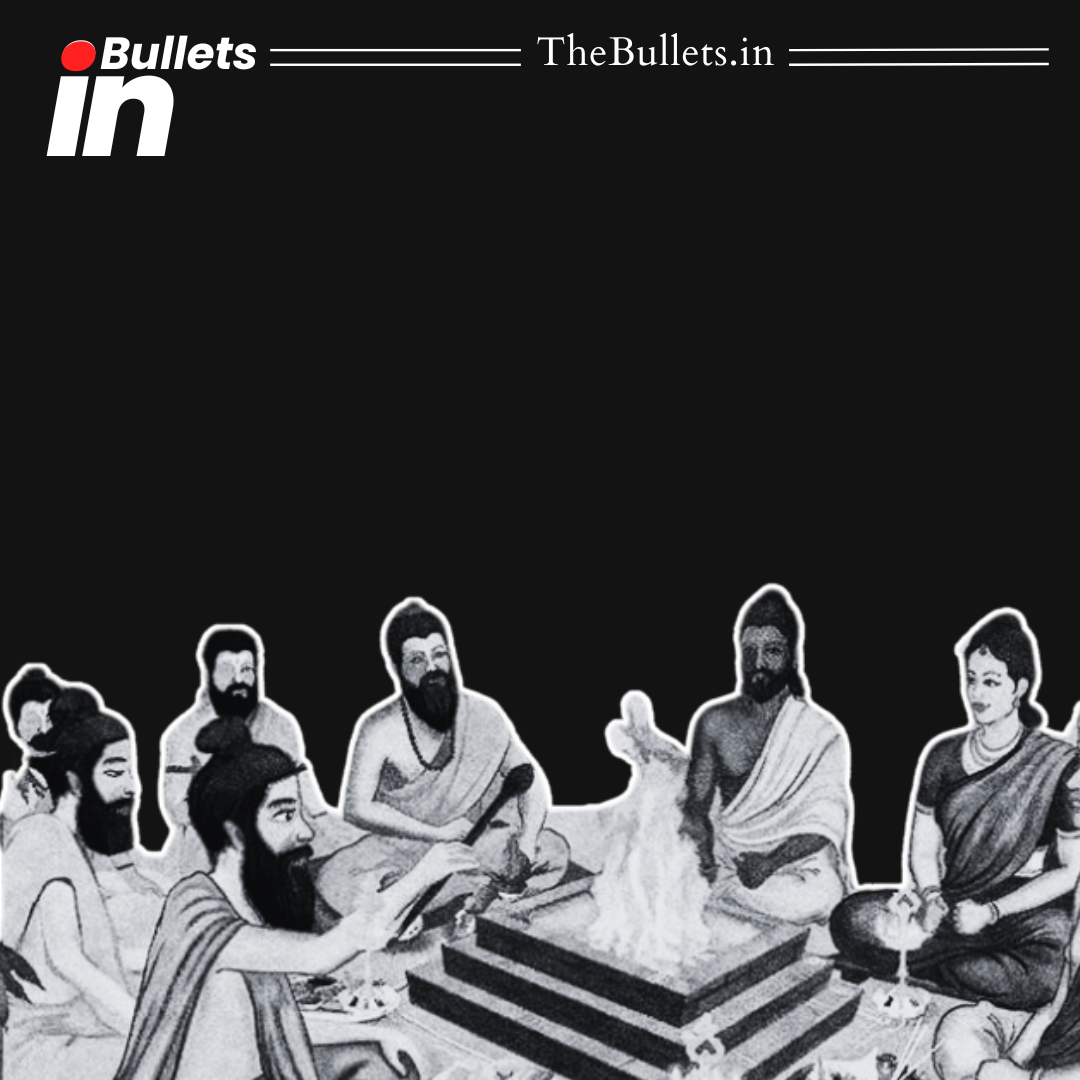


The Rig Vedic Period (1500 BC – 1000 BC) is a significant era in ancient Indian history, during which the Vedic culture developed. The period is marked by the creation of the Rig Veda, one of the oldest texts in Indo-European languages, and the establishment of a society based on religious rituals, social structures, and economic practices.
BulletsIn
- The Rig Vedic Period spanned from 1500 BC to 1000 BC.
- The Rig Veda, composed of 10,600 verses and 1,028 hymns, is the oldest Indo-European text.
- The period is characterized by a society divided into four varnas (social classes).
- Main deities included Indra (thunder), Agni (fire), Varuna (rain), and Vayu (wind).
- Political structure led by the Rajan; governance was decentralized, with groups like Kula, Grama, and Vishu.
- Social structure allowed women to participate in Sabhas and Samitis, with some women writers.
- Economy based on pastoralism, livestock farming, and trade; barter system used with gold coins for large deals.
- Religious practices involved worship of natural elements like earth, fire, and rain, with no idol worship.
- The Rig Veda mentions the concept of the varna system, which later influenced caste division in India.
- Trade and craftsmanship were significant, with carpenters, blacksmiths, goldsmiths, and potters being prominent.



What do you think?
It is nice to know your opinion. Leave a comment.