





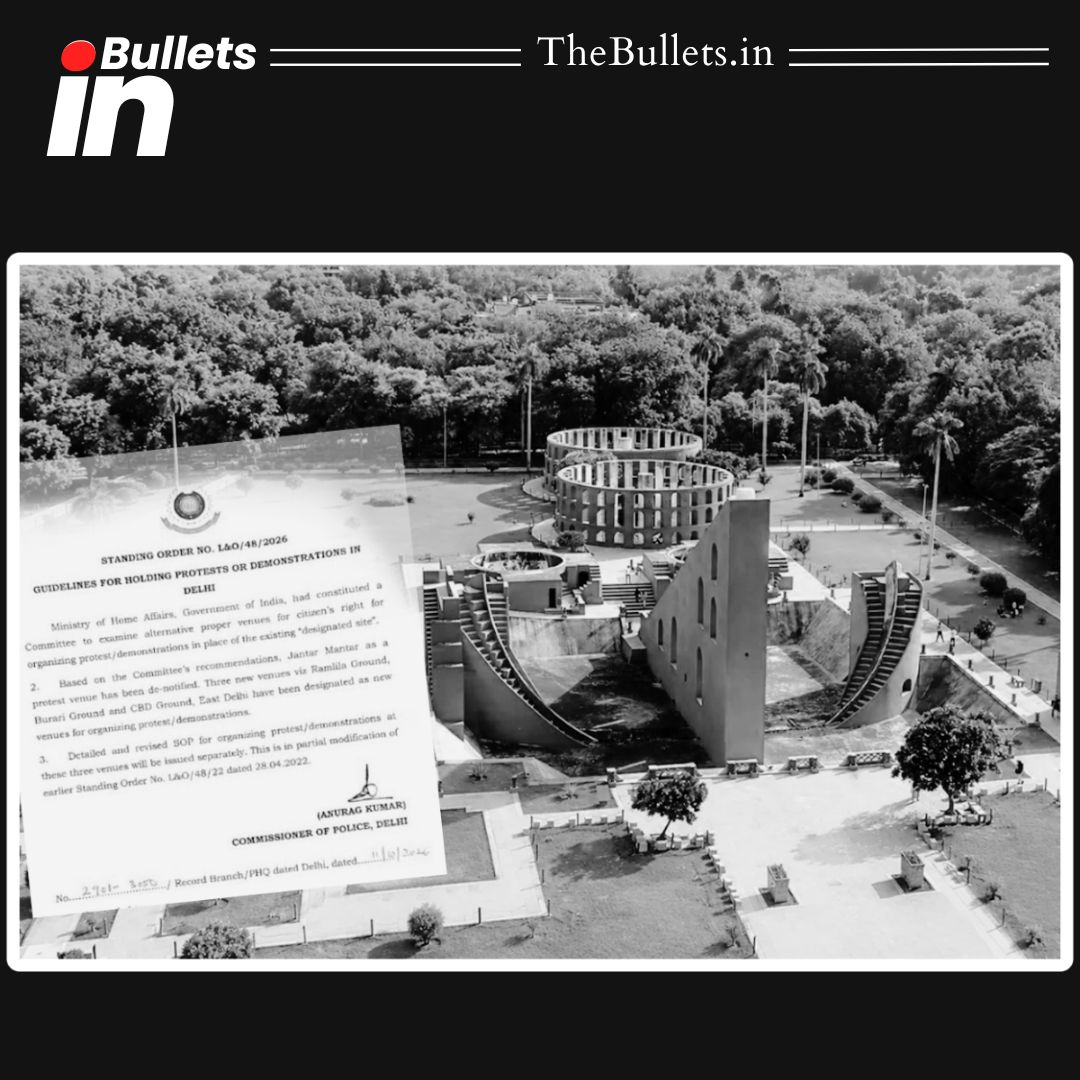


The cancellation of Jantar Mantar's status as a designated protest site during protests over voter exclusions has revived questions on how far the state can regulate peaceful assembly.
BulletsIn
- Delhi's Jantar Mantar has been denotified as a designated protest site, following protests over the exclusion of voters in the Special Intensive Revision of electoral rolls.
- Protesters have demanded the resignation of Chief Election Commissioner Gyanesh Kumar.
- Section 163 of the Bharatiya Nagarik Suraksha Sanhita, 2023, which allows preventive orders in cases of potential danger or disturbance, was invoked in the capital just before the protests.
- On October 9, the Supreme Court, hearing petitions on a blanket transport ban affecting access to Delhi, directed authorities to designate suitable alternative protest sites.
- The Additional Solicitor General told the Delhi High Court that the denotification followed the Supreme Court's earlier order.
- The Supreme Court has passed no interim orders in the cases challenging the denotification.
- Article 19(1)(b) guarantees citizens the right to assemble peaceably without arms, subject to reasonable restrictions under Article 19(3).
- In Himmat Lal v Commissioner of Police (1972), the Court held that reasonable regulation of assembly differs from arbitrary exclusion, and the state cannot close all public places to meetings.
- Concerns have been raised over prolonged detentions, limited access to lawyers and deportation notices to Overseas Citizens of India joining the protests.
- Critics argue that moving protests to distant alternative sites can weaken the visibility and effect of the right to assemble.



What do you think?
It is nice to know your opinion. Leave a comment.