











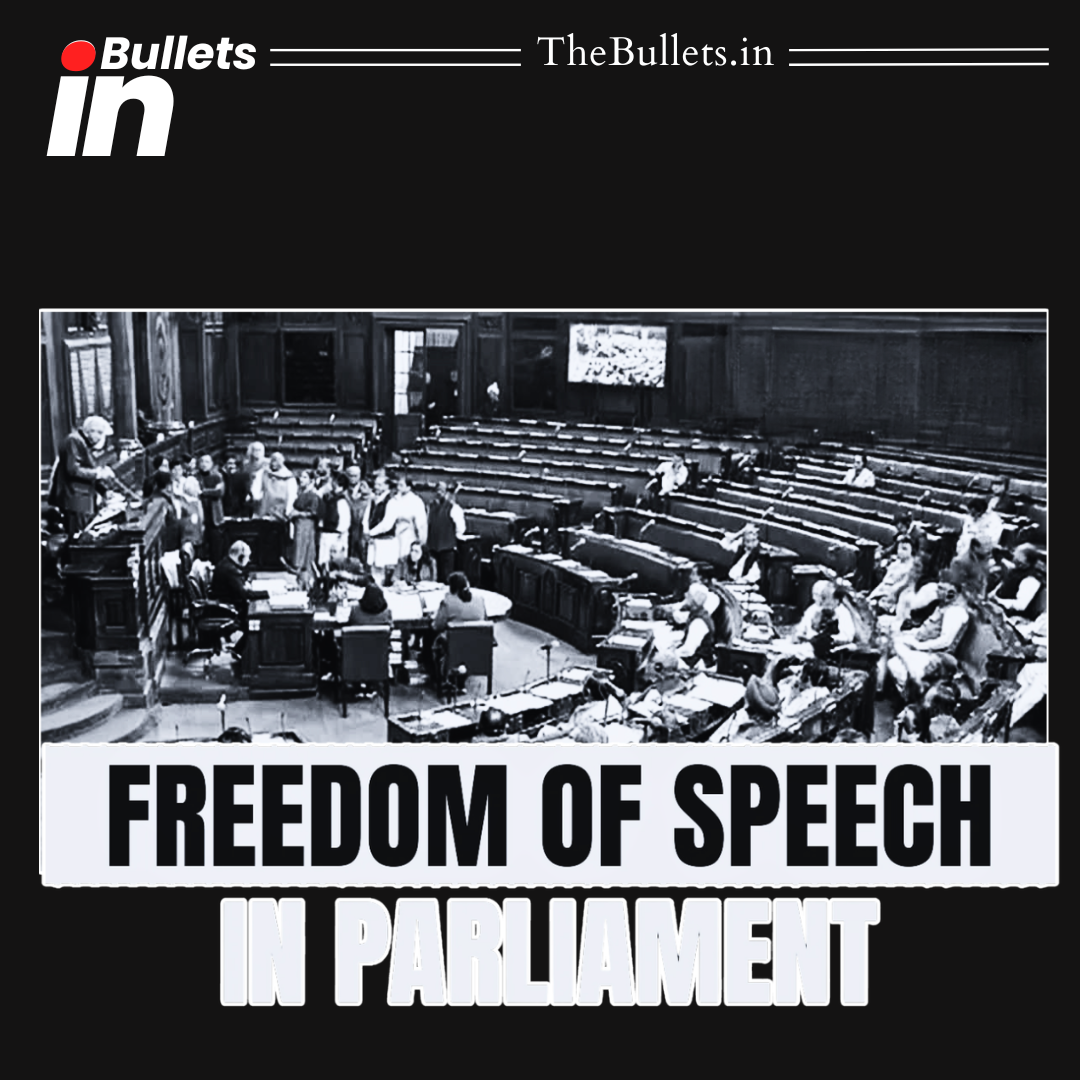


The Lok Sabha Speaker recently reiterated that Members of Parliament enjoy freedom of speech in Parliament, but it operates within the framework of the Constitution and parliamentary rules. The clarification came during discussions in the House after a debate on a resolution seeking the Speaker’s removal, where MPs debated for more than 12 hours across two days. The issue highlights how parliamentary privilege protects MPs’ speech while also maintaining procedural and constitutional limits.
BulletsIn
- Freedom of speech in Parliament is a key parliamentary privilege for MPs.
- Lok Sabha Speaker said the freedom is guaranteed but subject to Constitution and parliamentary rules.
- MPs debated over 12 hours across two days during discussion on resolution seeking Speaker’s removal.
- Article 105 of the Constitution grants MPs immunity for speeches and votes in Parliament.
- Article 194 provides similar protection to members of State Legislatures.
- Article 121 bars discussion on conduct of Supreme Court and High Court judges except during impeachment.
- MPs cannot face civil or criminal action in courts for statements made inside Parliament.
- Parliamentary protection also applies to speeches made in committee proceedings.
- Speaker can remove defamatory or unparliamentary remarks under Rule 380.
- Discussions on matters under court consideration generally restricted.
- Supreme Court rulings clarify privileges but allow judicial review if constitutional limits violated.
- Experts highlight challenges like misuse of privilege, disruptions and declining debate quality.



What do you think?
It is nice to know your opinion. Leave a comment.