











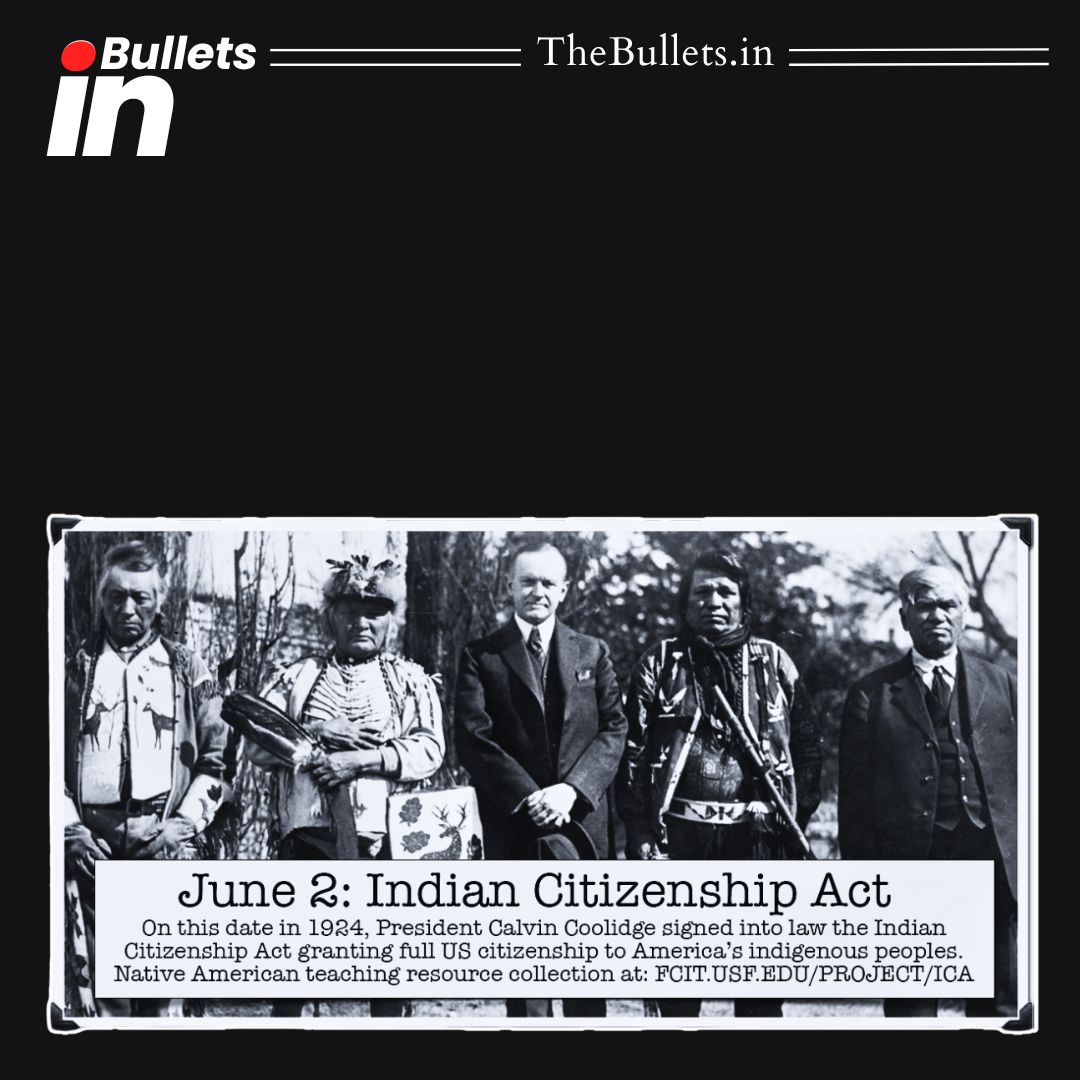


On 2 June 1924, President Calvin Coolidge signed the Indian Citizenship Act, also known as the Snyder Act, granting U.S. citizenship to all Indigenous peoples born within the territorial limits of the United States. While the law formally recognised citizenship rights, historians note that the decision was not purely progressive and came within a broader context of federal control and assimilation policies.
BulletsIn
- Indian Citizenship Act signed into law on 2 June 1924 by President Calvin Coolidge.
- Also known as the Snyder Act, it granted citizenship to all Native Americans born in the U.S.
- Law applied to approximately 125,000 Indigenous people who were not yet citizens.
- Remaining Indigenous population had already gained citizenship through earlier laws or military service.
- Dawes Act and World War I service provided earlier pathways to citizenship.
- Act stated citizenship would not impair tribal or property rights.
- Despite citizenship status, many Native Americans still faced voting restrictions at state level.
- Several states denied Indigenous voting rights until decades later.
- Law reflected broader federal assimilation policies of the early 20th century.
- Citizenship did not automatically guarantee equal civil or political rights.
- Debate continues over whether the Act was protective reform or federal control measure.
- Indigenous sovereignty and tribal identity remained central concerns after passage.
- Act marked significant but incomplete step toward civil rights recognition.



What do you think?
It is nice to know your opinion. Leave a comment.