











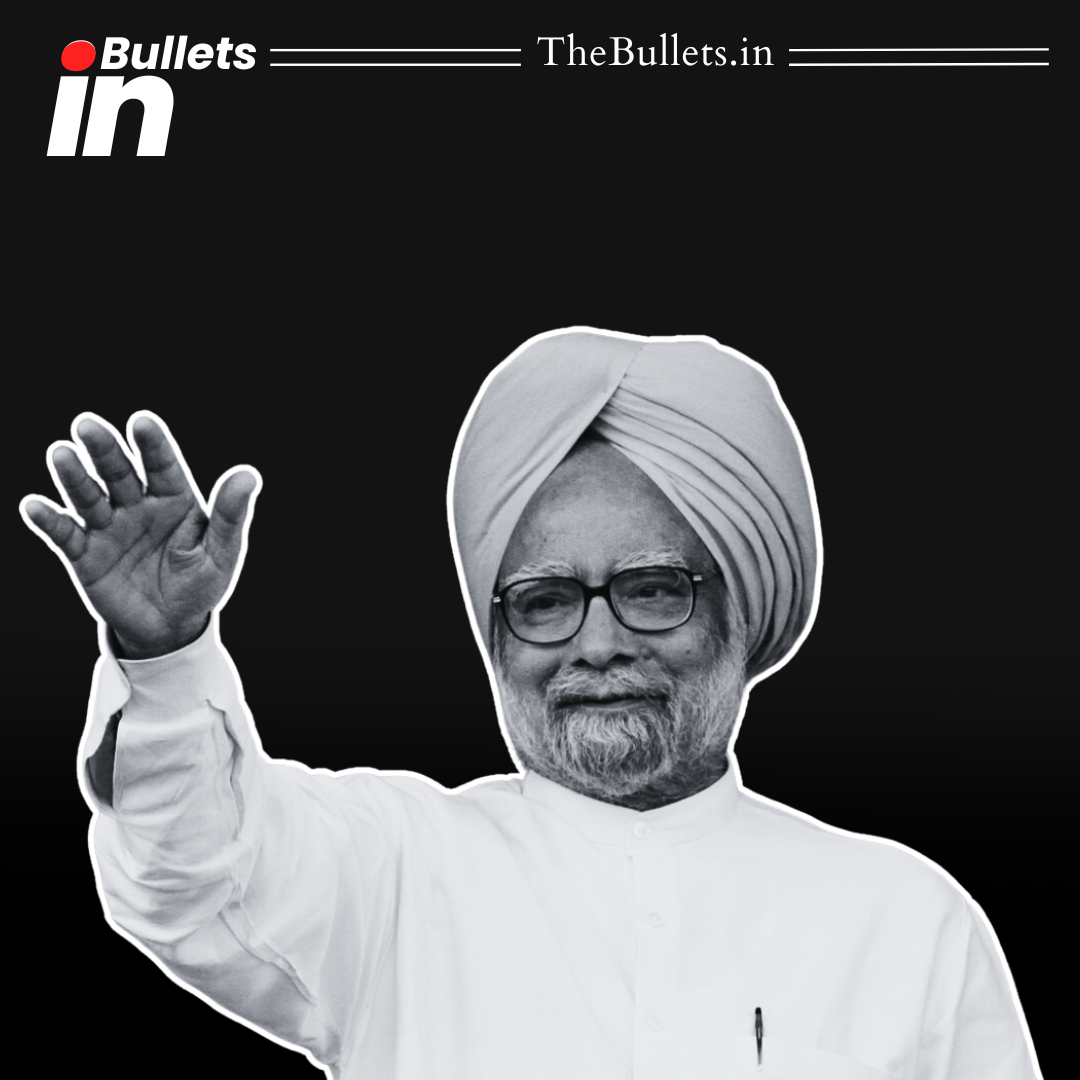


In June 1991, amidst a severe economic crisis, Manmohan Singh, an academic with no political experience, received a late-night call from P.C. Alexander, an aide of PM P.V. Narasimha Rao, urging him to take charge as the Finance Minister. Singh’s bold reforms soon pulled India from the brink of bankruptcy and laid the foundation for its modern economy.
BulletsIn
- In 1991, India faced an economic crisis: forex reserves were only ₹2,500 crore, barely enough for two weeks of imports.
- Inflation hit double digits, and global banks refused loans; the country was on the verge of bankruptcy.
- PM Narasimha Rao appointed Manmohan Singh as Finance Minister despite his non-political background.
- Singh’s reforms began with the historic budget on July 24, 1991.
- Abolished Licence Raj in all but 18 sectors, freeing industries from excessive regulations.
- Opened the economy to global players by allowing Foreign Direct Investment in 34 sectors.
- Devalued the rupee to boost export competitiveness and improve the balance of payments.
- Reduced government stakes in public sector enterprises and ended state monopolies in several sectors.
- Liberalised trade by removing export controls and slashing import tariffs.
- Introduced fiscal consolidation to cut wasteful government spending and stabilise the economy.



What do you think?
It is nice to know your opinion. Leave a comment.