











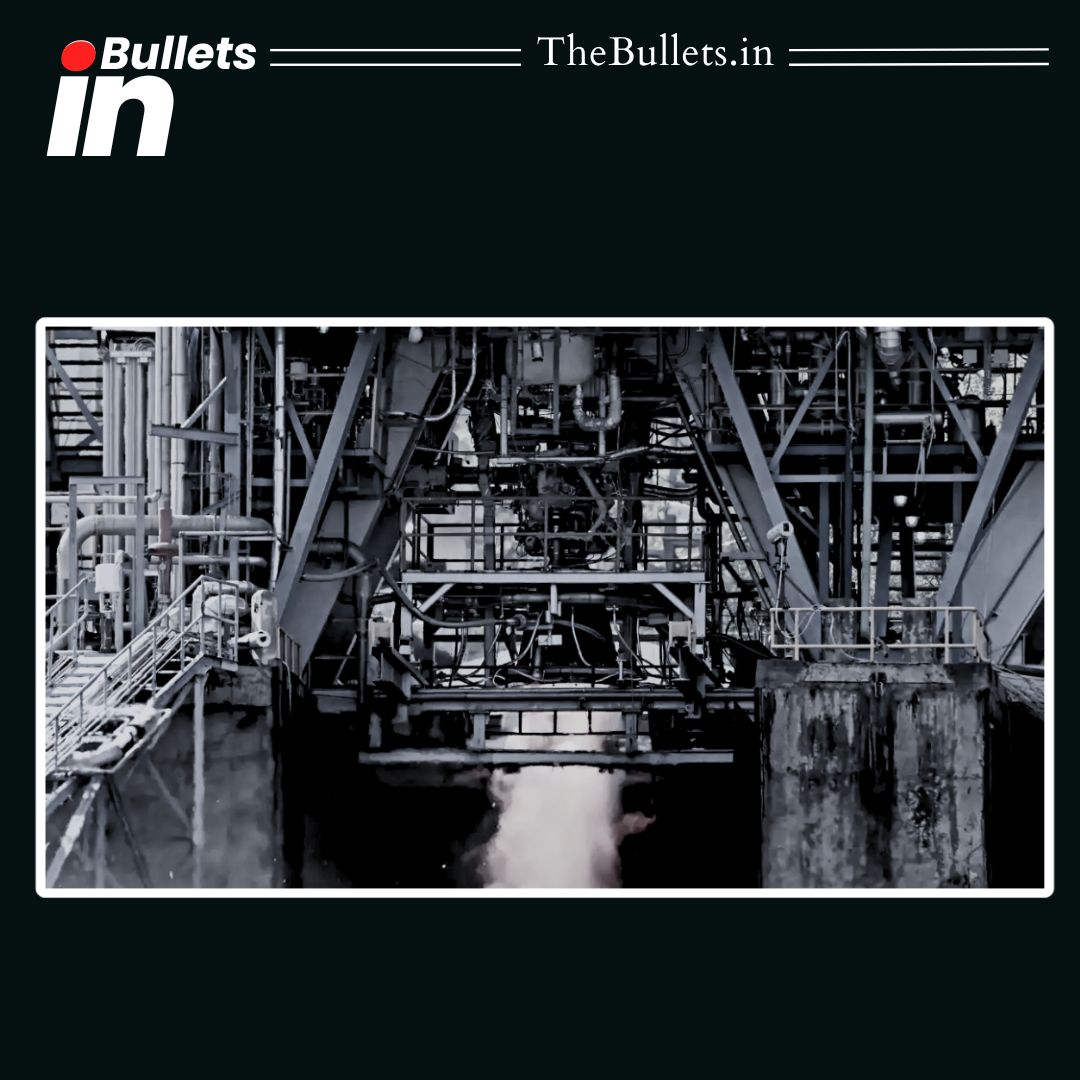


The Indian Space Research Organisation successfully completed a ground hot test of the CE20 cryogenic engine at 22-tonne thrust, improving the payload capability of the LVM3 rocket.
BulletsIn
• ISRO conducted a sea-level hot test of the CE20 cryogenic engine on March 10 at the ISRO Propulsion Complex, operating successfully for 165 seconds at 22-tonne thrust.
• The test used a specialised nozzle protection system and a multi-element igniter to ensure stable ignition and safe engine operation during the entire ground testing process.
• Earlier sea-level tests with the nozzle protection system were performed at 19-tonne thrust, making the latest 22-tonne thrust test an important technological upgrade.
• The CE20 cryogenic engine powers the upper cryogenic stage (C25) of the Launch Vehicle Mark-3, India’s heavy-lift rocket designed to launch large satellites and space missions.
• ISRO plans to use the upgraded CE20 engine in the future C32 stage of LVM3, which will increase payload capacity and support advanced space missions.
• Testing cryogenic engines at sea level is technically challenging because the engine nozzle is designed primarily for operation in the vacuum conditions of space.
• Low exit pressure and high nozzle area ratio can cause flow separation, which may result in vibrations, thermal stress, and potential mechanical damage during testing.
• The nozzle protection system helps maintain stable engine operation by controlling flow behavior, allowing safe and accurate performance evaluation during ground tests.



What do you think?
It is nice to know your opinion. Leave a comment.