











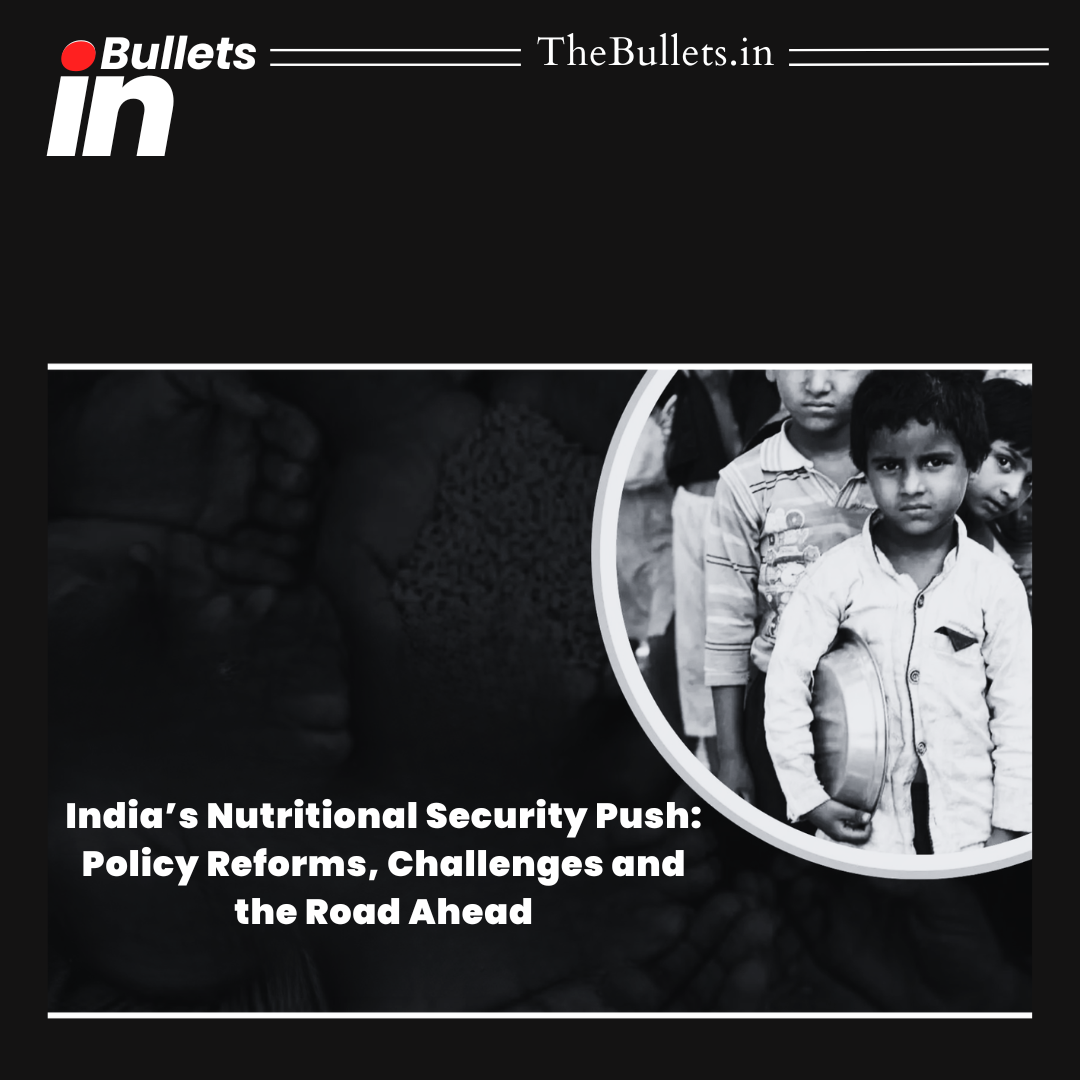


India is shifting from basic food security to comprehensive nutritional security, focusing on micronutrients, maternal health, diet diversity and climate-resilient agriculture for sustainable human development.
BulletsIn
- Despite progress in food grain production, nearly 12% of India’s population remains undernourished and ranks low in the Global Hunger Index 2025.
- Around 35% of children under five are stunted and 18.7% are wasted, reflecting persistent chronic and acute malnutrition challenges.
- Anaemia affects over half of women and children, highlighting widespread micronutrient deficiencies despite supplementation and welfare programs.
- Rice fortification and biofortified crop varieties are being promoted to improve iron, zinc and protein intake passively through public distribution systems.
- Digital monitoring through Poshan Tracker ensures real-time tracking of beneficiaries and strengthens transparency in nutrition delivery.
- Millets and region-specific grains are being integrated into procurement systems to improve diet diversity and address diabetes and obesity concerns.
- Climate change threatens nutrient density in staple crops, making climate-smart agriculture essential for future food and nutrition security.
- Rising food inflation, limited access to fruits, vegetables and proteins, and poor sanitation weaken the overall impact of nutrition programs.



What do you think?
It is nice to know your opinion. Leave a comment.