











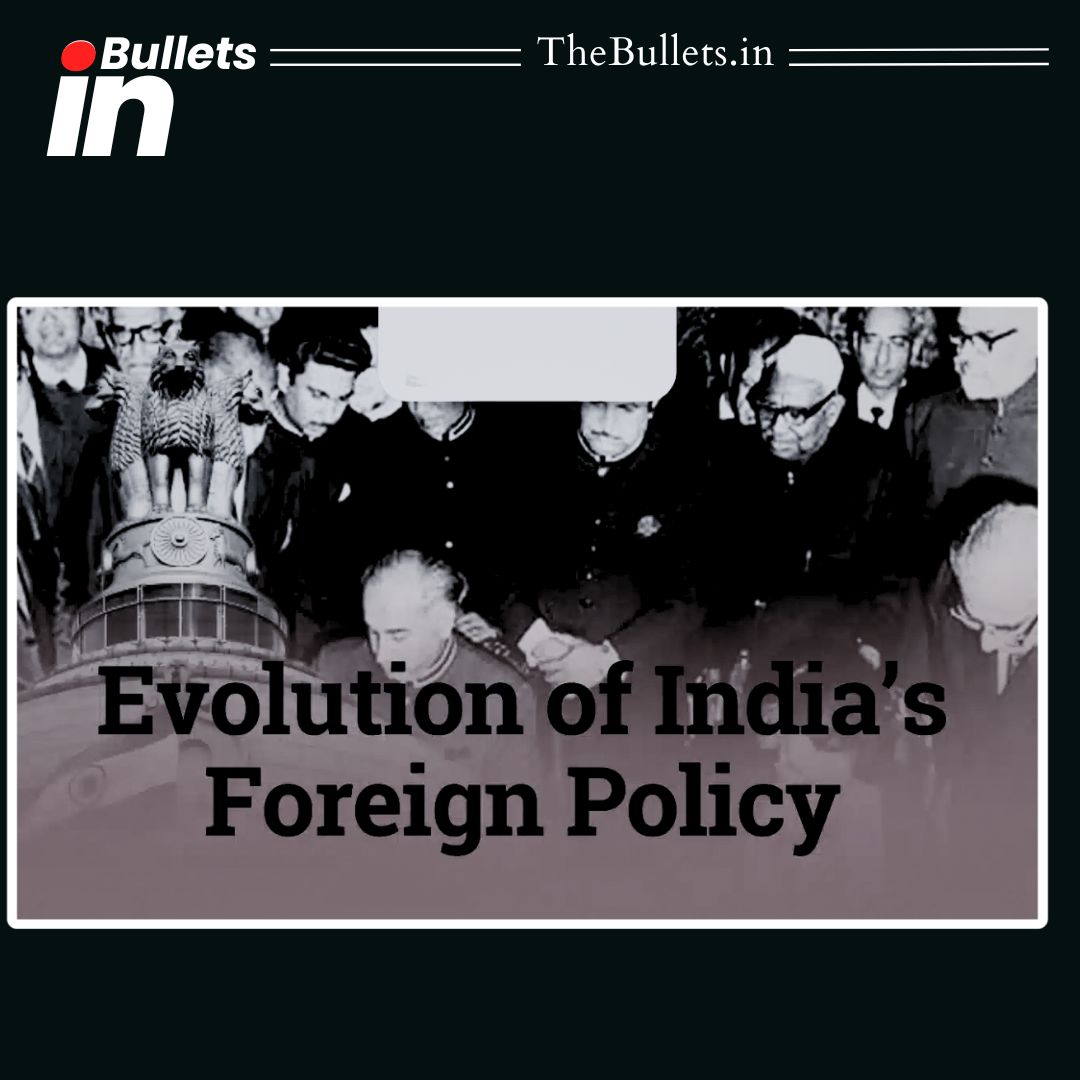


India’s foreign policy has evolved from colonial influence to an independent diplomatic strategy focused on non-alignment, economic cooperation, regional stability, and strategic global partnerships.
BulletsIn
• Before independence, India’s foreign policy was controlled by the British government and mainly focused on supporting the interests of the British Empire.
• The Indian National Congress played an important role in raising global awareness about colonial oppression and mobilising international support for India’s independence movement.
• After independence, Jawaharlal Nehru shaped India’s foreign policy through principles of non-alignment, peaceful coexistence, and participation in international organisations.
• The Panchsheel principles established guidelines for international relations, emphasizing mutual respect for sovereignty, non-aggression, non-interference, equality, and peaceful coexistence.
• During Indira Gandhi’s leadership, India strengthened its regional influence, conducted the 1974 nuclear test, and signed the Indo–Soviet Treaty of Peace and Cooperation.
• In the 1990s, economic reforms and globalization shifted foreign policy toward economic diplomacy and stronger relations with Western nations and global institutions.
• Strategic developments such as nuclear tests in 1998 and the Kargil conflict reshaped India’s security policies and international diplomatic positioning.
• In recent years, initiatives such as Neighborhood First and Act East policies have focused on strengthening regional partnerships and expanding India’s role in Indo-Pacific cooperation.



What do you think?
It is nice to know your opinion. Leave a comment.