











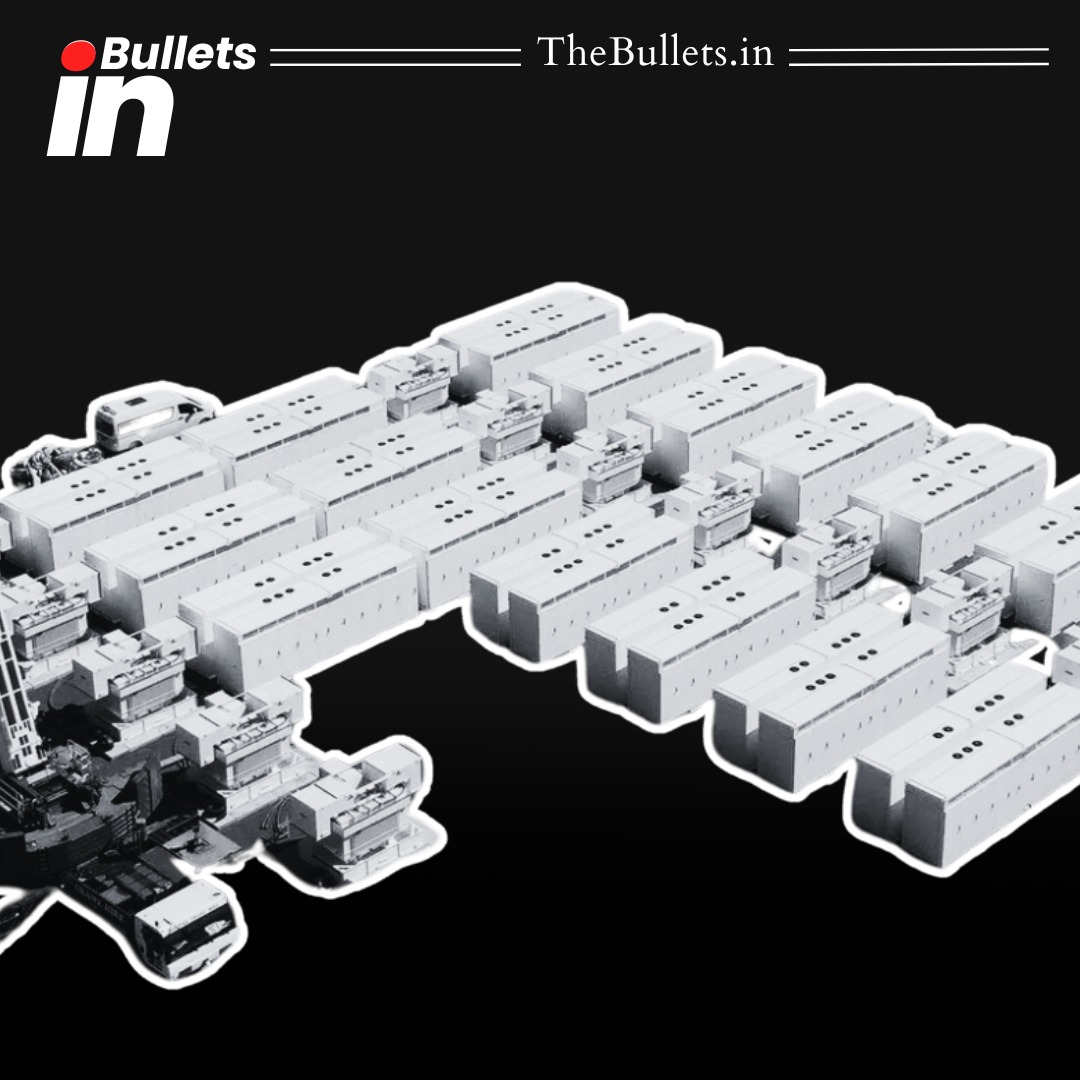


The Indian government is promoting the inclusion of Battery Energy Storage Systems (BESS) in renewable energy (RE) tenders to enhance grid reliability, minimize wastage, and optimize transmission networks. This move aims to meet India’s renewable energy targets and tackle intermittent power supply challenges.
BulletsIn
- Centre urges CPSUs, state PSUs, and private developers to co-locate BESS with RE generation sites.
- Current transmission capacities for RE are underutilized, used only 6–8 hours daily. BESS will help use corridors for remaining hours.
- India targets 500 GW of non-fossil energy capacity by 2030, needing 42 GW of BESS and 19 GW of pumped storage.
- 12 GW of BESS already under development by CPSUs and private entities; further growth requires ₹14 lakh crore in financing.
- NTPC, Rajasthan, and Maharashtra are among the first to include BESS in RE tenders.
- Recent cost reductions make BESS more viable, with prices dropping from ₹10/kWh to ₹4.50/kWh and expected to reach ₹3.75–₹4/kWh soon.
- ICRA estimates RE and large hydro share in electricity generation to rise from 21% in FY24 to over 35% in FY30.
- Government-approved viability gap funding of ₹3,760 crore for 4,000 MWh of BESS projects ensures 85% of capacity benefits distribution companies.
- Installed RE capacity (including large hydro) is expected to grow from 201 GW in September 2024 to 250 GW by March 2026, driven by an 80 GW project pipeline.
- BESS integration is critical for balancing grid loads, reducing energy wastage, and achieving India’s RE goals.



What do you think?
It is nice to know your opinion. Leave a comment.