











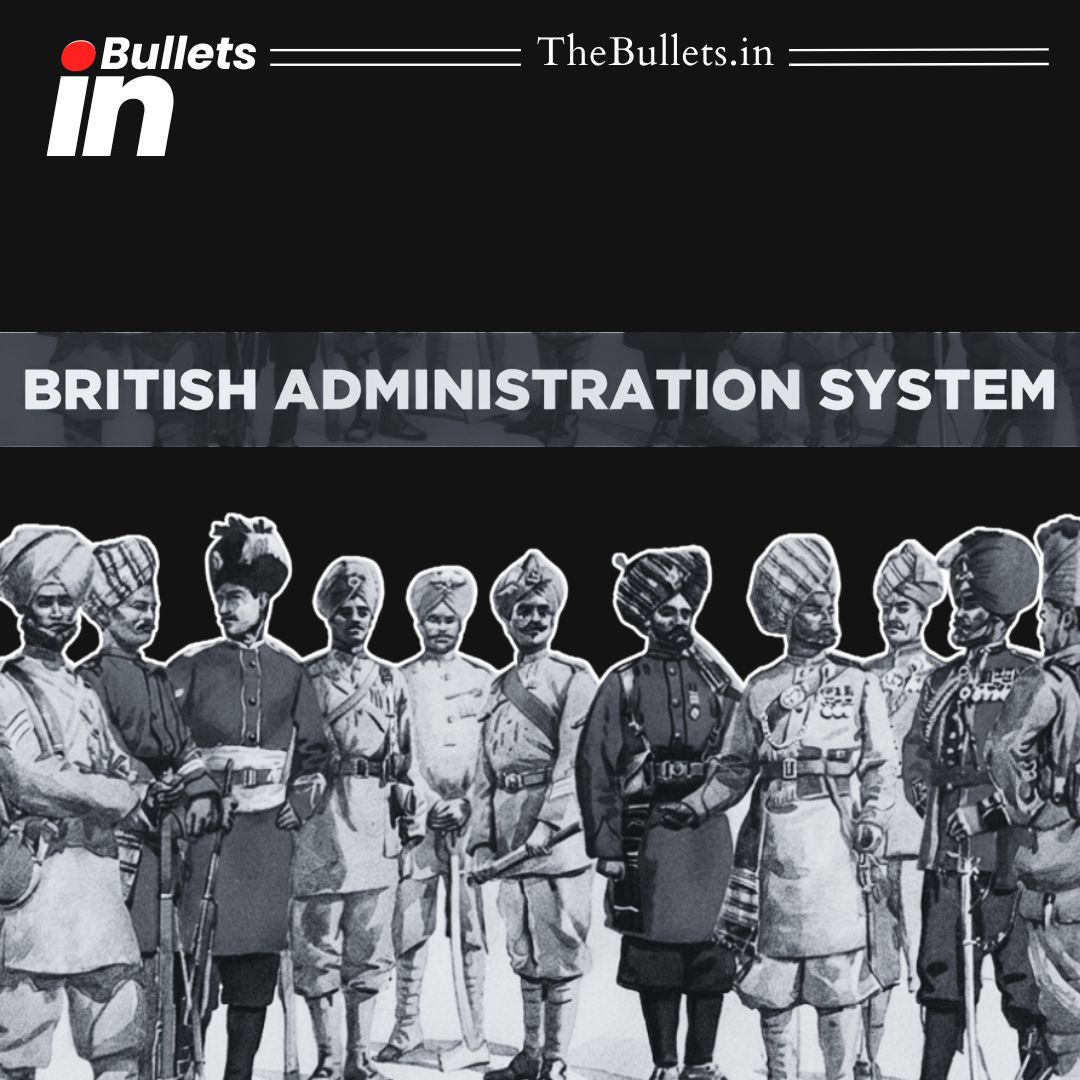


After the 1857 uprising, the British changed their approach in India. Expansion gave way to controlled administration through laws, alliances, and institutions. The system rested mainly on the Civil Service, Army, and Police, with judicial reforms added later. Its objective was law, order, and maintaining British dominance.
BulletsIn
-
1857 revolt forced Britain to abandon annexation, adopt cooperation
-
Act of 1858 assured Indian princes honor, rights, limited autonomy
-
Civil Service created by Cornwallis, later competitive exams (1853)
-
Indians largely excluded; training at Fort William, Haileybury College
-
Army backbone of empire, all officers British; suppressed Indian powers
-
Tech changes reduced cavalry need; muskets, rifles dominated
-
Police system by Cornwallis, permanent force, daroga-led thanas
-
Judicial reforms: civil, criminal courts; Diwani Adalat, Circuit Courts
-
High Courts set up in 1865, Law Commission codified laws
-
Rule of law, equality before law introduced, but Europeans had separate courts
-
Justice costly, slow, inaccessible for common Indians
-
Objectives: preserve law/order for trade, ensure British control
-
Later reforms: Indian Councils Acts, Morley-Minto (1909), Montagu-Chelmsford (1919), Govt of India Act (1935)
-
Legacy: PSC, District Collector, local self-government carried into modern India



What do you think?
It is nice to know your opinion. Leave a comment.