











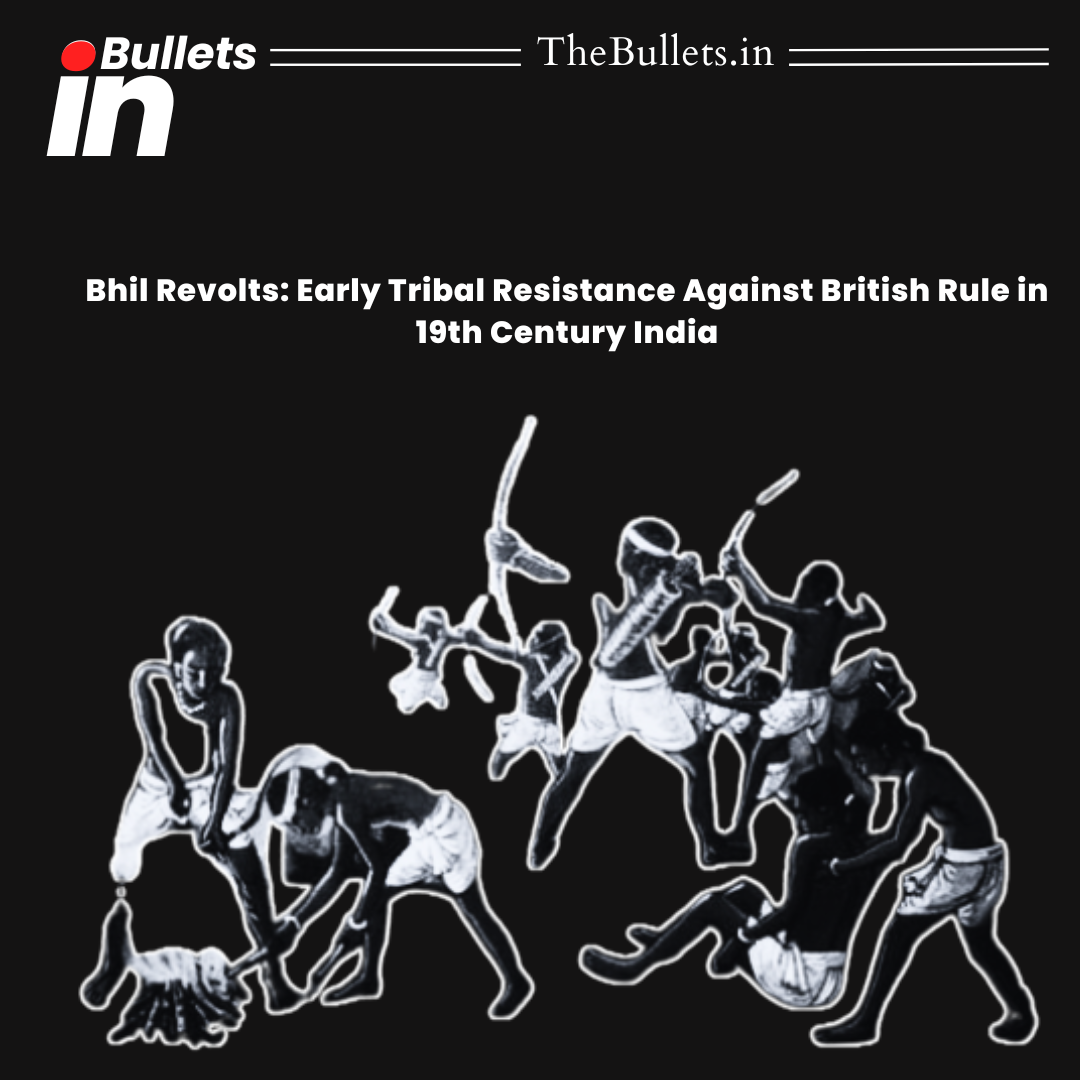


The Bhil Revolts were among the earliest tribal uprisings against British colonial rule, beginning in 1818 in western India due to exploitation, forest restrictions and loss of traditional autonomy.
BulletsIn
- The Bhil Revolts began in 1818 in the Khandesh region following the expansion of British authority after the fall of the Maratha power.
- The Bhil community faced economic hardship due to heavy taxation, land revenue policies and disruption of traditional forest-based livelihoods.
- British interference in tribal administration and denial of customary forest rights intensified resentment among the Bhil population.
- Leaders such as Kazi Singh and Bhima Naik mobilised tribal groups to resist colonial control and oppressive practices.
- The revolts included guerrilla-style attacks on British outposts, revenue offices and symbols of colonial administration.
- British authorities responded with military action and later adopted conciliatory measures including recruitment of Bhils into local forces.
- Though suppressed, the revolts highlighted early organised tribal resistance and influenced later indigenous movements in western and central India.



What do you think?
It is nice to know your opinion. Leave a comment.