











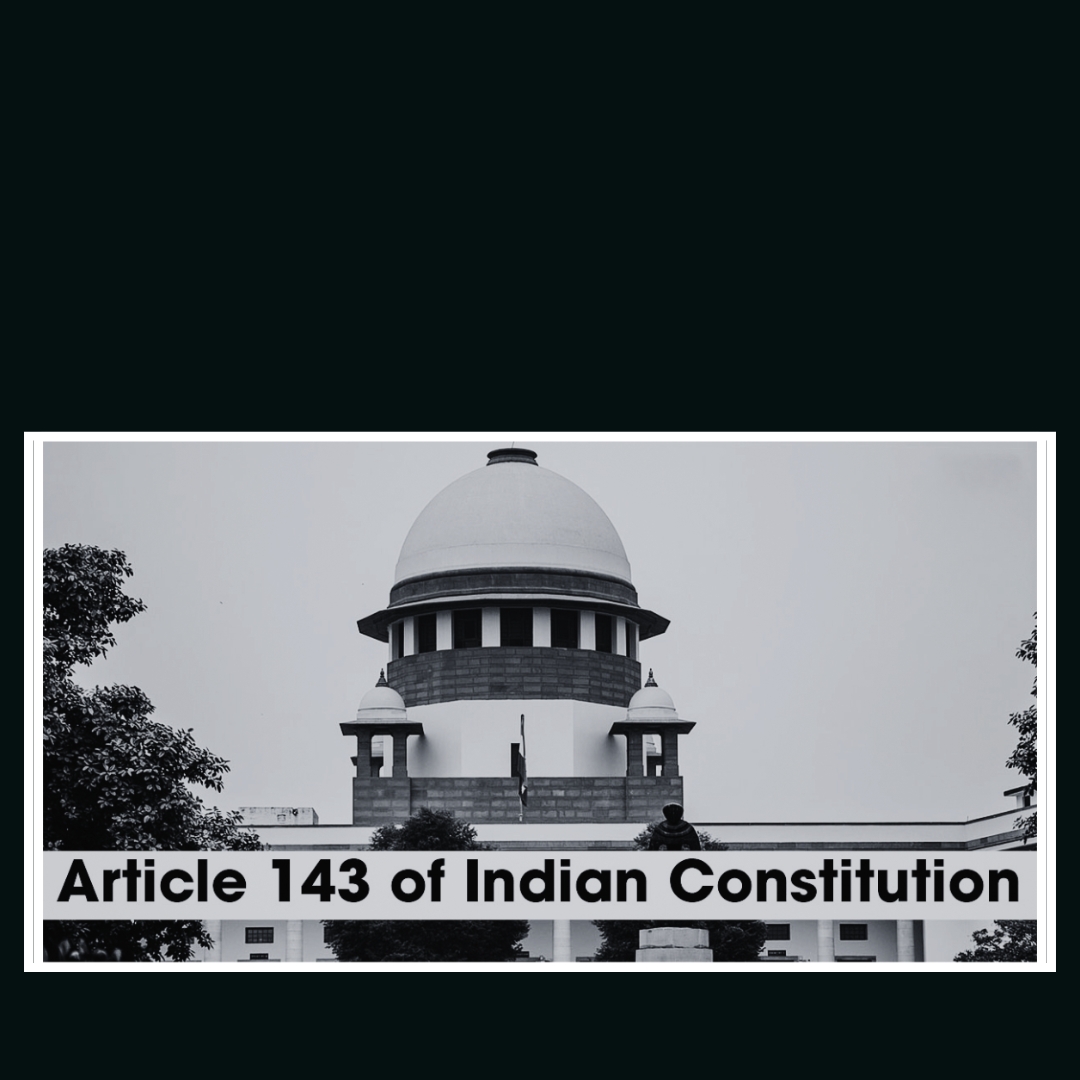


Article 143 of the Constitution of India empowers the President of India to refer questions of law or fact that are of public importance to the Supreme Court of India for its advisory opinion. This provision allows the President to seek legal guidance before taking action on complex constitutional or legal issues. The Supreme Court may give its opinion after hearing the matter, but such opinions are advisory and not binding. Article 143 also covers references related to disputes in pre-constitutional treaties or agreements.
BulletsIn
- Article 143 gives the President the authority to seek the Supreme Court’s advisory opinion on questions of law or fact of public importance.
- This advisory jurisdiction allows the government to prevent legal ambiguity by obtaining the Court’s legal interpretation before action.
- The Supreme Court’s opinion under Article 143 is not binding on the President or any other authority.
- Under Clause (1), the President may refer any important constitutional or legal question to the Supreme Court.
- Under Clause (2), the President may refer disputes from pre-Constitution treaties or agreements excluded from regular jurisdiction.
- The Supreme Court hears these references before reporting its advisory opinion to the President.
- Article 143 enhances constitutional dialogue between the executive and judiciary without creating adversarial proceedings.
- Recent uses involve referring constitutional questions about timelines for assent on state Bills to clarify roles of constitutional authorities.



What do you think?
It is nice to know your opinion. Leave a comment.