











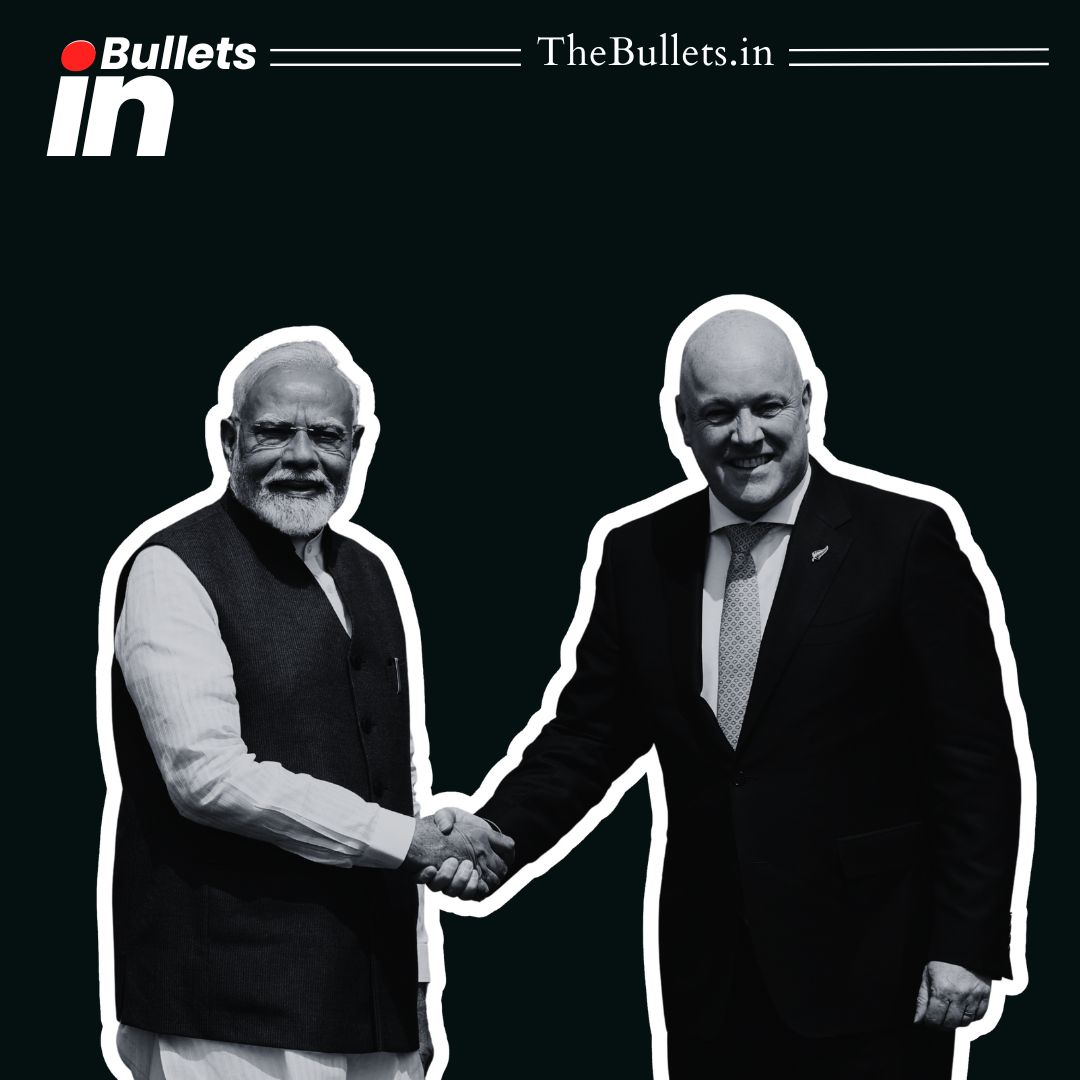


India finalised a Free Trade Agreement (FTA) with New Zealand on December 22, 2025, after nine months of negotiations, aiming to enhance bilateral trade, investment, and regulatory alignment while respecting sensitive sectors.
BulletsIn
- India eliminated duties on 100% of its exports to New Zealand, removing tariffs on 8,284 tariff lines immediately.
- Key Indian exports like textiles, leather goods, ceramics, automobiles, pharmaceuticals, and engineering goods will now have zero-duty access.
- The FTA particularly benefits MSMEs in export-oriented sectors due to immediate tariff elimination and simplified market access.
- New Zealand offered India access on 70.03% of tariff lines while protecting sensitive sectors like dairy, arms, and gems.
- Tariff reductions for India: 30% lines immediate, 35.6% phased over 3, 5, 7, and 10 years, 4.37% reduced partially.
- New Zealand commits $20 billion in investments in India over the next 15 years, signaling confidence in long-term collaboration.
- The agreement includes annexes on traditional medicine services, student mobility, and post-study work visas, promoting people-to-people ties.
- FTA unlikely to drastically increase export volumes due to minimal trade ($1.3 billion), low applied tariffs, and 58% pre-existing duty-free lines.
- Value lies in regulatory alignment in pharmaceuticals, chemicals, auto components, and machinery, ensuring quality standards and export compliance.
- Labour mobility provisions provide limited temporary employment visas, addressing skill shortages in New Zealand while diversifying Indian workforce destinations.
- FTA demonstrates India’s ability to negotiate high-standard agreements beyond US trade dependence, signaling geopolitical and economic intent.
- Success depends on effective utilisation by Indian exporters, awareness, regulatory compliance, and potential facilitation of direct flights and visas.



What do you think?
It is nice to know your opinion. Leave a comment.