











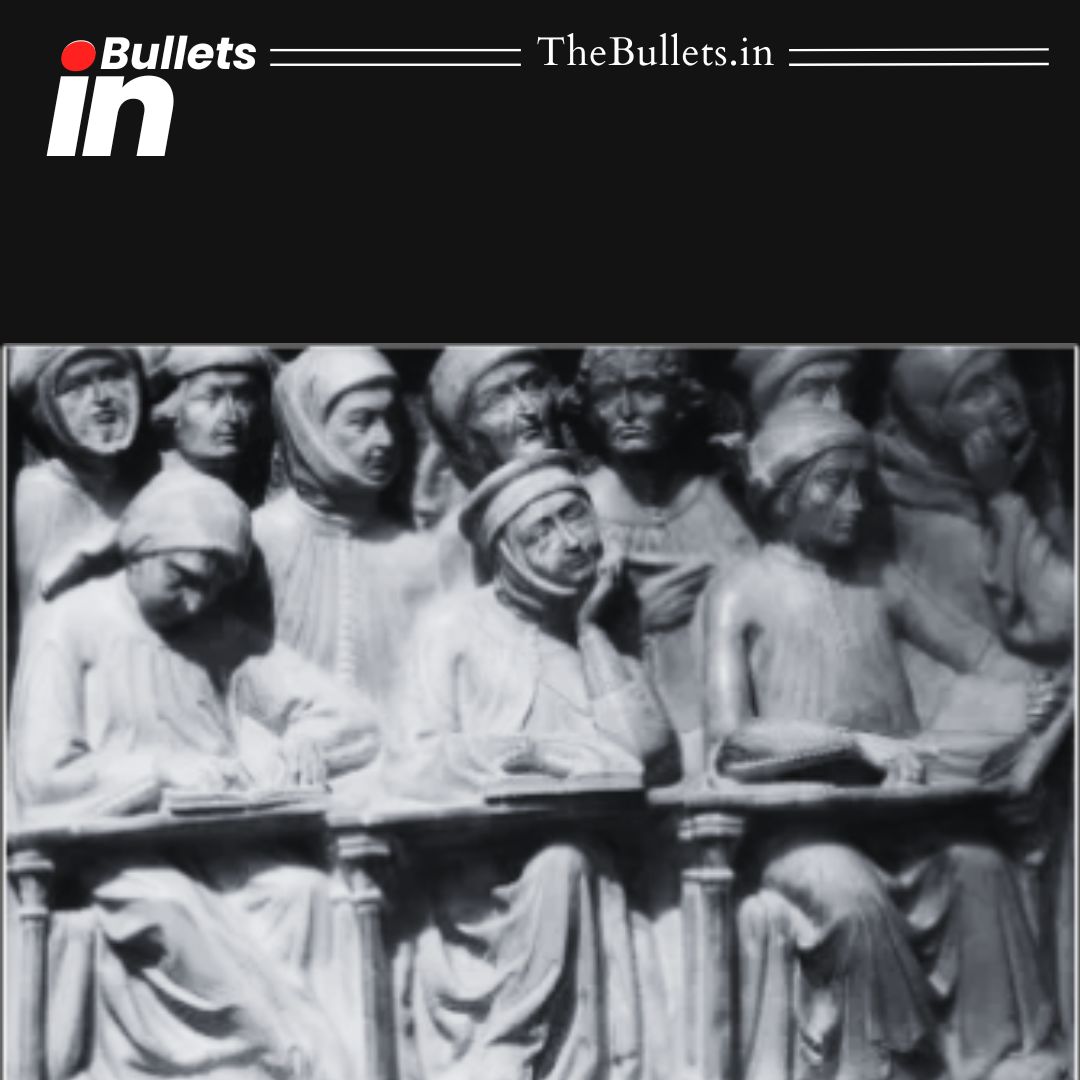


As printing technology emerged in late medieval Oxford, professional scribes and book craftsmen struggled to survive the transition from handwritten manuscripts to printed texts. Many diversified into related trades such as bookbinding, valuation, and even brewing, reflecting the shifting economics of England’s early publishing world.
BulletsIn
* Oxford’s book trade flourished in the 13th century, with friaries and universities needing manuscripts.
* Professional scribes replaced monastic copyists; William de Brailes was Oxford’s best-known scribe-artist.
* De Brailes created the De Brailes Hours (c.1240), England’s earliest independent Book of Hours.
* By the 15th century, printing began reducing demand for handwritten manuscripts.
* Scribes like John Cornish took up rebinding and repair work to supplement income.
* University loan chests let students and masters pledge books for cash; stationers handled valuations.
* Early printer Thomas Hunt may have funded his press through this system before his business collapsed in 1486.
* Many scribes also brewed ale — ingredients overlapped with parchment and pigment work.
* Scribes such as John Lutton and Stephen Bromyerd appear in brewing court records for minor fines.
* By the 16th century, manuscripts gave way to print; Oxford’s book trade rebounded under royal charter in 1636.
* This evolution led to the eventual founding of the Oxford University Press (1668–69).



What do you think?
It is nice to know your opinion. Leave a comment.