











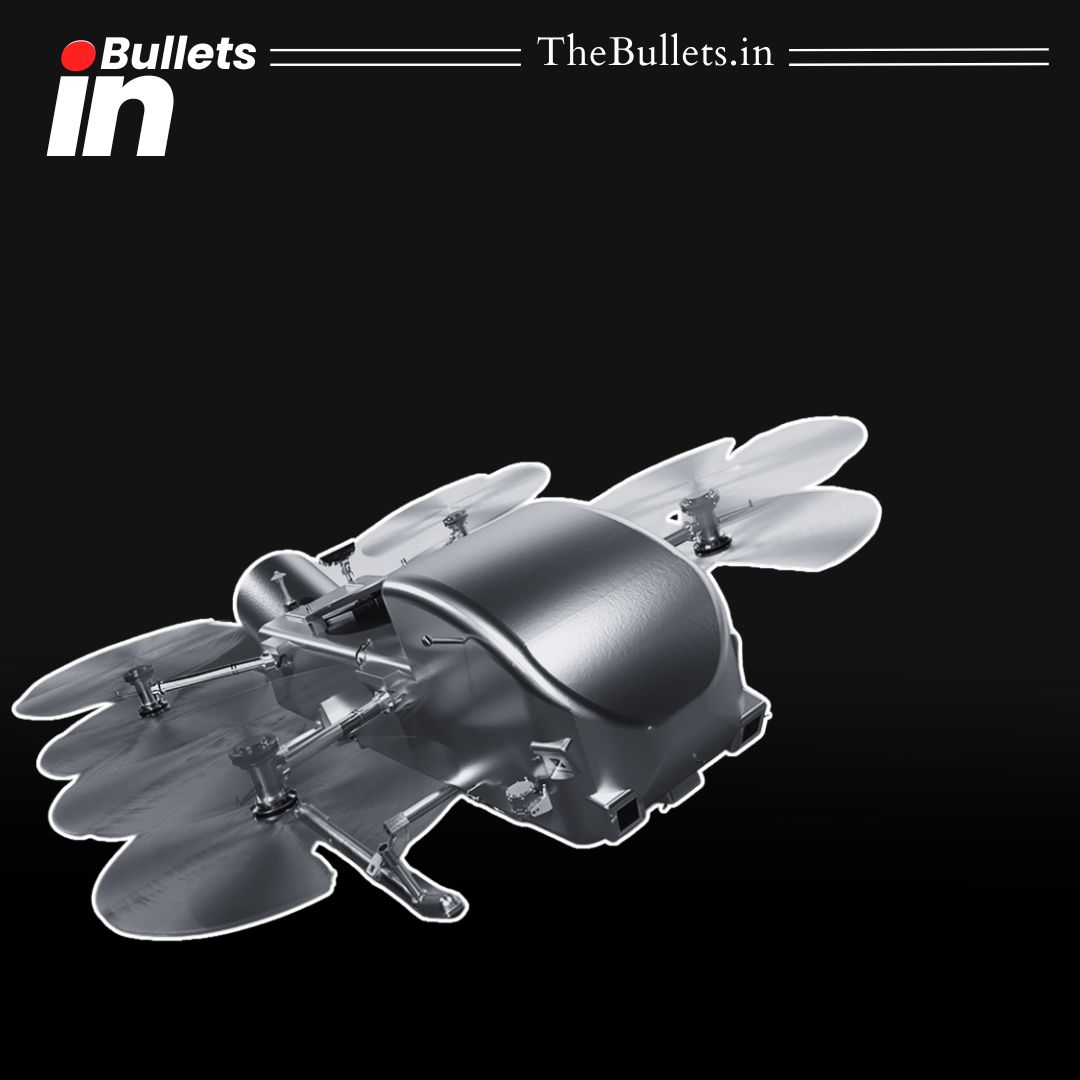


NASA’s Dragonfly mission has cleared a crucial milestone by passing its Critical Design Review. The nuclear-powered rotorcraft is now ready for hardware development and spacecraft assembly. Launch is scheduled between July 5–25, 2028, aiming to explore Titan’s surface and search for signs of life.
BulletsIn
- Dragonfly mission passes Critical Design Review, moves to hardware phase
- Nuclear-powered, car-sized rotorcraft designed for Titan’s exploration
- 8-rotor drone to perform vertical takeoffs, landings on Titan’s surface
- Mission duration planned for 3.3 years after arrival in 2034
- Equipped with cameras, sensors, samplers to study surface and atmosphere
- Will investigate Titan’s prebiotic chemistry, habitability, potential for alien life
- Launch window: July 5–25, 2028, via SpaceX Falcon Heavy from Kennedy Space Center
- Built by Johns Hopkins APL, led by Principal Investigator Elizabeth Turtle
- Titan offers nitrogen-rich atmosphere, methane lakes ideal for life search
- Mission budget $3.35 billion, originally selected by NASA in 2019



What do you think?
It is nice to know your opinion. Leave a comment.