











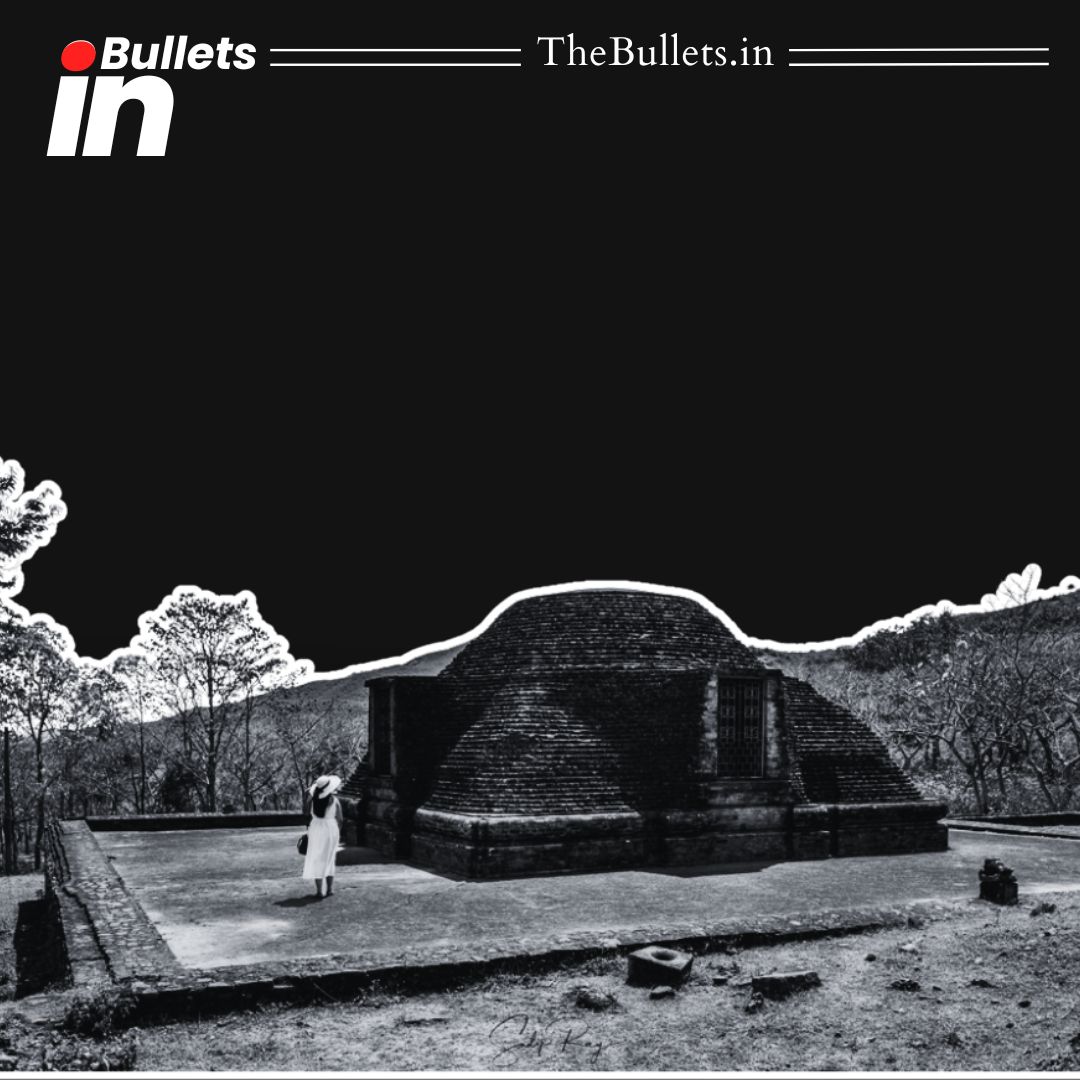


Recent excavation at Ratnagiri, Odisha, after 60 years, has uncovered significant Buddhist relics, bringing focus back to the region’s ‘Diamond Triangle’—Ratnagiri, Lalitgiri, and Udaygiri. The discovery highlights Odisha’s role in Vajrayana Buddhism.
BulletsIn
Excavation at Ratnagiri, Odisha, resumed after 60 years; new findings include a colossal Buddha head, palm, and ancient inscriptions.
Ratnagiri is part of Odisha’s ‘Diamond Triangle’ along with Udaygiri and Lalitgiri, key Buddhist heritage sites.
First excavated in 1958-61 by Debala Mitra, later ASI’s first female Director General.
Ratnagiri monastery housed ~500 monks at its peak and is India’s only Buddhist monastery with a curvilinear roof.
Site linked to Vajrayana Buddhism (Tantrayana), which emphasizes mystical powers through rituals.
Historian Thomas Donaldson suggests Ratnagiri rivaled Nalanda as a major Buddhist learning center.
Odisha flourished as a Buddhist center under the Bhaumakara dynasty (8th-10th century).
Kalinga’s historical maritime trade helped spread Buddhism to Southeast Asia.
Emperor Ashoka turned to Buddhism after the Kalinga war (261 BCE) and promoted its spread.
Vajrayana Buddhism developed from Mahayana in the 6th-7th century and flourished in Bengal, Bihar, and Tibet.



What do you think?
It is nice to know your opinion. Leave a comment.