





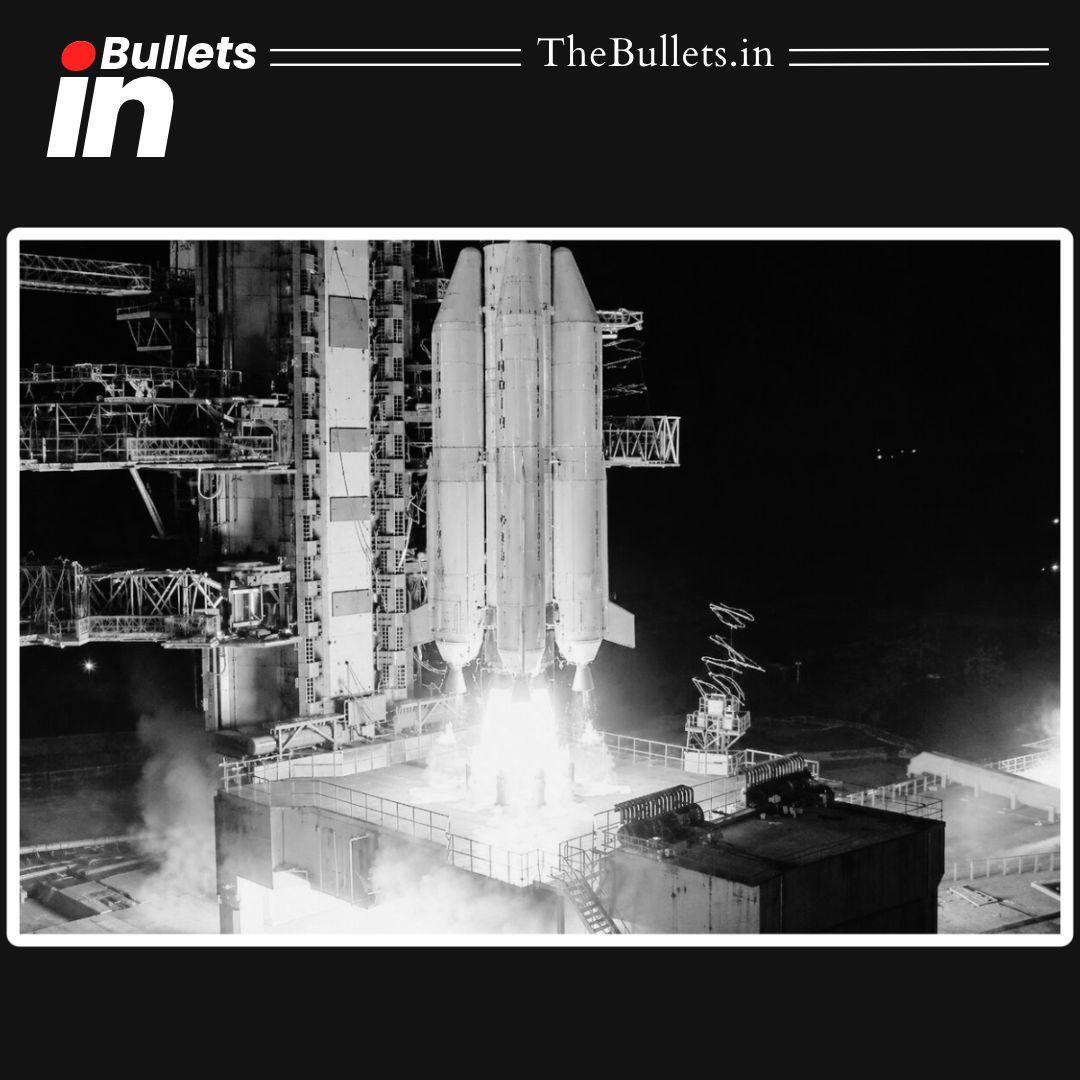


ISRO's GSLV-F18 has placed the NVS-03 navigation satellite in orbit, adding capacity to NavIC at a time when the constellation had been running below strength.
BulletsIn
- ISRO launched the GSLV-F18 rocket carrying NVS-03 at 11:51 pm IST on October 30, 2026, from the Satish Dhawan Space Centre in Sriharikota.
- ISRO chairman V. Narayanan said soon after liftoff that the satellite had been placed in its correct elliptical orbit.
- NVS-03 is the third satellite of India's second-generation navigation series and the twelfth in the country's regional navigation satellite system.
- NavIC is India's own alternative to the US GPS, offering positioning services across India and up to 1,500 km beyond its borders.
- The system offers two services: the Standard Positioning Service for general users and a Restricted Service for authorised users.
- The new satellite carries an additional L1 navigation signal, which improves compatibility with consumer devices.
- It flies an indigenous atomic clock alongside imported clocks; earlier navigation satellites had suffered atomic clock problems that hurt accuracy.
- Before this launch, NavIC was reported to be running below par because some satellites had stopped working and another had reached the end of its life.
- India's push for its own navigation system is traced to the 1999 Kargil conflict, when access to foreign GPS data proved limited.
- GSLV Mk II is a three-stage rocket with a cryogenic upper stage, standing about 50 metres tall, and has earlier been nicknamed ISRO's "naughty boy".
- Prime Minister Narendra Modi congratulated ISRO, while Narayanan linked the launch to the "One Nation One Time" vision for precise indigenous timing services.
- ISRO has said it plans at least five more launches this financial year, including the first uncrewed Gaganyaan mission.
Tags: NavIC, NVS03, GSLVF18



What do you think?
It is nice to know your opinion. Leave a comment.