





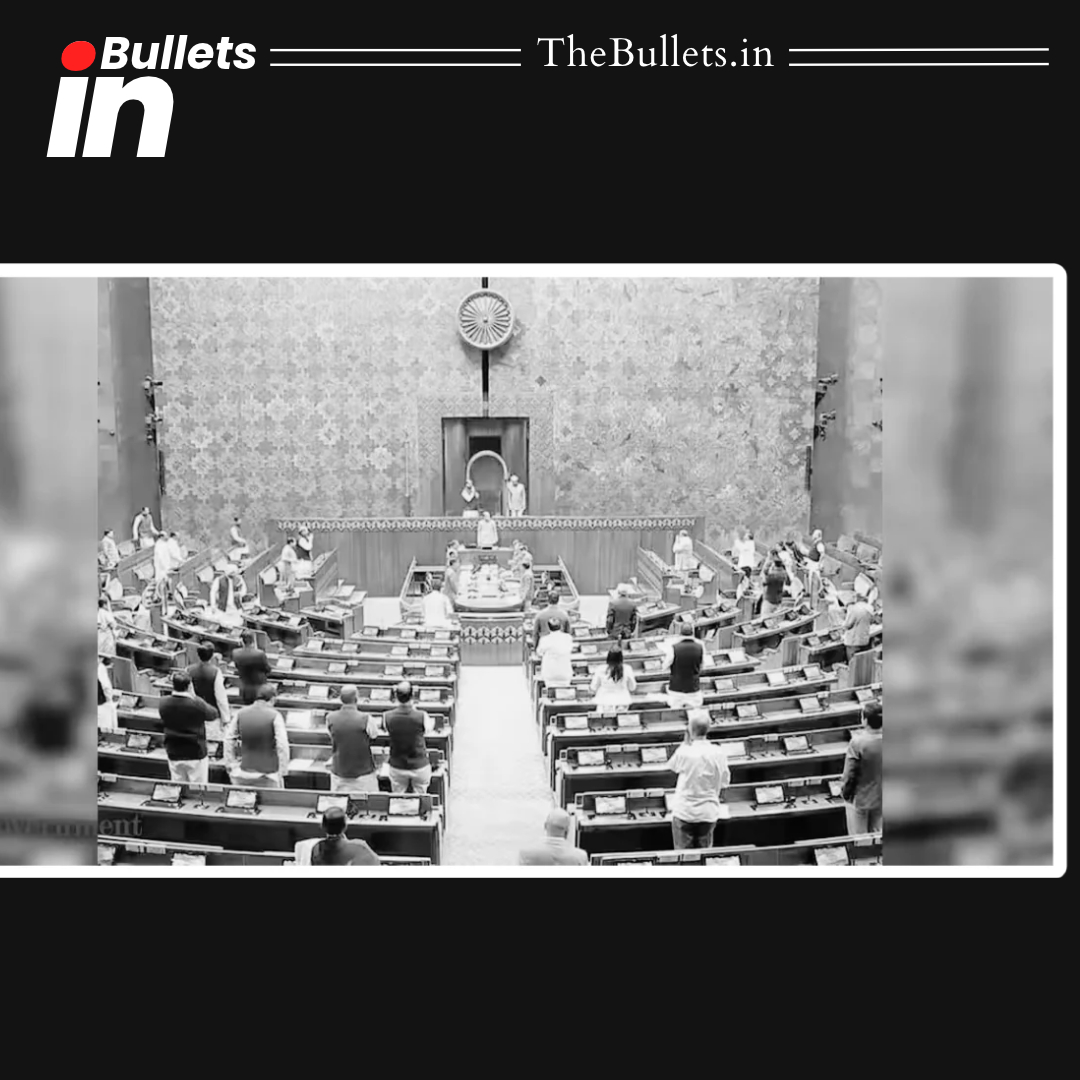


Parliament's Monsoon Session has been kept technically open since August 13, setting a record and fuelling speculation about a short-notice sitting on the delimitation-linked amendment.
BulletsIn
- The Monsoon Session began on July 20, 2026, and both Houses were adjourned sine die on August 13 after their scheduled sittings ended.
- Neither the Lok Sabha nor the Rajya Sabha has been prorogued since, leaving the session technically open for 94 days as of November 15.
- The previous record was 87 days in 2008; the 2026 gap passed it on November 9, when it reached 88 days.
- Earlier long gaps were 76 days in 1987, 54 days in 1989, 49 days each in 2006 and 2013, and 41 days in 1963.
- Prorogation ends a session, while adjournment sine die only suspends sittings indefinitely and dissolution ends the life of the Lok Sabha itself.
- Former Lok Sabha secretary general P.D.T. Achary has said the usual practice is to prorogue the Houses within about a week.
- An unprorogued session means the government can ask the Houses to sit again at short notice, with an extended sitting needing at least two days' notice.
- Convening a fresh session after prorogation requires at least 14 days' notice, which is one reason the arrangement has fuelled speculation about a special sitting.
- Reports say the Houses were kept open in case the government wants to take up the delimitation-linked women's reservation amendment quickly.
- Congress alleges the delay is meant to give the government time to manufacture a two-thirds majority, while Parliamentary Affairs Minister Kiren Rijiju has cited the 2008 precedent in a letter to Mallikarjun Kharge.
- Reports note that the Constitution prescribes no time frame for proroguing a House after sine die adjournment, so the extended gap is not a constitutional or procedural irregularity.
- While the Houses remain unprorogued, the government cannot promulgate an ordinance.
Tags: Prorogation, ParliamentSession, Delimitation



What do you think?
It is nice to know your opinion. Leave a comment.