





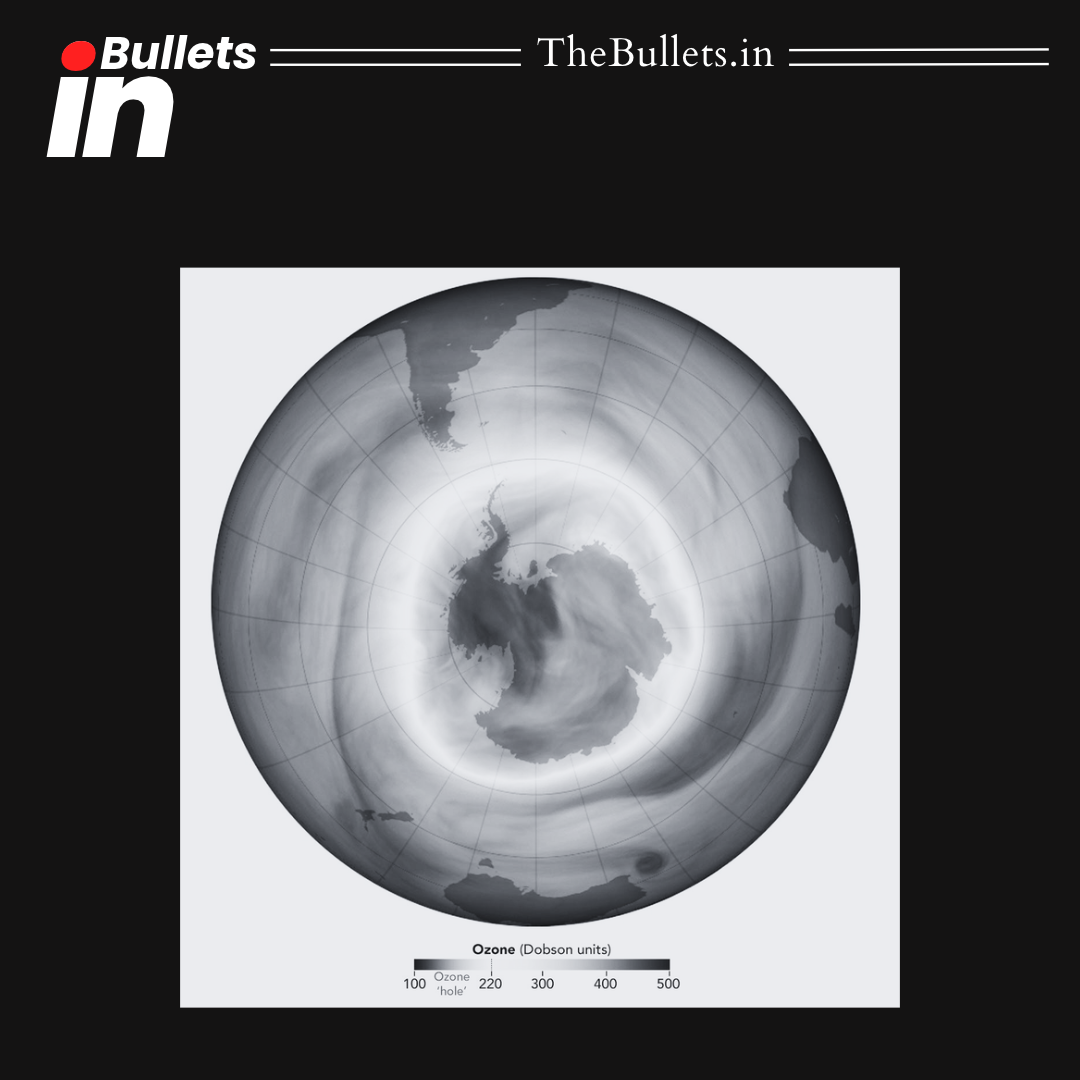


Unusual atmospheric conditions expanded Antarctica’s ozone hole to its seventh-largest recorded size, although international chemical restrictions continue supporting gradual ozone recovery.
BulletsIn
- Antarctica’s ozone hole ranked as the seventh-largest in 48 years of observations during 2026, driven primarily by unusually strong atmospheric circulation.
- Between September 7 and October 13, the seasonal ozone hole covered an average area of approximately 25 million square kilometres.
- The average affected area exceeded twice the size of the United States, highlighting the significant scale of ozone depletion over Antarctica.
- The ozone hole reached its maximum extent on September 18, covering approximately 27.1 million square kilometres, nearly 90% of the 2000 record.
- Scientists from NASA and NOAA attributed the expansion mainly to an exceptionally powerful polar vortex that prolonged seasonal ozone depletion.
- Despite the expansion, international restrictions on ozone-destroying chemicals have prevented substantially greater damage, supporting the atmosphere’s continuing recovery.
- Scientists explained that the protective ozone layer absorbs harmful solar radiation, acting as Earth’s natural sunscreen and safeguarding living organisms.
- According to ozone researcher Paul Newman, the later seasonal formation of the ozone hole in recent years indicates that the protective layer is gradually healing.
- However, the unusually strong polar vortex in 2026 extended Antarctic ozone depletion, producing the largest ozone hole observed in approximately a decade.
- Researchers continue monitoring stratospheric ozone levels to assess atmospheric recovery and understand how changing weather patterns influence seasonal ozone depletion.



What do you think?
It is nice to know your opinion. Leave a comment.