











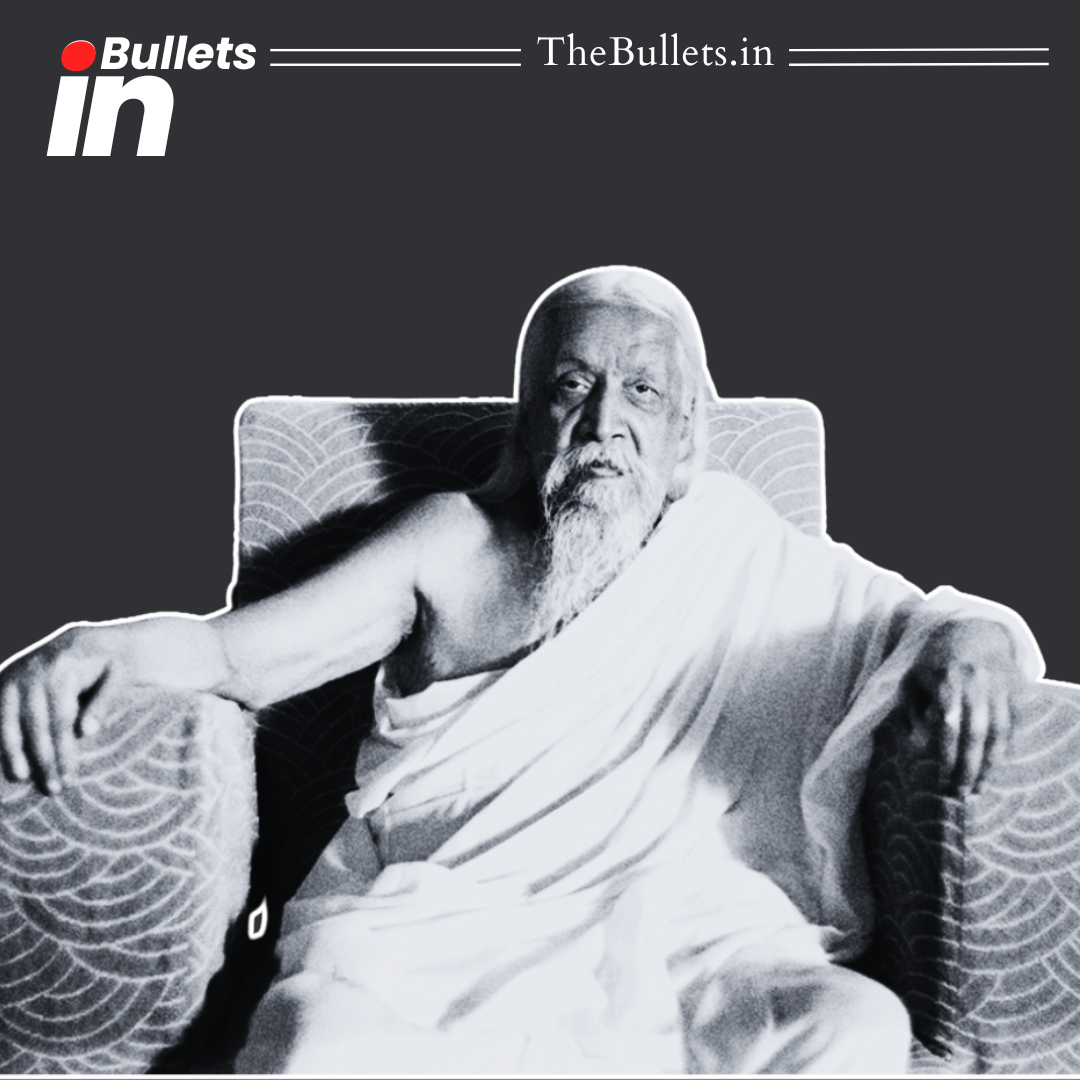


Sri Aurobindo Ghosh was a prominent freedom fighter, nationalist thinker, philosopher, poet, and spiritual leader who played a significant role in India’s independence movement before dedicating his life to spiritual evolution and Integral Yoga.
BulletsIn
- Sri Aurobindo Ghosh was born on 15 August 1872 in Kolkata and became one of the most influential nationalist leaders, philosophers, and spiritual thinkers of modern India.
- After returning from England in 1893, he served in Baroda State and later emerged as a leading voice of revolutionary nationalism, advocating complete independence from British rule.
- Following the 1905 Partition of Bengal, Aurobindo actively supported the Swadeshi Movement, inspired revolutionary organizations like Anushilan Samiti, and promoted national education and self-reliance.
- Through newspapers such as Bande Mataram, Karmayogin, and Yugantar, he spread nationalist ideas and encouraged Indians to strive for Swaraj and political freedom.
- He was arrested in the famous Alipore Bomb Case in 1908 but was acquitted after a year of imprisonment, which deeply influenced his spiritual transformation.
- In 1910, Aurobindo moved to Puducherry, where he developed the philosophy of Integral Yoga and established the renowned Sri Aurobindo Ashram in 1926.
- His major literary works include The Life Divine, The Synthesis of Yoga, and Savitri, one of the longest poems written in English.
- In his famous “Five Dreams” message, Aurobindo envisioned a free and united India, the resurgence of Asia, global unity, India’s spiritual contribution to humanity, and the evolution of higher human consciousness.



What do you think?
It is nice to know your opinion. Leave a comment.