











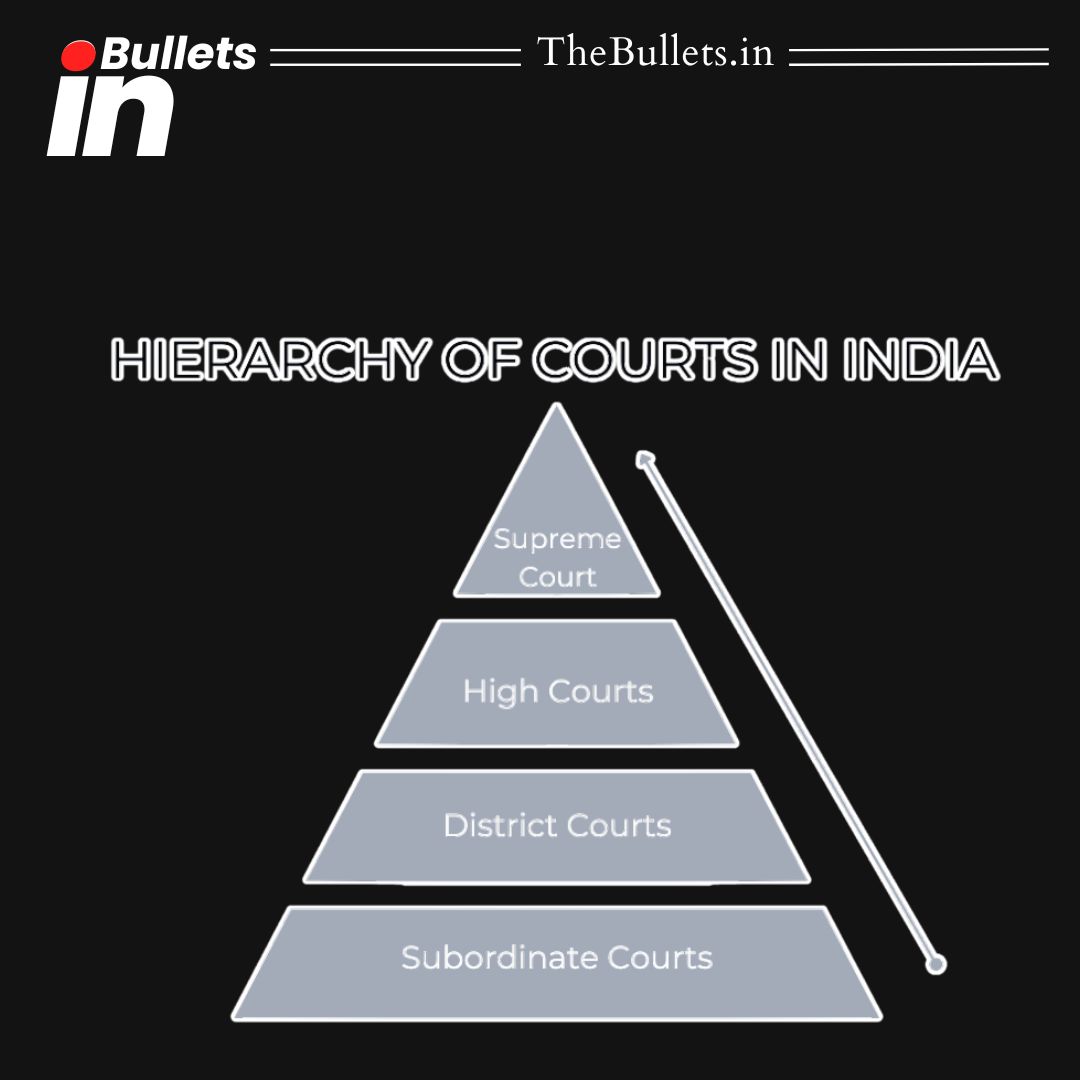


Subordinate courts form the foundation of India’s judicial system, handling civil and criminal cases at local levels and ensuring accessible, efficient, and timely justice for citizens.
BulletsIn
- Subordinate courts operate under the supervision of High Courts and handle the majority of civil and criminal cases, ensuring justice delivery at district and local levels across India.
- Articles 233 to 237 of the Constitution provide the legal framework for appointment, control, and independence of subordinate courts, ensuring separation from executive influence.
- District Judges are appointed by the Governor in consultation with the High Court and serve as the highest judicial authority at the district level with both civil and criminal jurisdiction.
- The District Judge also functions as a Sessions Judge in criminal matters, with powers to award sentences including life imprisonment and capital punishment, subject to High Court confirmation.
- Below district courts, civil courts include subordinate judges and munsif courts, while criminal courts include Chief Judicial Magistrates and Judicial Magistrates with varying jurisdiction limits.
- Chief Judicial Magistrates handle criminal cases punishable up to seven years, while Judicial Magistrates deal with offences carrying imprisonment up to three years.
- Special courts like City Civil Courts, Metropolitan Magistrate Courts, and Small Causes Courts handle specific types of cases, particularly in urban areas and minor civil disputes.
- Grassroots-level institutions such as Nyaya Panchayats and Gram Kutchery resolve minor disputes locally, improving access to justice and reducing the burden on higher courts.



What do you think?
It is nice to know your opinion. Leave a comment.