











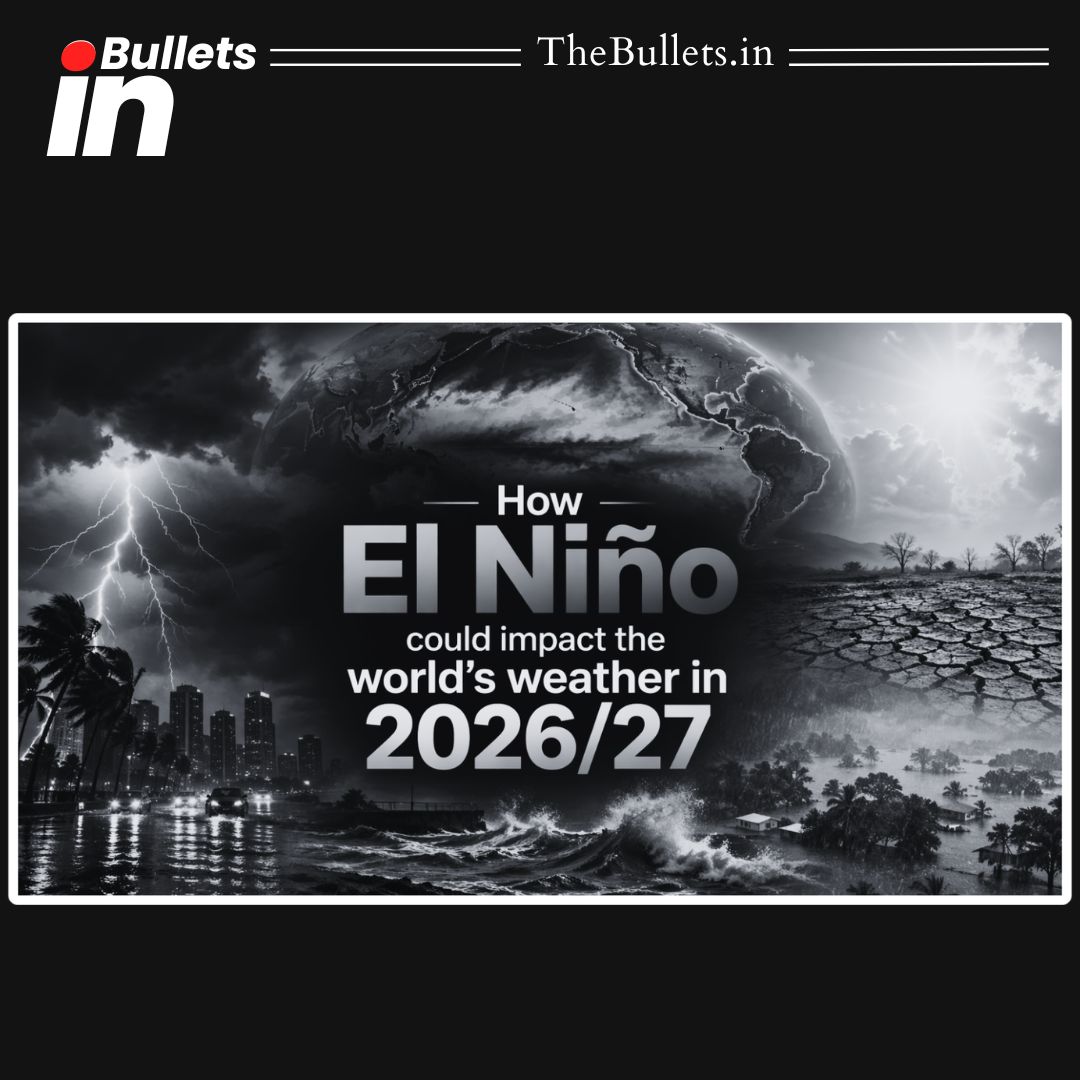


Global weather agencies indicate a strong El Niño could emerge in 2026–27, potentially disrupting monsoons, intensifying heat across Asia, and triggering uneven rainfall patterns affecting global agriculture and food security.
BulletsIn
- A strong El Niño is projected to develop by mid-2026, with major forecasting agencies estimating around 60–70% probability based on Pacific Ocean warming trends and atmospheric indicators.
- India’s monsoon may fall below average for the first time in three years, raising risks for agriculture, water supply, and rural economic stability.
- Southeast Asia, India, and Australia are likely to experience above-normal temperatures and reduced rainfall, impacting crop productivity and increasing drought risks.
- Eastern Australia’s key agricultural regions could see below-average rainfall during the early growing season, affecting crop cycles and farmer planning decisions.
- North and South America may receive higher-than-normal rainfall, which could benefit crops but also increase flooding risks and disrupt harvest timelines.
- El Niño develops when weakened trade winds allow warm ocean waters to shift eastward in the Pacific, altering global heat distribution and weather systems.
- Past strong El Niño events, including 2015–16 and 1997–98, led to severe droughts in Asia and widespread flooding across the Americas.
- Experts emphasize that the timing and strength of El Niño will be critical in determining whether impacts remain moderate or escalate into extreme weather disruptions.



What do you think?
It is nice to know your opinion. Leave a comment.