











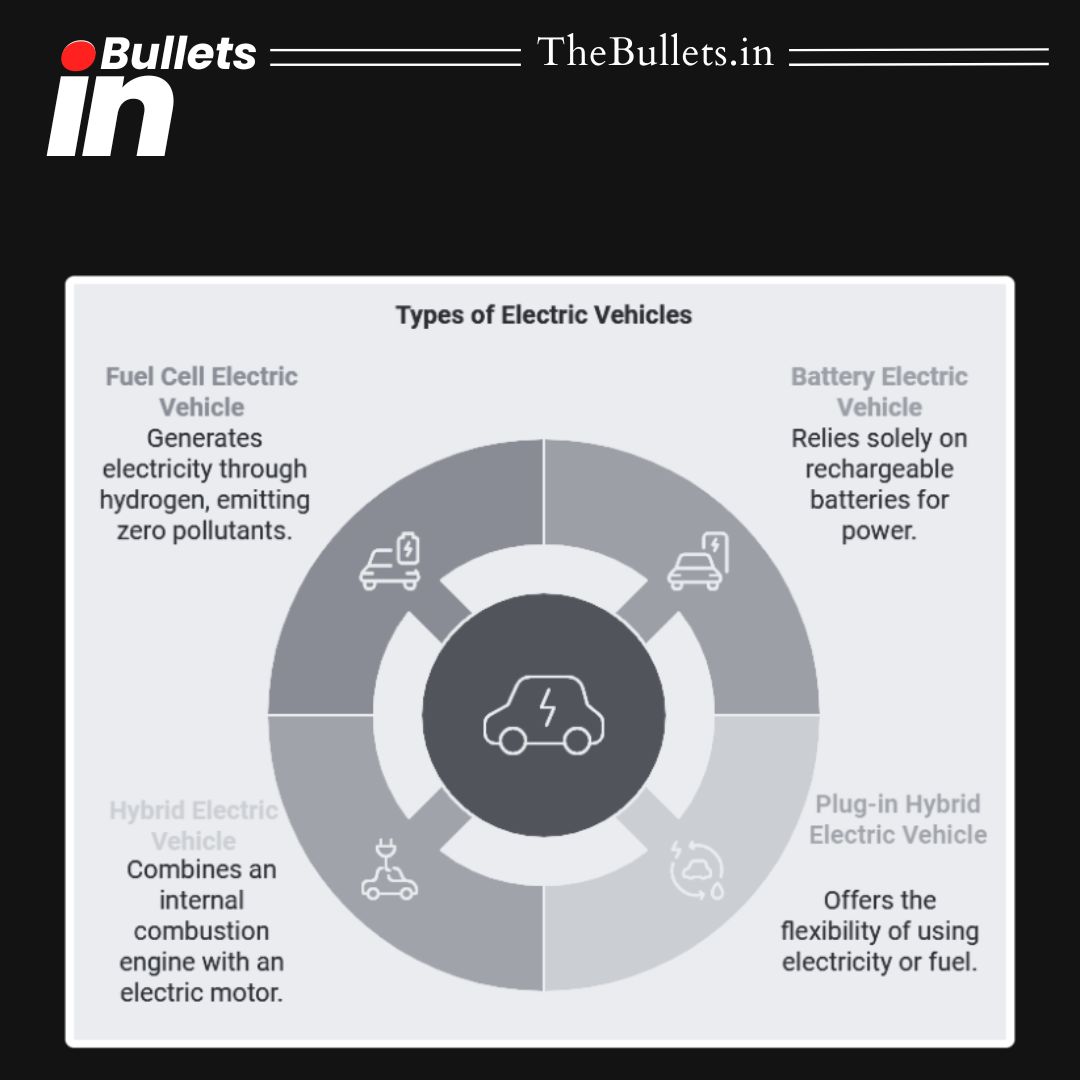


India’s electric vehicle (EV) transition is no longer just an environmental goal but a strategic necessity driven by energy security, import dependence, industrial transformation, and climate commitments, making it a core pillar of future economic planning.
BulletsIn
- India’s EV transition is critical due to heavy dependence on imported crude oil, which exposes the economy to global price shocks and geopolitical supply disruptions affecting energy security.
- Transport electrification, especially in two-wheelers and three-wheelers, is emerging as the fastest route to reduce fossil fuel consumption and urban air pollution levels in major cities of India.
- EV adoption remains relatively low in passenger vehicles, indicating a structural gap between policy ambition and market penetration, requiring stronger demand-side interventions in India.
- The transition supports India’s broader industrial strategy by promoting domestic manufacturing of batteries, electric drivetrains, and charging infrastructure under various government schemes.
- Critical mineral dependency for batteries, including lithium, cobalt, and nickel, creates a new form of import vulnerability even as oil dependence declines for India.
- Charging infrastructure expansion and grid readiness remain key bottlenecks, limiting large-scale EV adoption across urban and rural regions of India.
- Policy frameworks like subsidies, PLI schemes, and FAME initiatives are designed to accelerate adoption while building a self-reliant EV ecosystem in India.



What do you think?
It is nice to know your opinion. Leave a comment.