











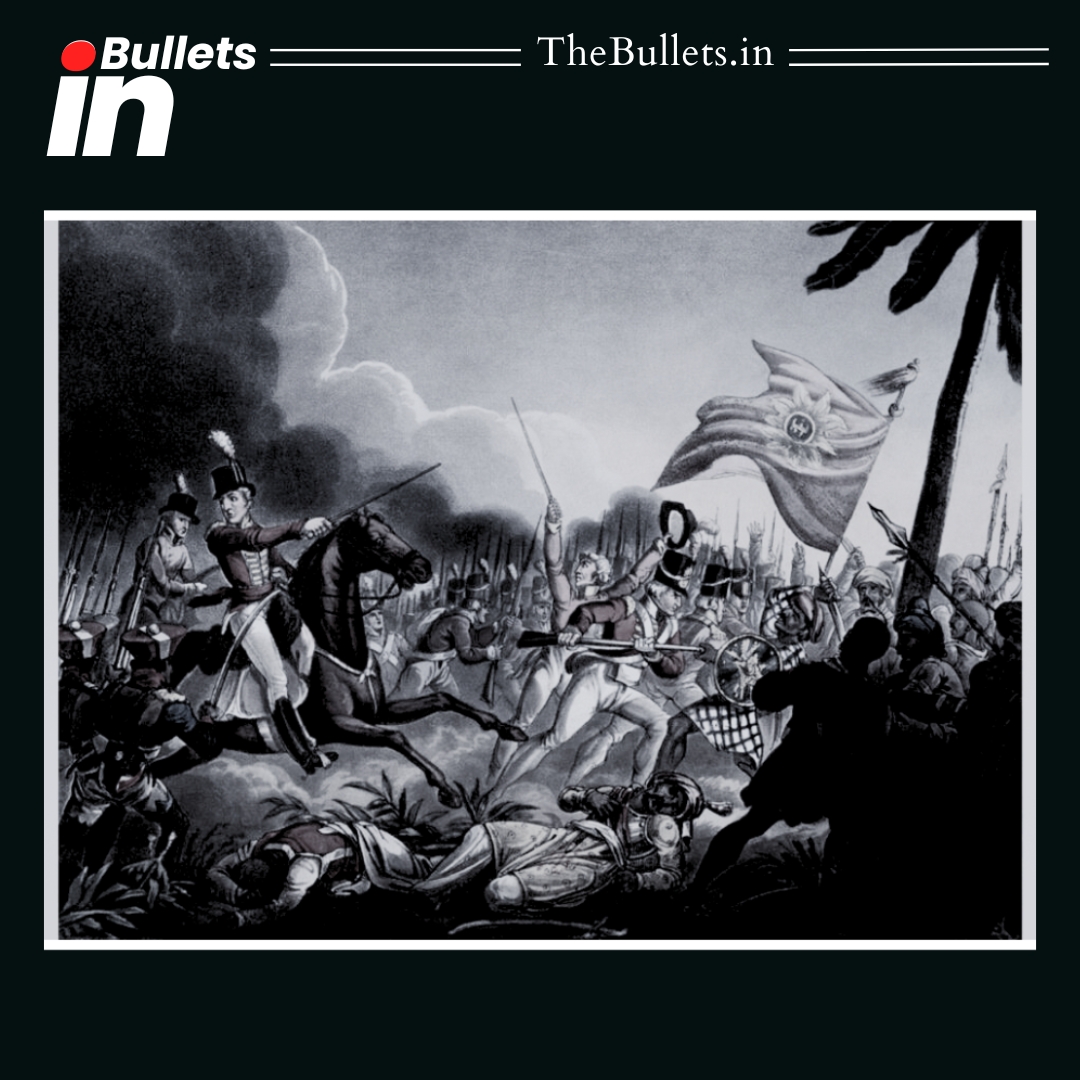


The Battle of Bhima Koregaon was fought on January 1, 1818, near Koregaon village in Maharashtra during the Third Anglo-Maratha War. It marked a key moment in the decline of Maratha power and the rise of British dominance, while later gaining social significance as a symbol of resistance and Dalit pride.
Bullets
- The battle took place between the British East India Company forces and the Peshwa-led Maratha Empire near Koregaon in Maharashtra.
- It was part of the Third Anglo-Maratha War, which aimed at consolidating British control over Indian territories.
- Peshwa Baji Rao II attempted to regain control of Pune, leading to confrontation with British forces.
- The British troops were led by Captain Francis Staunton, consisting of diverse regiments including Mahar soldiers.
- The Mahar community’s role in the battle later became a symbol of resistance against caste-based discrimination.
- The British victory weakened Maratha power significantly and accelerated the expansion of British rule in India.
- The battle is seen as a clash between colonial expansion and regional sovereignty aspirations.
- A victory pillar was later erected at Koregaon to commemorate the soldiers who fought in the battle.
- Over time, the event gained importance as a symbol of Dalit pride and is observed annually as a remembrance day.
- The aftermath contributed to the eventual defeat of the Peshwa rule and British dominance over large parts of India.



What do you think?
It is nice to know your opinion. Leave a comment.