











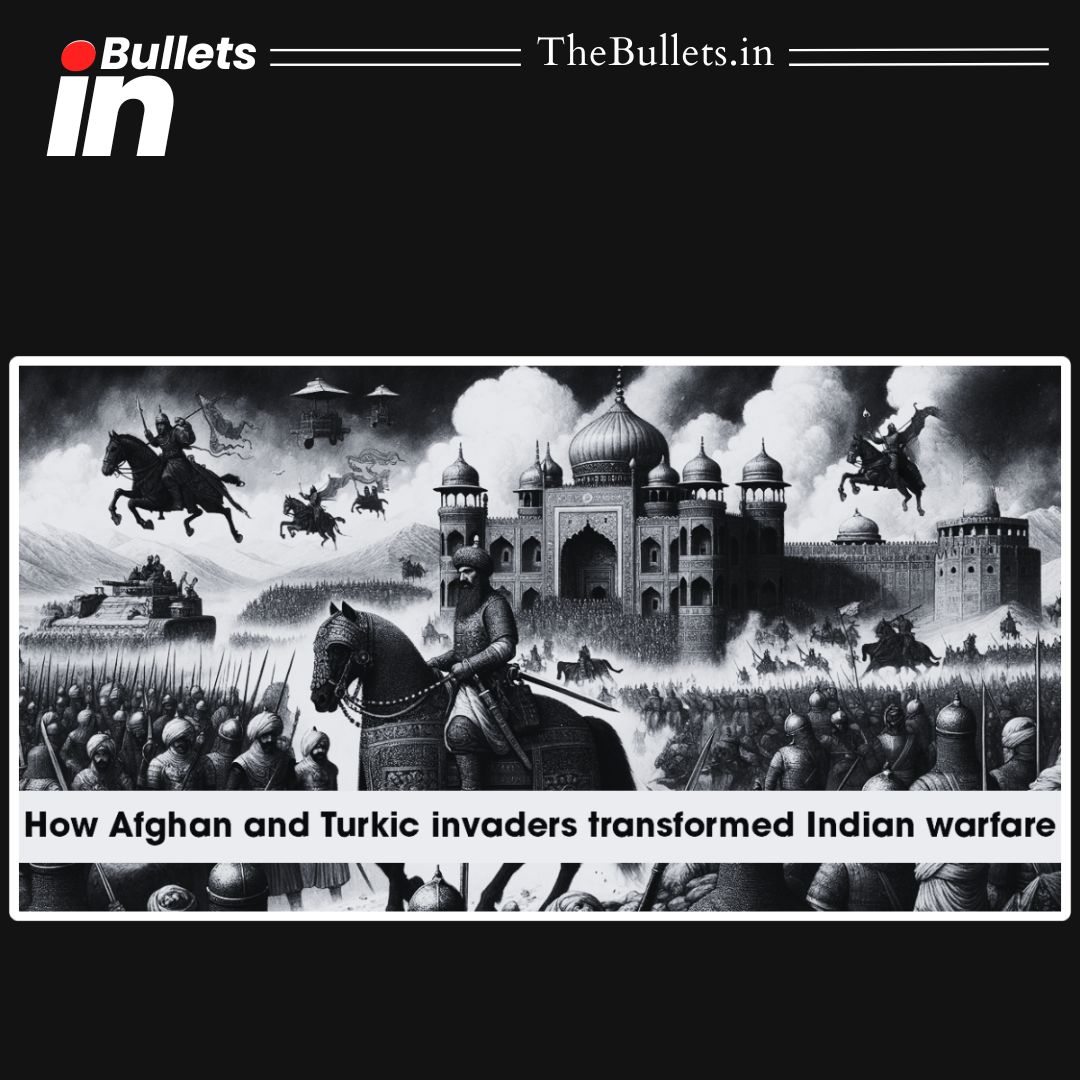


Afghans and Turks introduced new military tactics, cavalry strategies, siege techniques and artillery systems that significantly transformed warfare and strengthened their dominance in medieval India.
BulletsIn
- Afghan and Turkic armies relied heavily on swift cavalry forces, enabling rapid movement across battlefields and allowing them to conduct surprise attacks and strategic manoeuvres against enemies.
- Mounted archery became a major tactical advantage, where soldiers could shoot arrows while riding horses, including the famous retreating attack technique known as the Parthian Shot.
- Strong logistical systems supported their campaigns, as rulers organised supply chains using animals such as camels to transport food, water and military equipment during long expeditions.
- Military commanders used encirclement strategies inspired by steppe warfare traditions, surrounding enemy forces from multiple directions and weakening them through coordinated attacks.
- Afghan and Turkic rulers introduced advanced siege warfare methods, including powerful catapults and elevated platforms to break fortified city walls and capture strategic strongholds.
- War elephants were also used during sieges to break gates and create fear among defending forces, playing a major role in early assault operations.
- The introduction of gunpowder and cannons during later periods transformed battlefield strategies and gradually replaced elephants as the primary method for destroying fortifications.
- Mughal rulers organised large mobile imperial camps that functioned like travelling administrative centres, allowing armies to operate efficiently while maintaining governance across vast territories.



What do you think?
It is nice to know your opinion. Leave a comment.